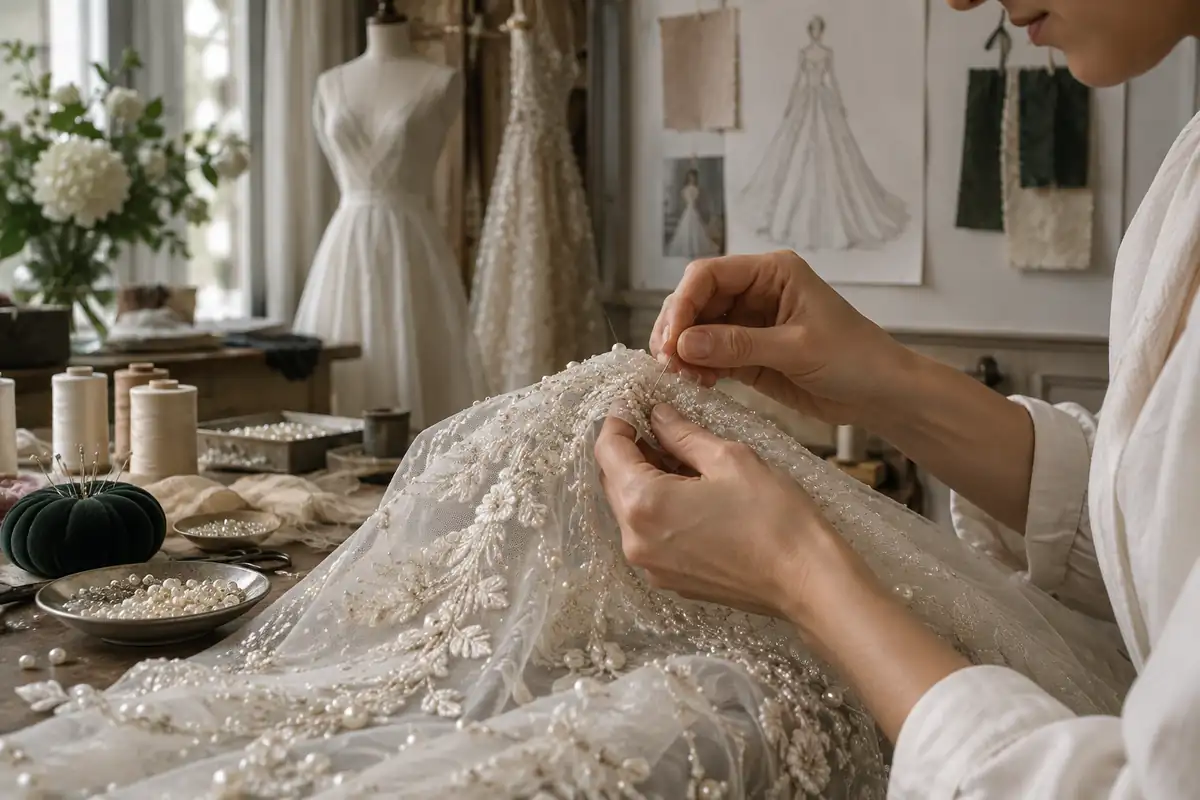
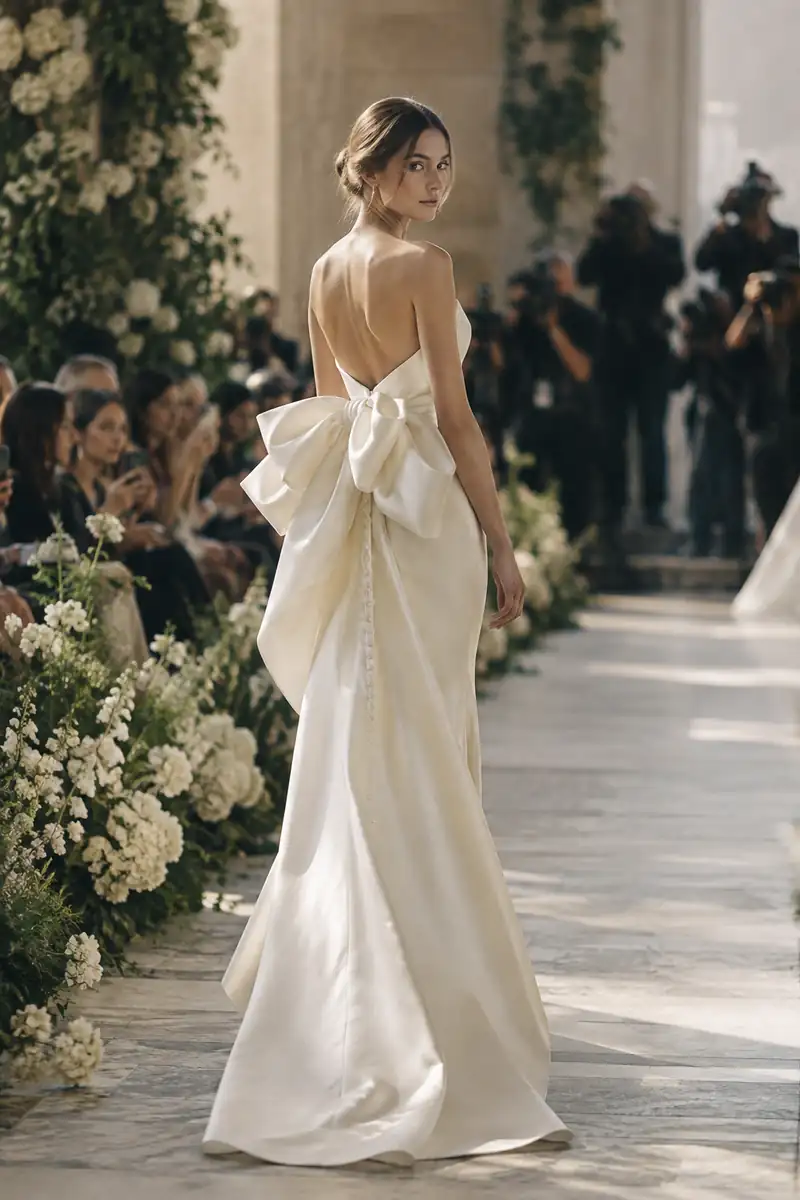
The Wedding Dress, Decoded
Every silhouette, neckline, sleeve, waistline, train, veil and fabric you will hear in a bridal salon — what each one is, what it does, and who it suits.
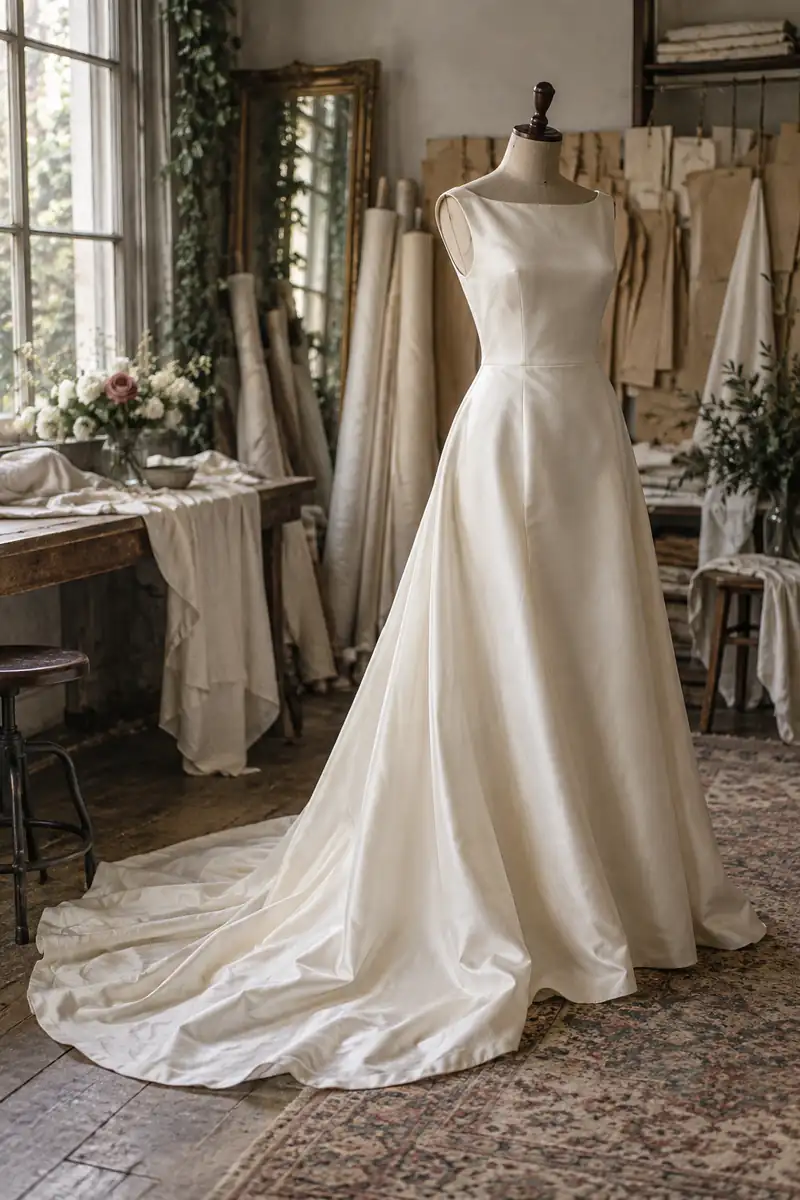
The bridal salon has a language of its own, and it is spoken quickly. Within five minutes of arriving you may be asked whether you prefer a trumpet or a mermaid, a bateau or a sabrina, chiffon or crepe. This guide explains all of it: what each term means, what it does on a body and in a room, and what to keep in mind when you’re choosing. It absorbs and expands the glossaries Today’s Weddings has published since the early days of the site. Each term has its own small picture: the sketches and swatches are illustrations made for Today’s Weddings.
- Silhouettes
- Necklines
- Sleeves
- Waistlines
- Trains and bustles
- Veils
- Headpieces
- Fabrics and lace
- Shades of white
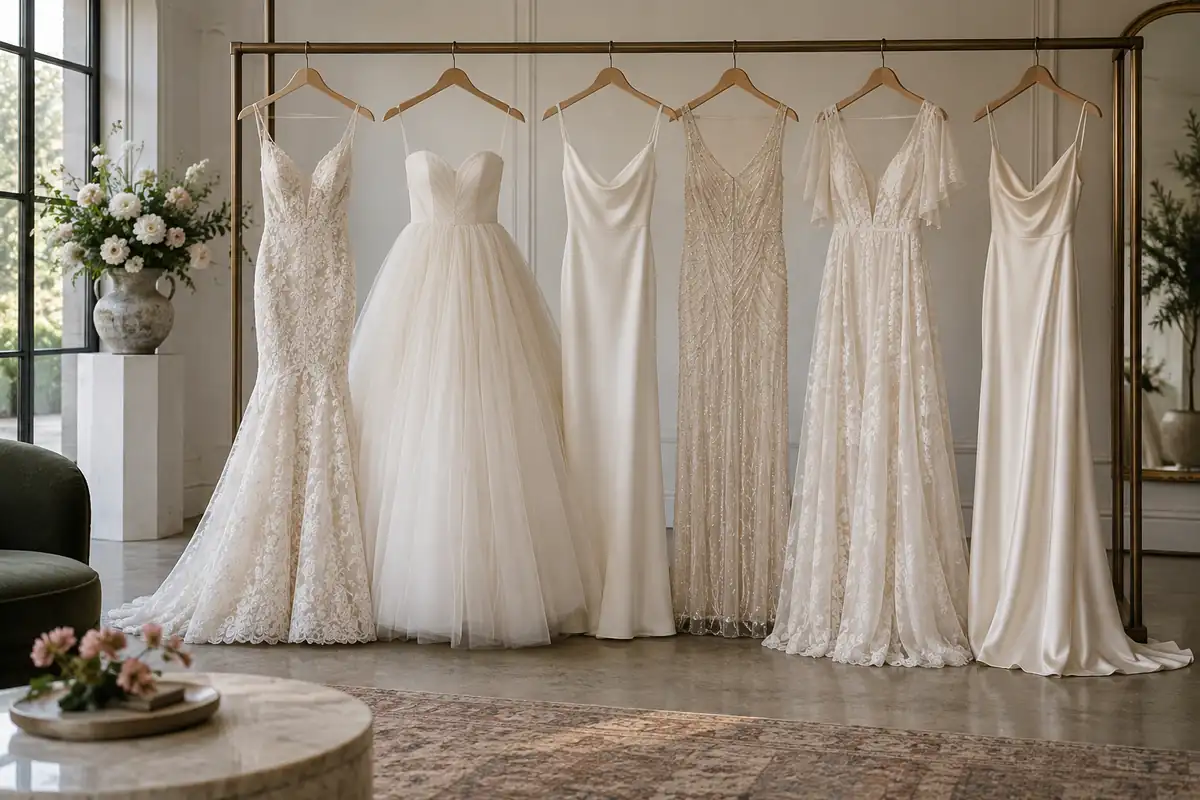
Silhouettes
The silhouette is the overall shape of the dress — the outline you would see in shadow. It matters more than any other choice, because it decides how the dress moves, how it sits in the room, and how easy it is to sit, dance and climb into a car.
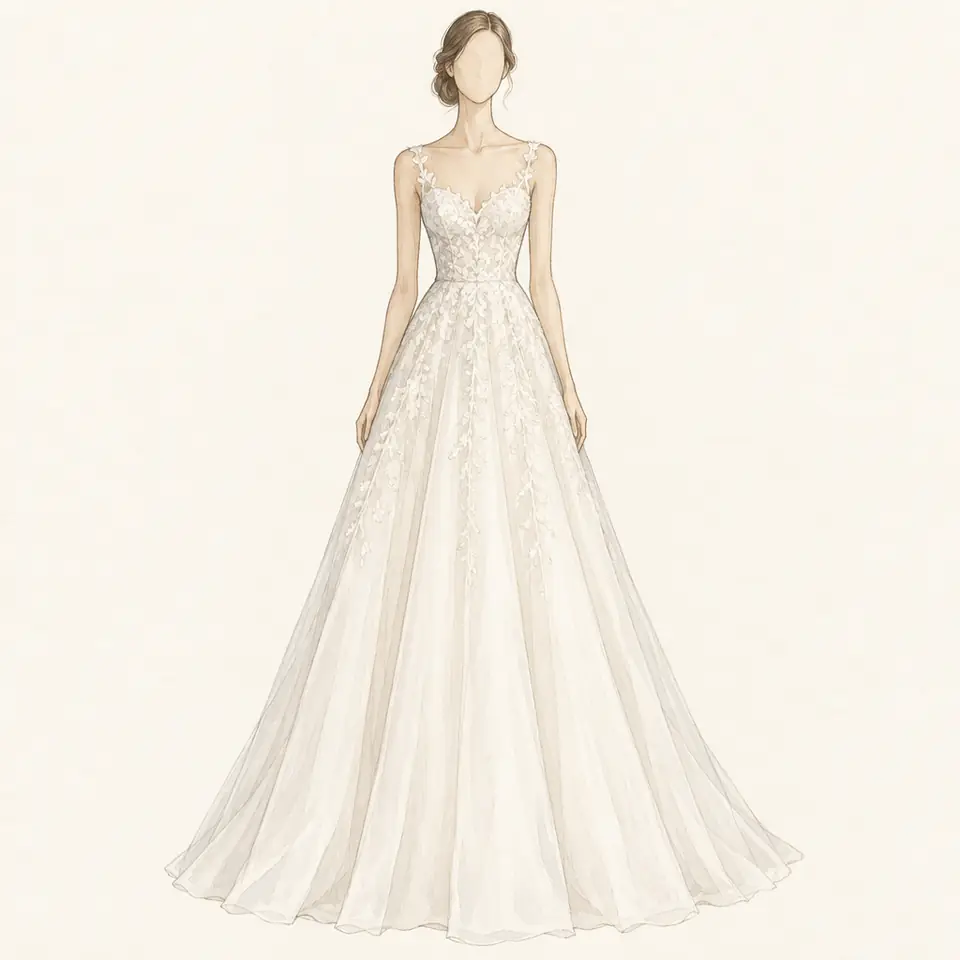
A-line. Fitted through the bodice, then flaring gradually from the waist to the hem in the shape of a capital A. The most universally flattering silhouette, and the easiest to wear all day.
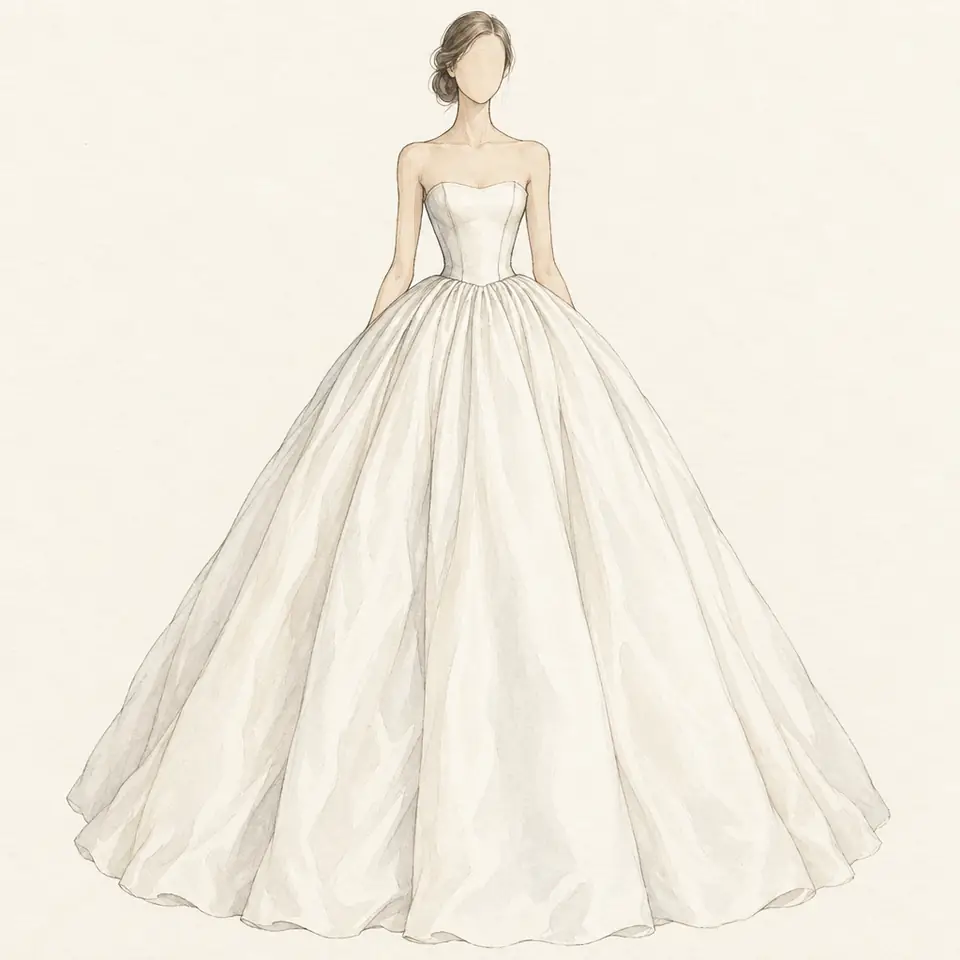
Ball gown. A fitted bodice and a very full skirt, usually gathered or pleated at the natural waist and supported by petticoats. The fairy-tale dress, and the most formal. It belongs in large rooms — a cathedral, a ballroom — and needs space to move through.
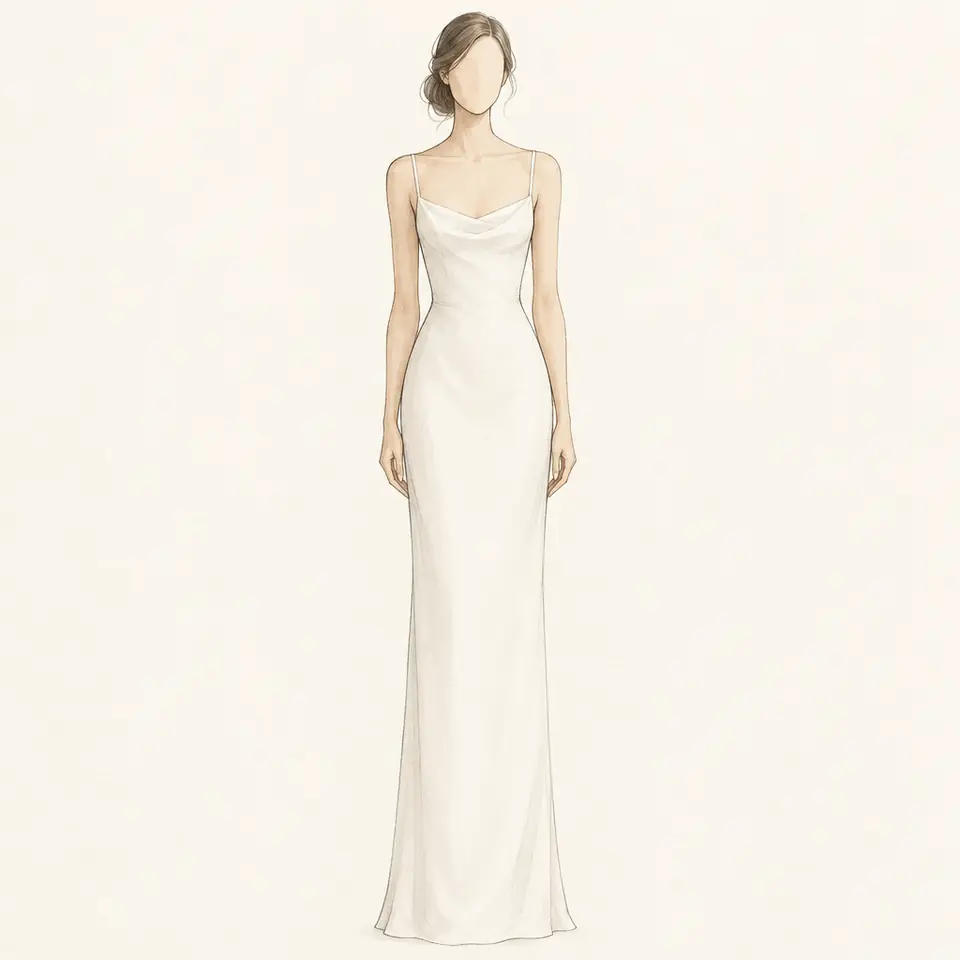
Sheath or column. A narrow, straight line that follows the body from shoulder to hem without flaring. Elegant and modern, particularly in crepe or silk. It shows the shape of the body clearly and suits smaller, less formal weddings and warm weather.
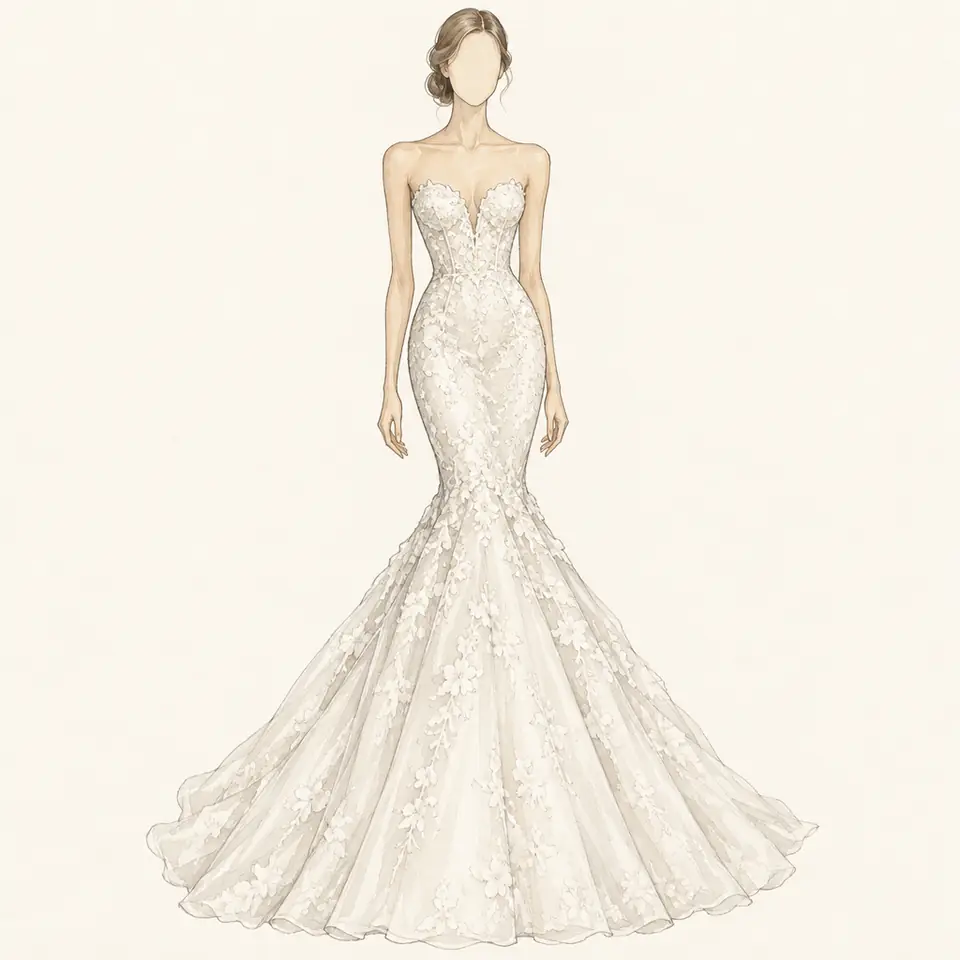
Mermaid. Fitted closely from the bodice to the knee, then flaring dramatically. The most body-conscious silhouette and the hardest to walk, sit and dance in.
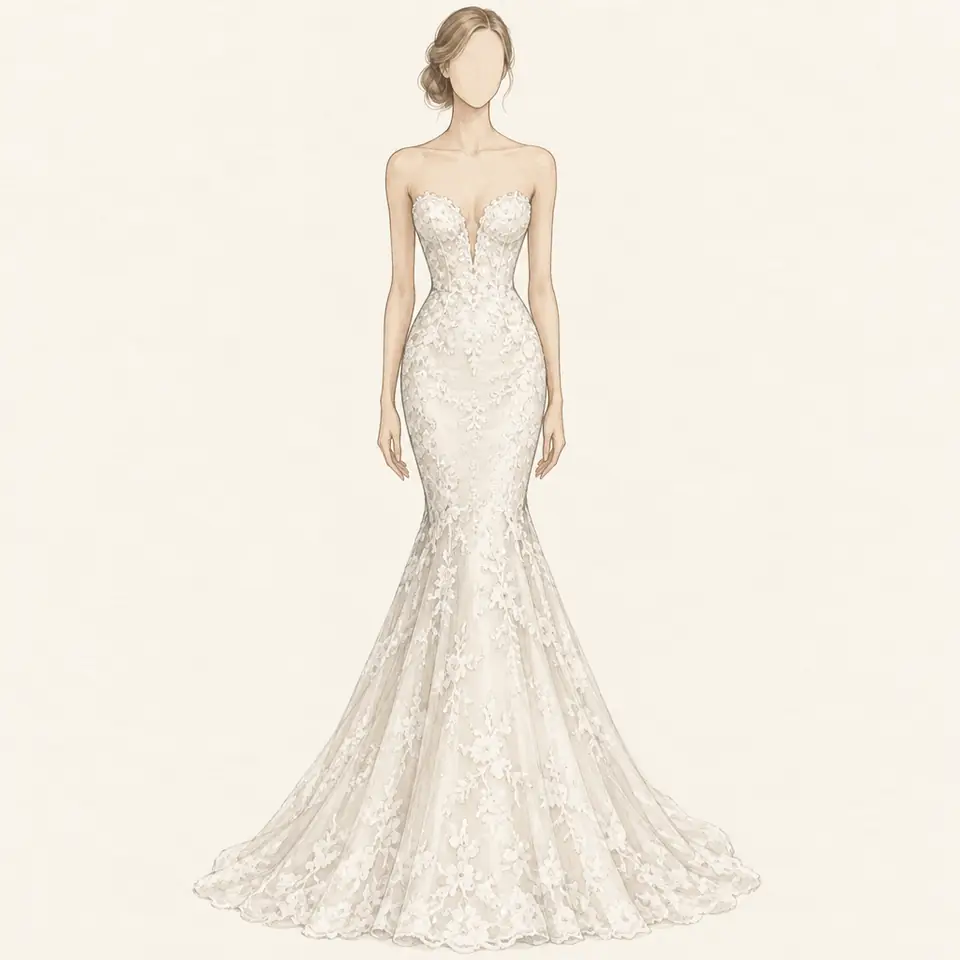
Trumpet. Like the mermaid, but the flare begins higher, around mid-thigh, and is softer. Easier to move in, and to many eyes the more elegant of the two.
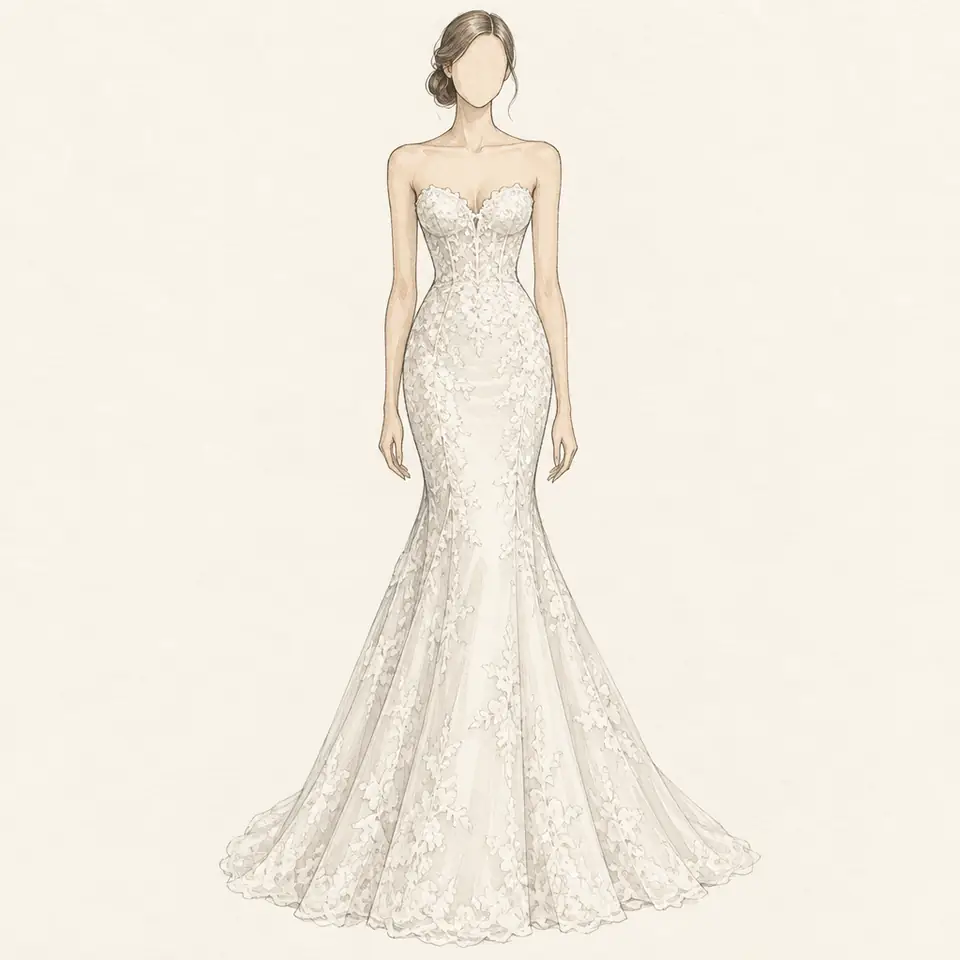
Fit-and-flare. Fitted through the bodice and waist, flaring from the hip. A gentle middle ground between the A-line and the trumpet.
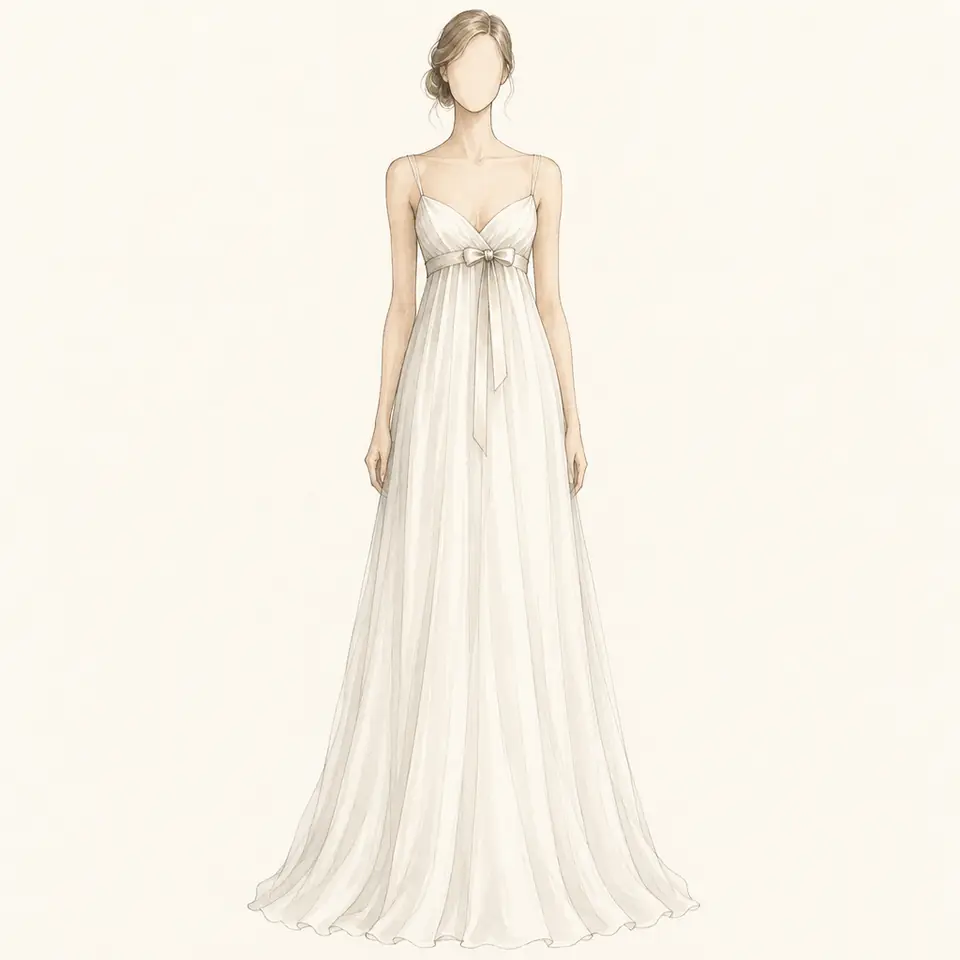
Empire. A high waistline just below the bust, with the skirt falling straight or softly from there. Romantic, comfortable and forgiving; a natural choice for a pregnant bride.
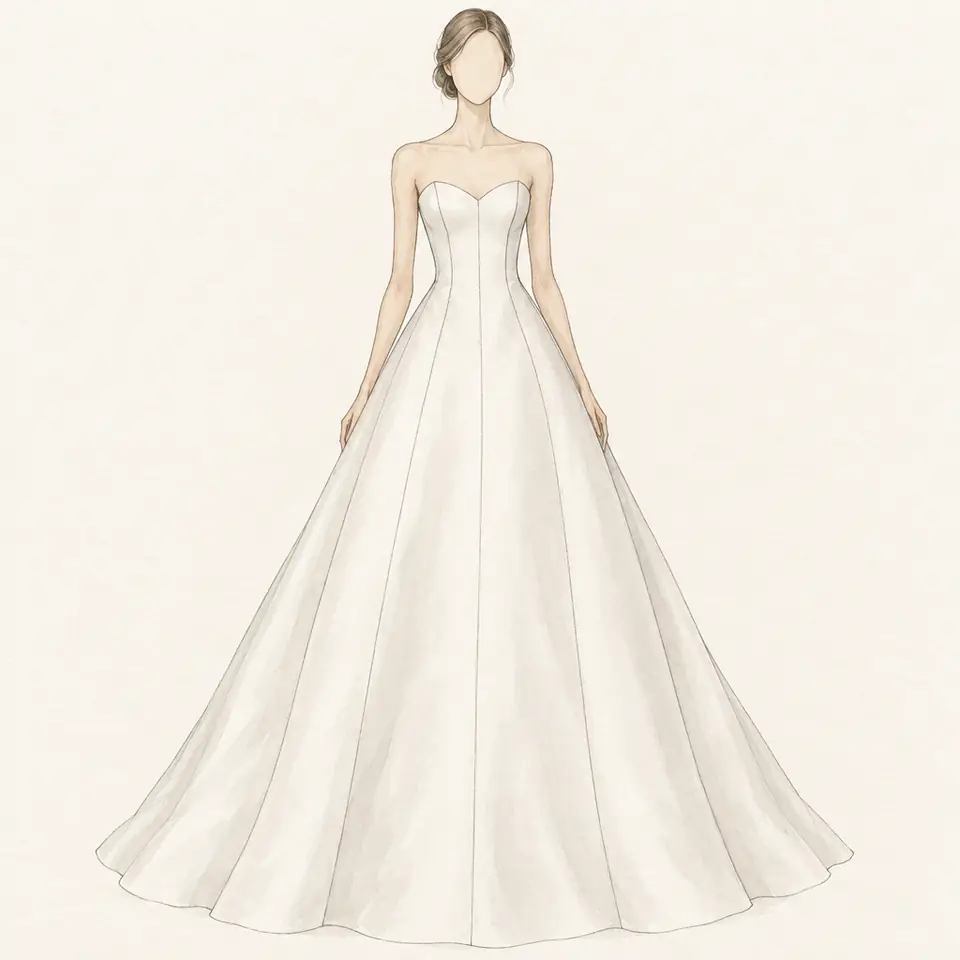
Princess. Shaped by long vertical seams from shoulder or bust to hem rather than a horizontal waist seam, giving a long, continuous line. Often confused with the A-line; the difference is the seaming.
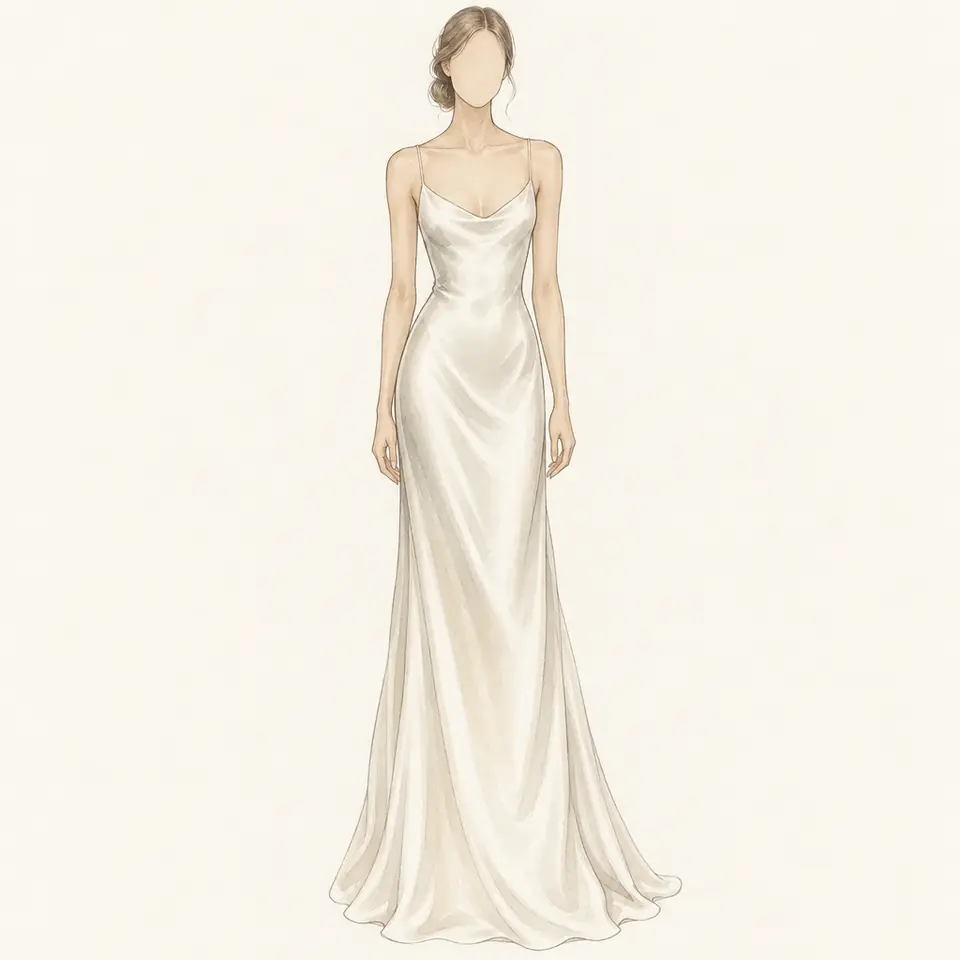
Slip. A bias-cut dress in silk or satin that skims rather than clings, usually with thin straps. Minimal and sensual, and very unforgiving of the wrong underwear.
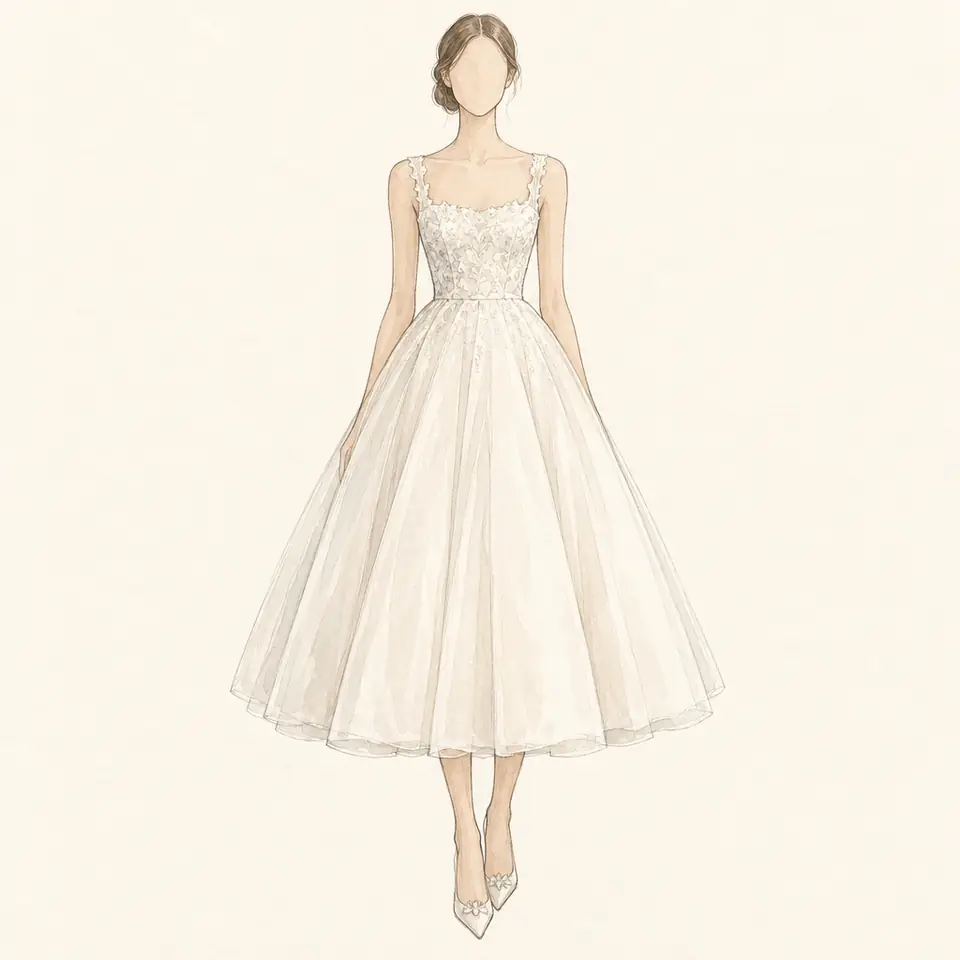
Tea-length. A full or A-line skirt ending between the knee and the ankle. Vintage in feeling, easy to dance in, and ideal for shoes you want to show.
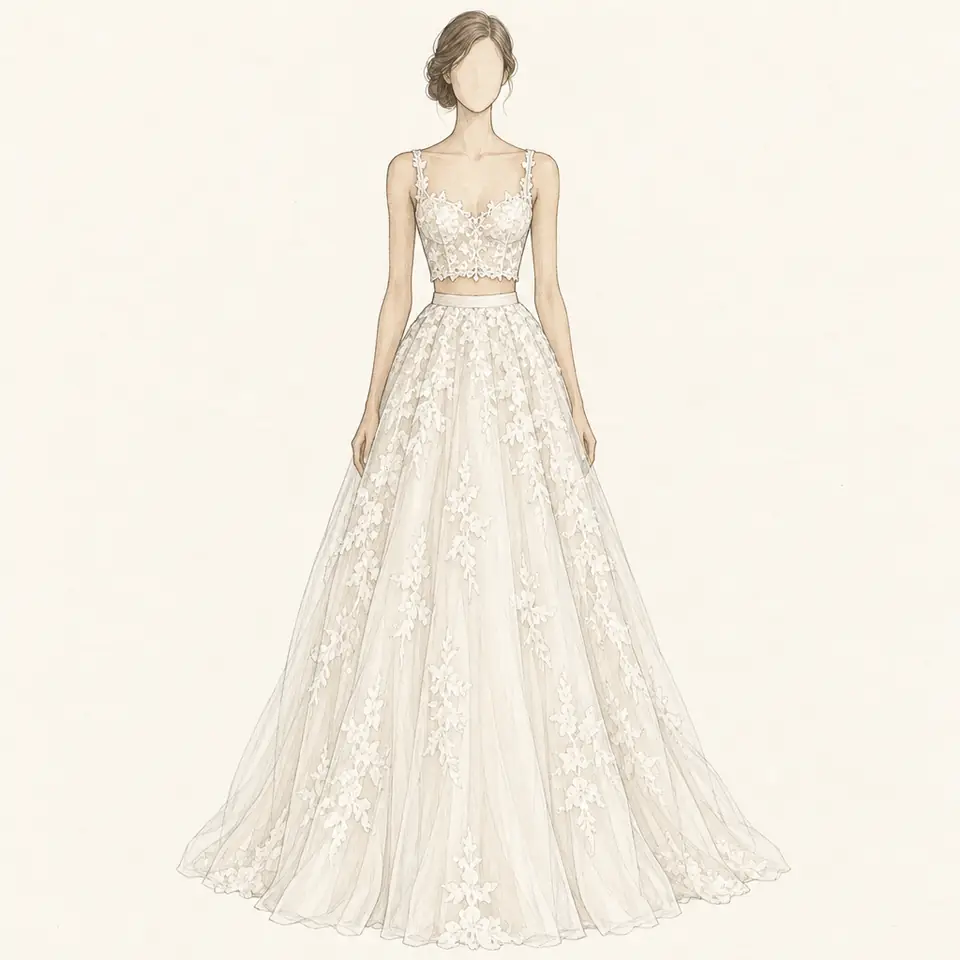
Two-piece and separates. A separate top and skirt, which lets you combine shapes and change for the reception. Increasingly common.
Necklines
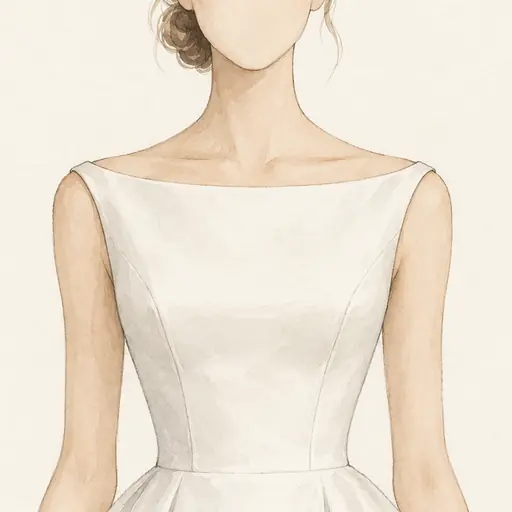
Bateau (boat). A wide, shallow neckline running almost horizontally from shoulder to shoulder, following the line of the collarbone. Graceful and modest; lovely on narrow shoulders.
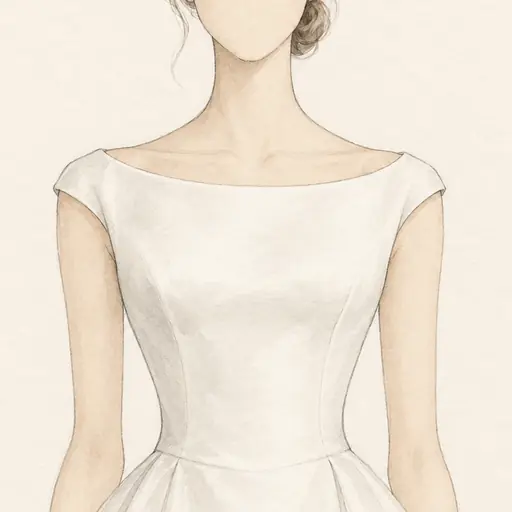
Sabrina. Similar to the bateau, but beginning a little further in from the shoulders, with a slight curve.
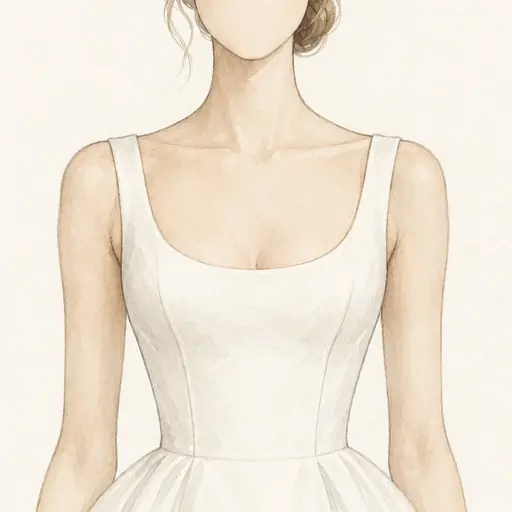
Scoop. A rounded, U-shaped neckline of any depth. Simple and flattering on most people.
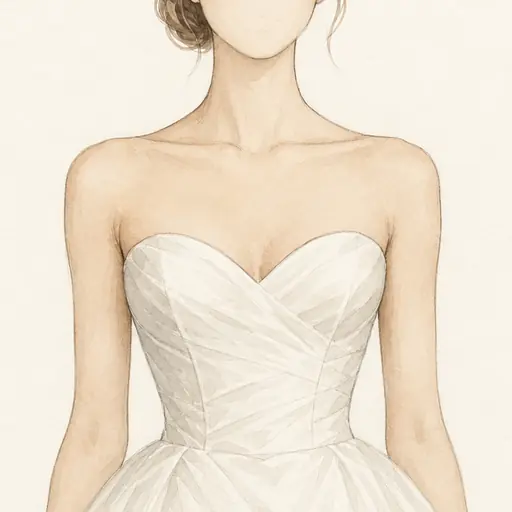
Sweetheart. Shaped like the top of a heart, dipping in the center. Romantic and one of the most popular necklines on strapless dresses.
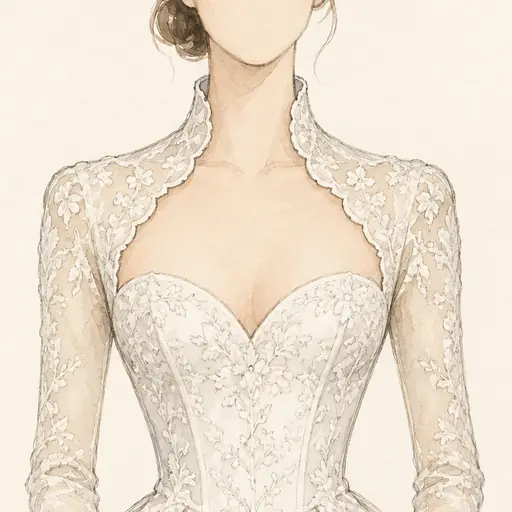
Queen Anne. A high collar at the back and sides that curves down to an open, often sweetheart-shaped front. Regal and structured.
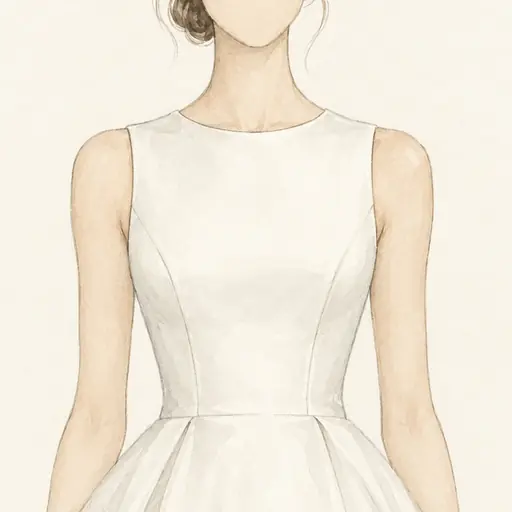
Jewel. A round neckline sitting at the base of the throat, like a simple crew neck. Clean and classic; a perfect frame for a necklace-free look.
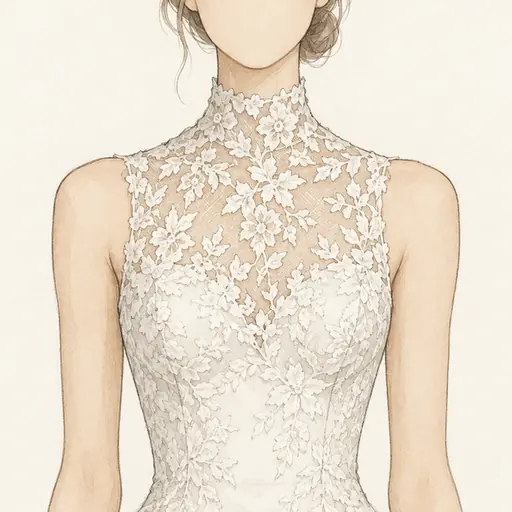
High neck. Rising up the throat, often in lace or illusion fabric. Dramatic and modest together.
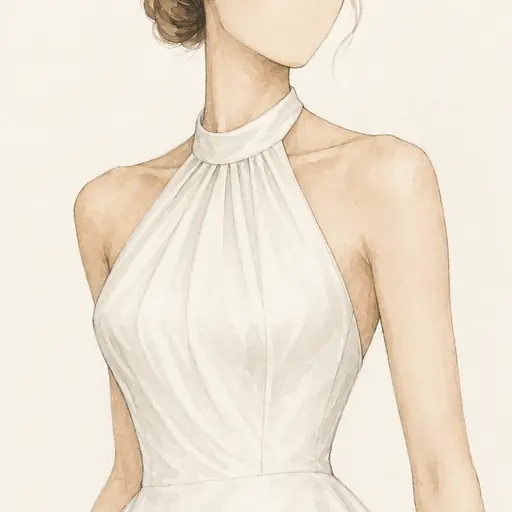
Halter. Straps that fasten around the back of the neck, leaving the shoulders and often the back bare. Good for showing off the shoulders; less good for a strapless bra.
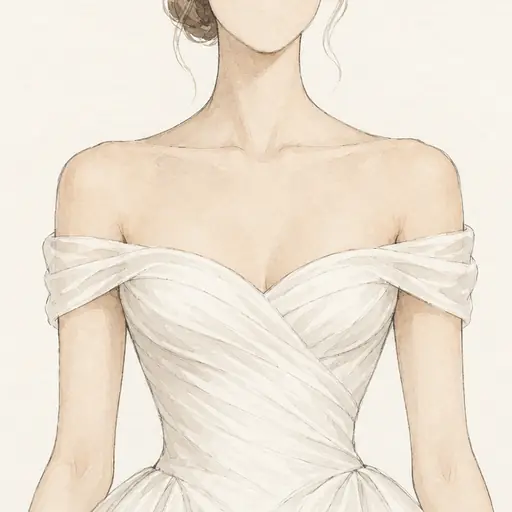
Off-the-shoulder. The neckline sits below the shoulders, with the fabric resting on the upper arm. Beautiful for photographs, and it limits how high you can raise your arms.
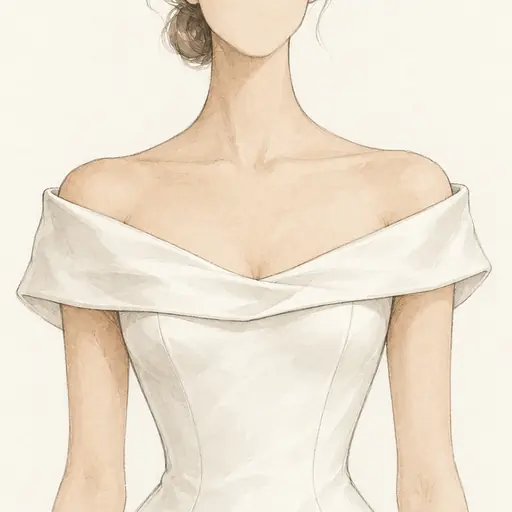
Portrait. A wide, open neckline framed by a folded band of fabric across the shoulders, like a shawl. Elegant for formal weddings.
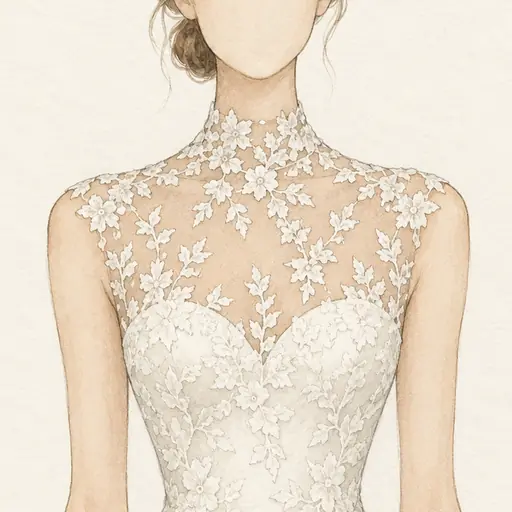
Illusion. A sheer panel of tulle or net, sometimes embroidered with lace, over a lower neckline, giving coverage that looks almost invisible.
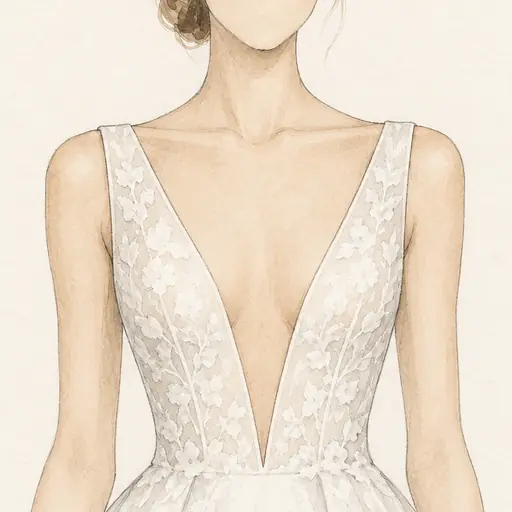
V-neck and plunging V. A V-shaped neckline of varying depth. Lengthening and flattering; a deep plunge needs careful structure and tape.
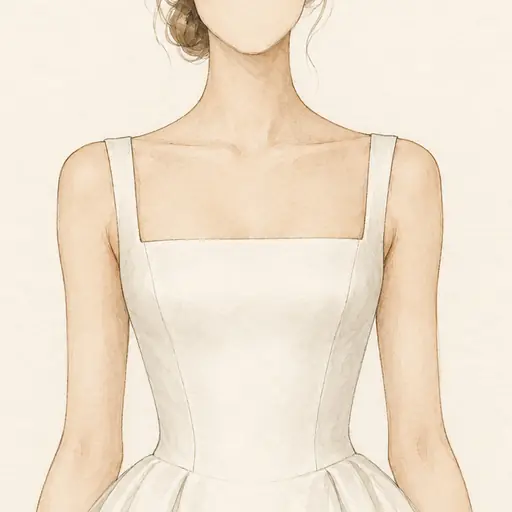
Square. A straight horizontal neckline with right-angled corners. Architectural, with a vintage or Renaissance feeling.
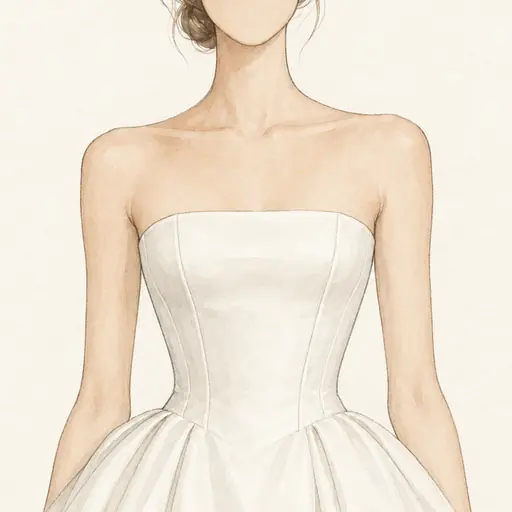
Strapless. Cut straight across, or in a slight curve, with no straps at all. Needs a well-built bodice; ask for a fitting in which you raise your arms and dance.
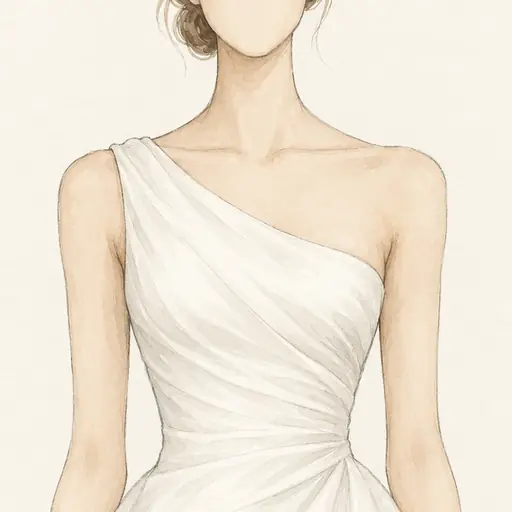
One-shoulder (asymmetric). A single strap or sleeve on one side. Modern and sculptural.
Sleeves
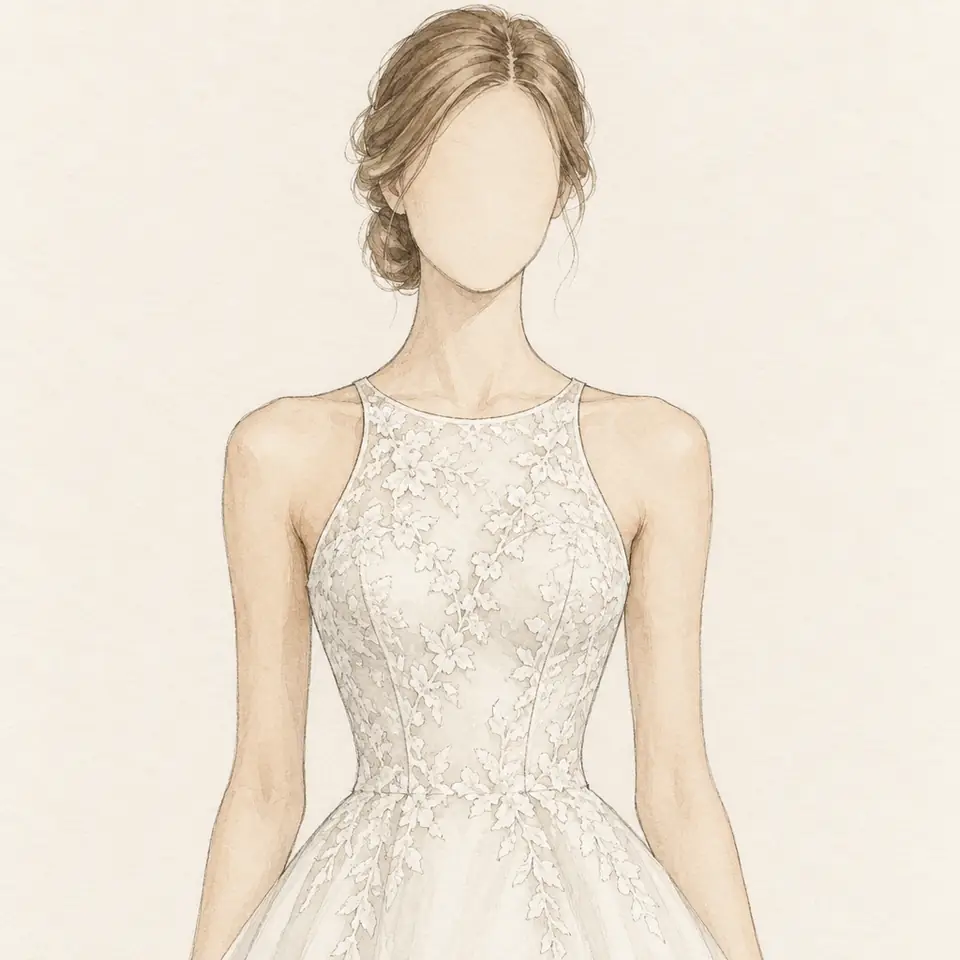
Sleeveless. No sleeves; the armhole may be cut in or wide.
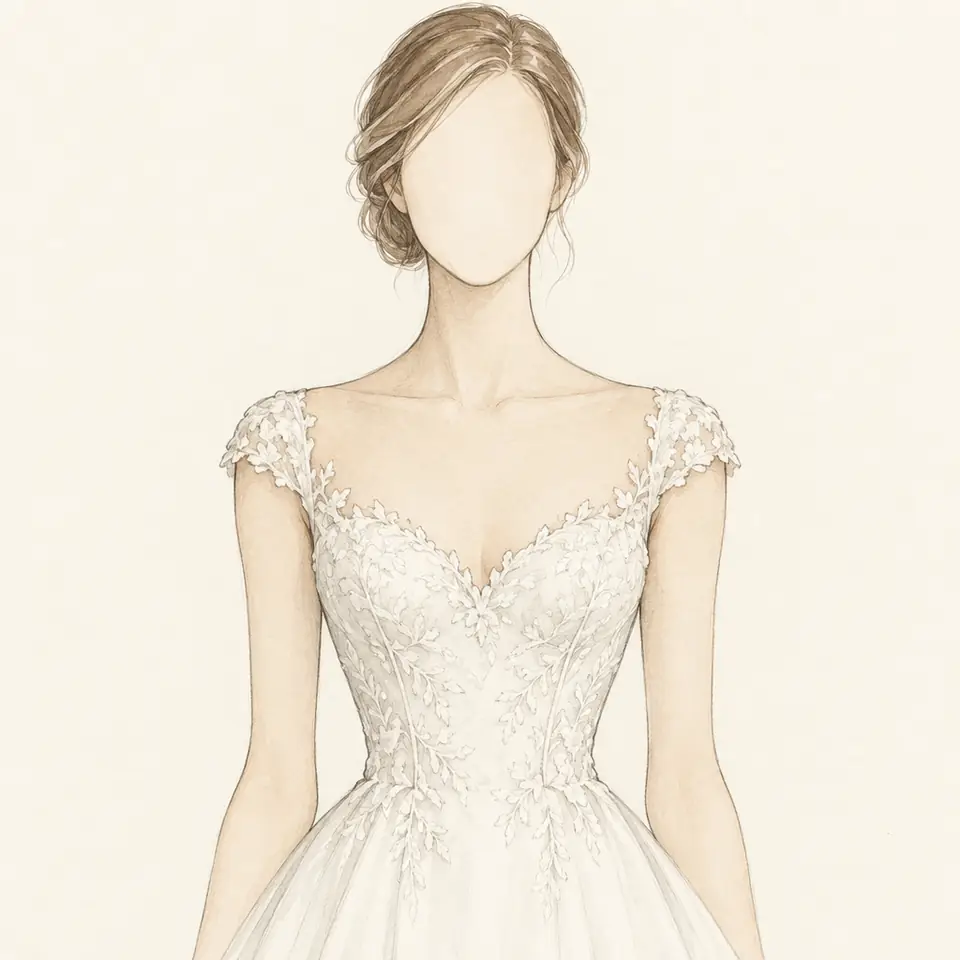
Cap. A very short sleeve that just covers the top of the shoulder.
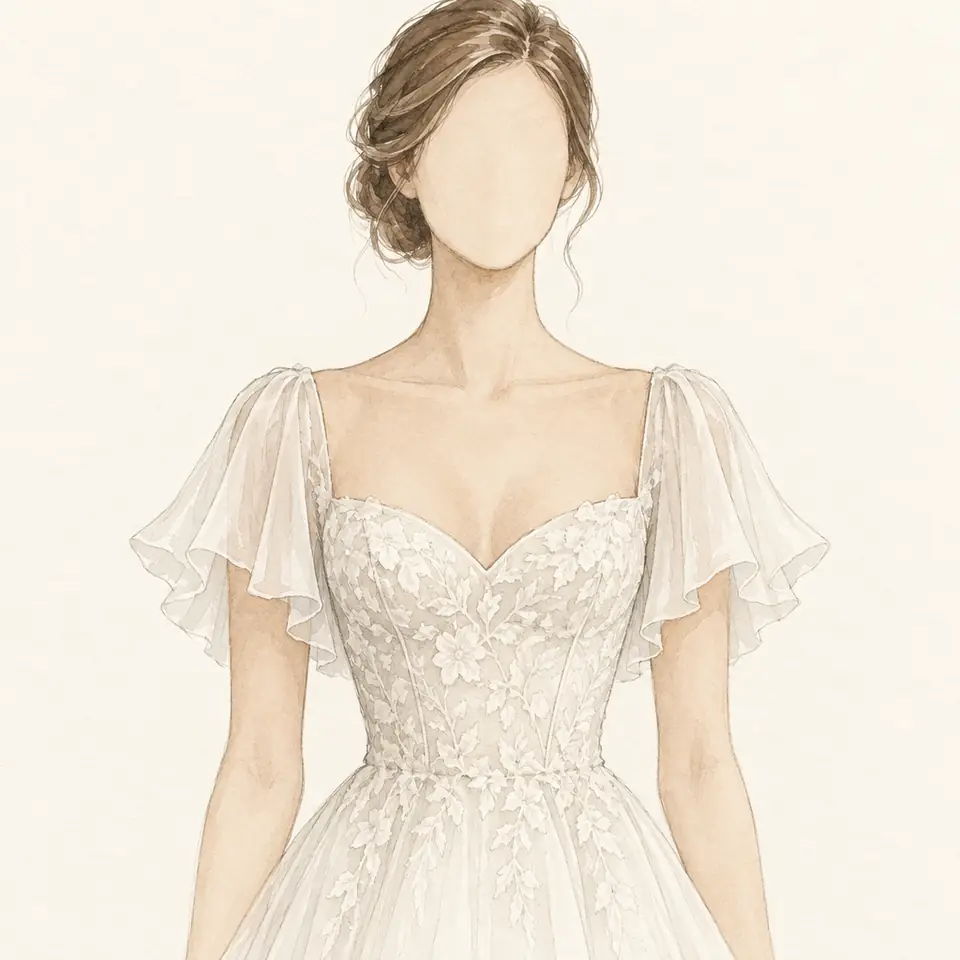
Flutter. A short, loose, floaty sleeve that moves as you do.
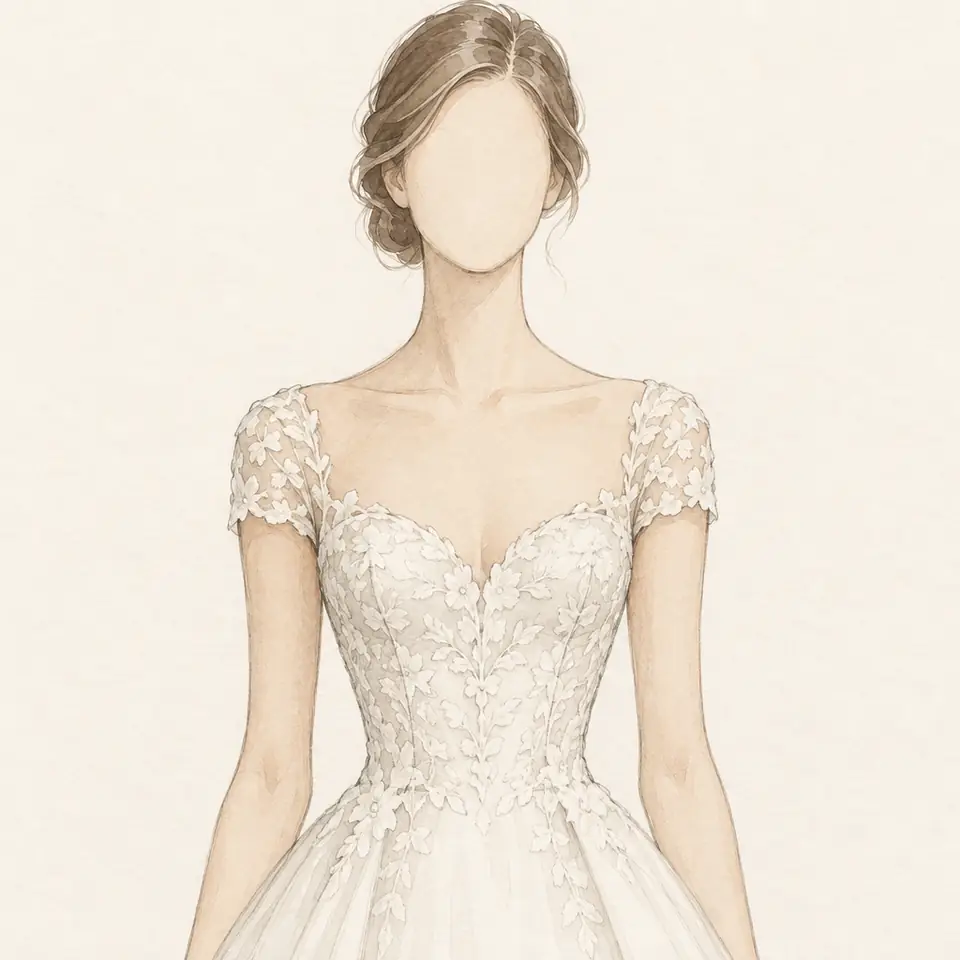
Short. A fitted or slightly loose sleeve ending around the upper arm.
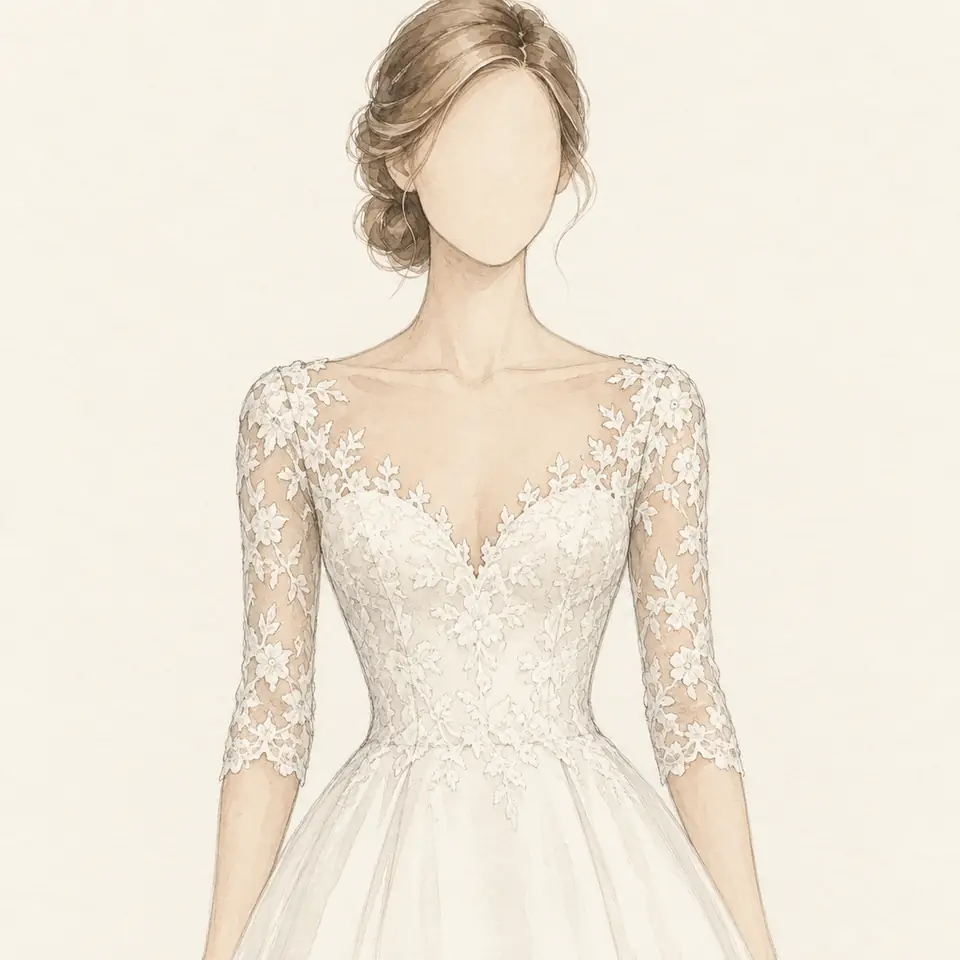
Three-quarter. Ending between the elbow and the wrist. Graceful and practical — you can eat without trailing lace through the sauce.
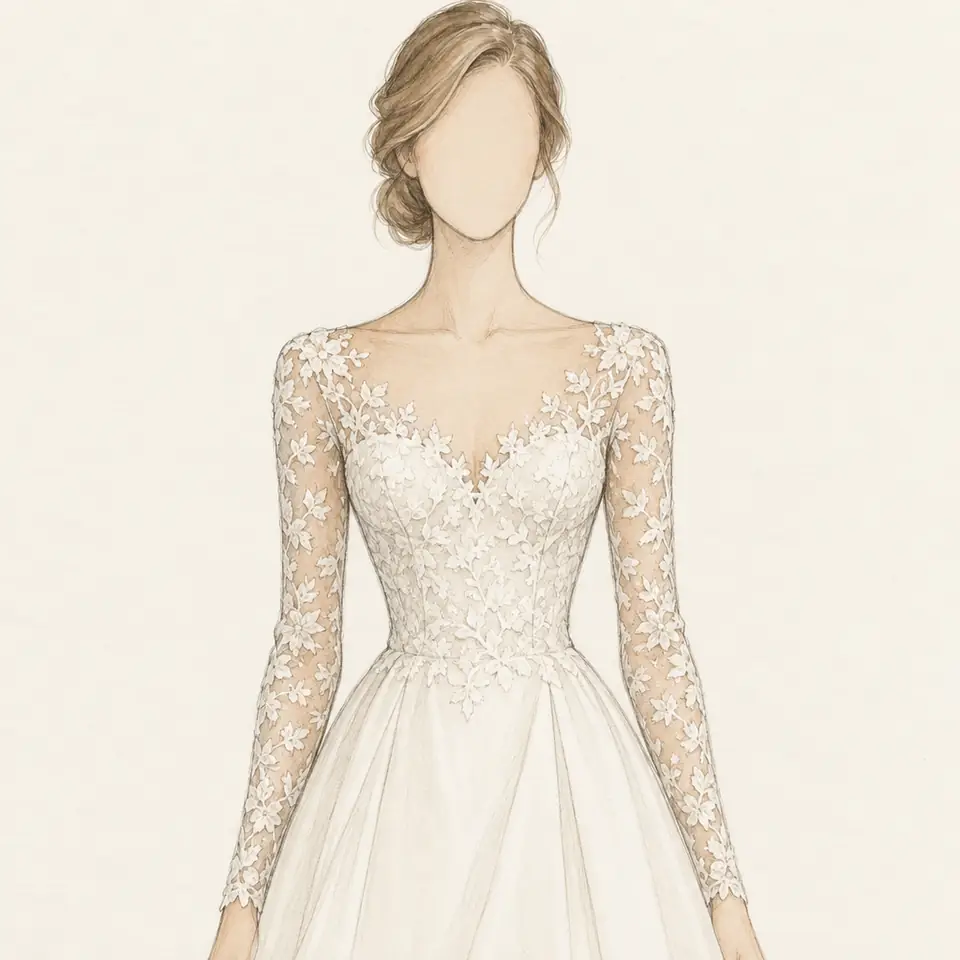
Long fitted. Close to the arm and reaching the wrist, often in lace. Timeless and formal; good for winter and for church weddings.
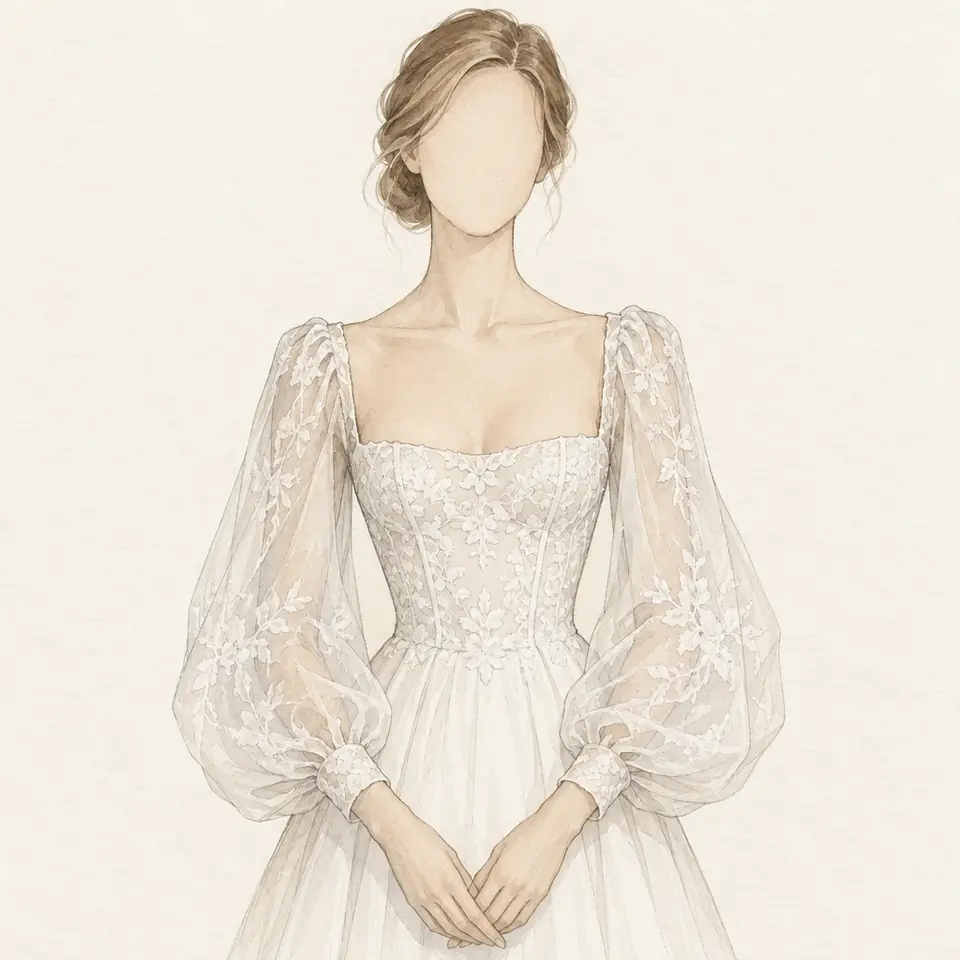
Bishop. Full through the lower arm and gathered into a cuff at the wrist. Romantic, with a Victorian or 1970s feeling.
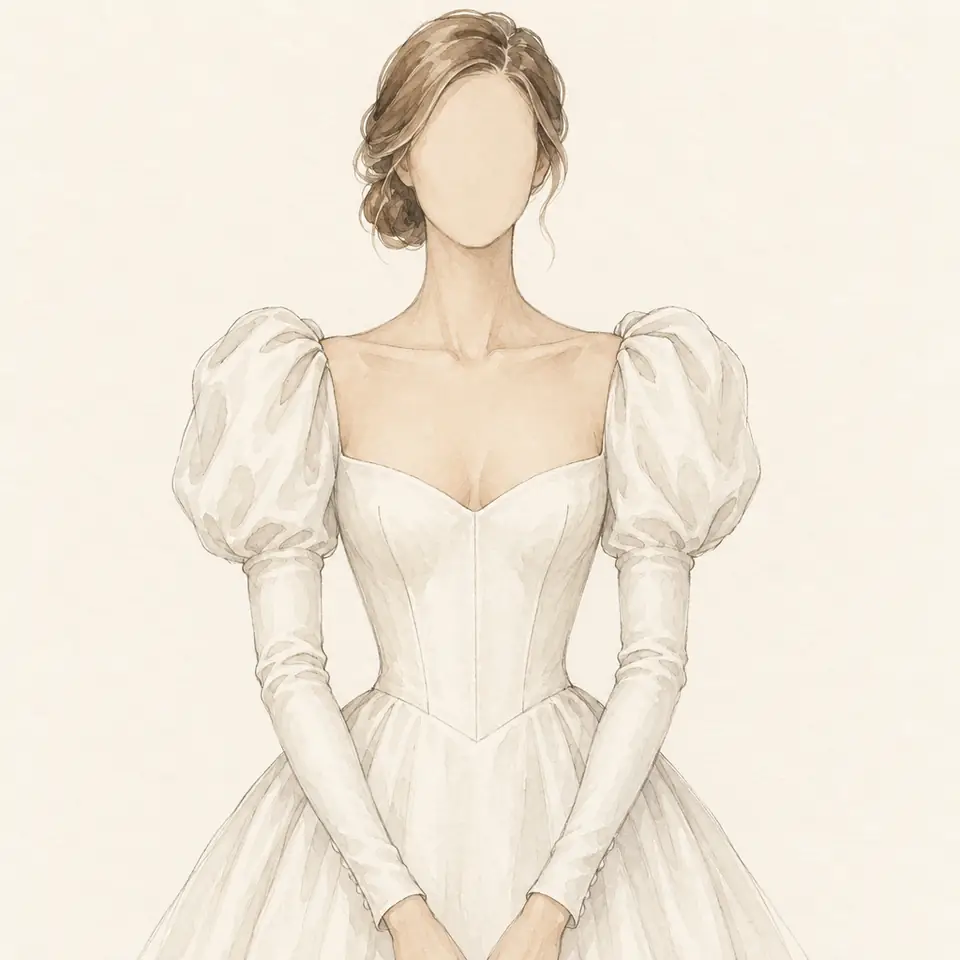
Juliet. Puffed at the shoulder and fitted from the elbow down. Renaissance-inspired.
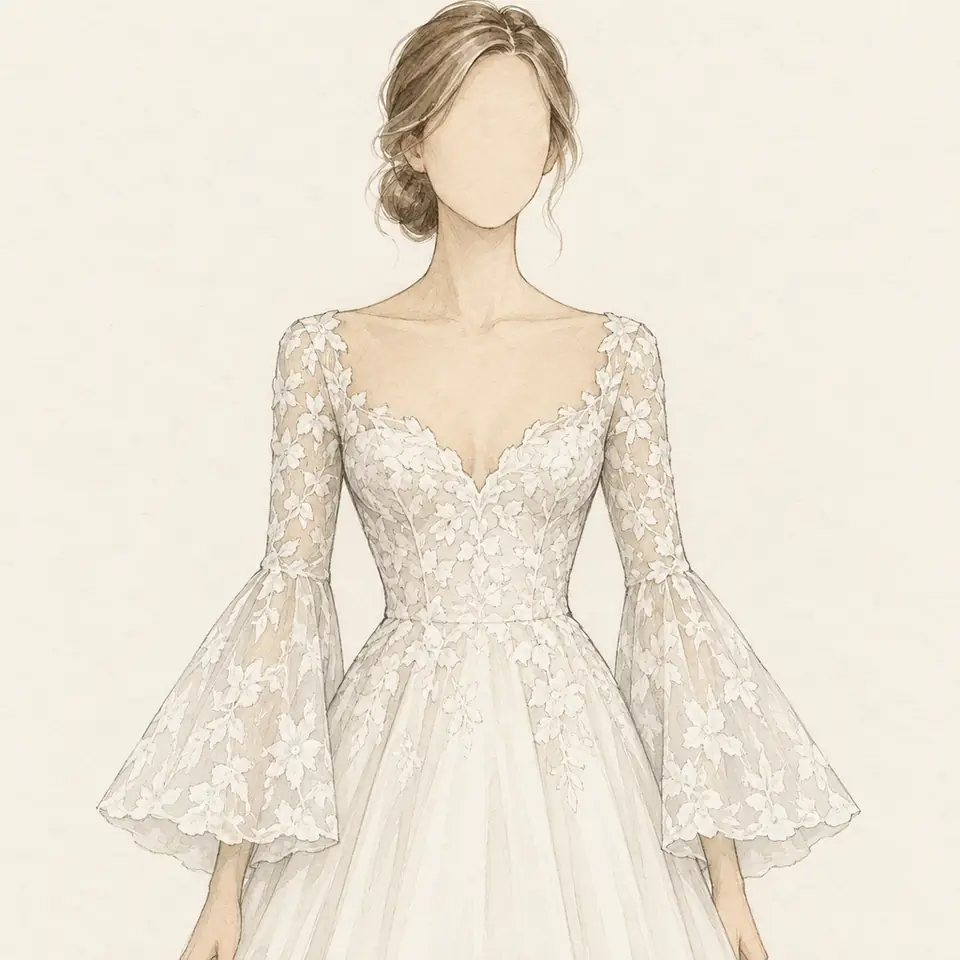
Bell. Fitted at the top and flaring from the elbow into a bell shape.
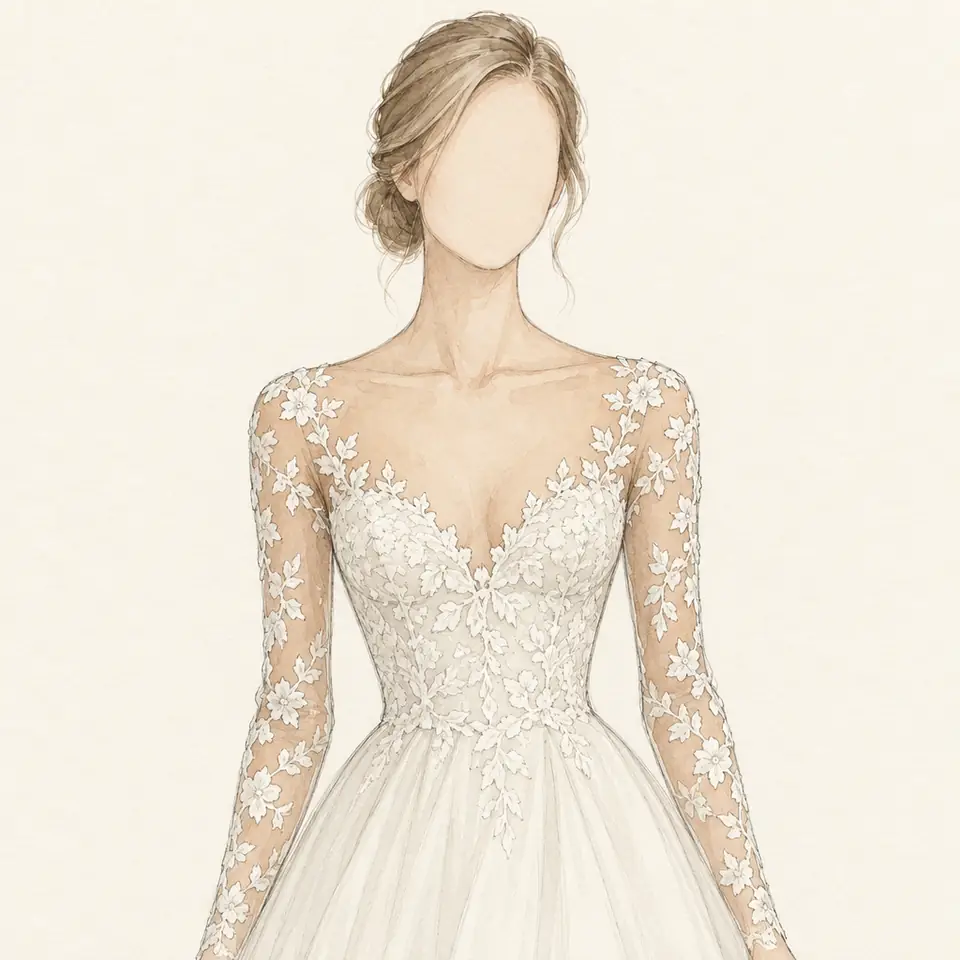
Illusion. Sheer sleeves of tulle, often with lace appliqués, that give coverage without weight.
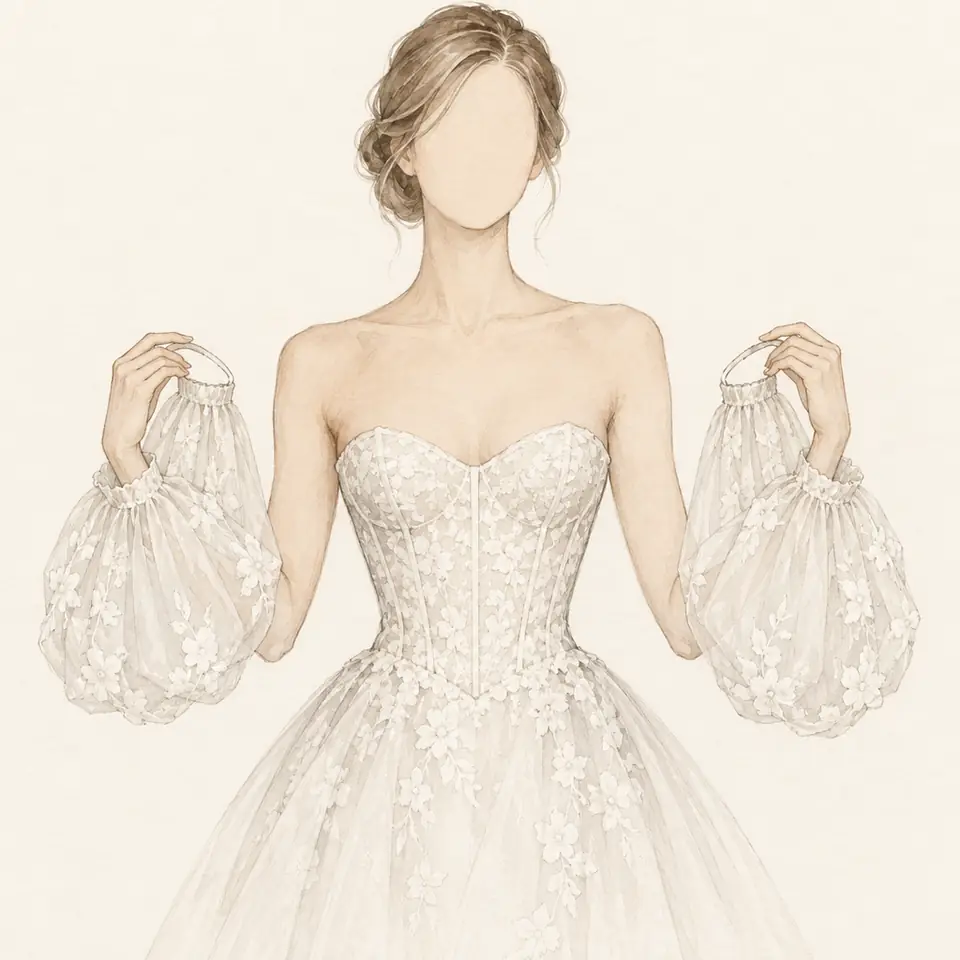
Detachable. Sleeves — or a matching bolero or cape — that can be removed for the reception. A useful way to satisfy a religious dress code for the ceremony and dance comfortably afterwards.
Waistlines
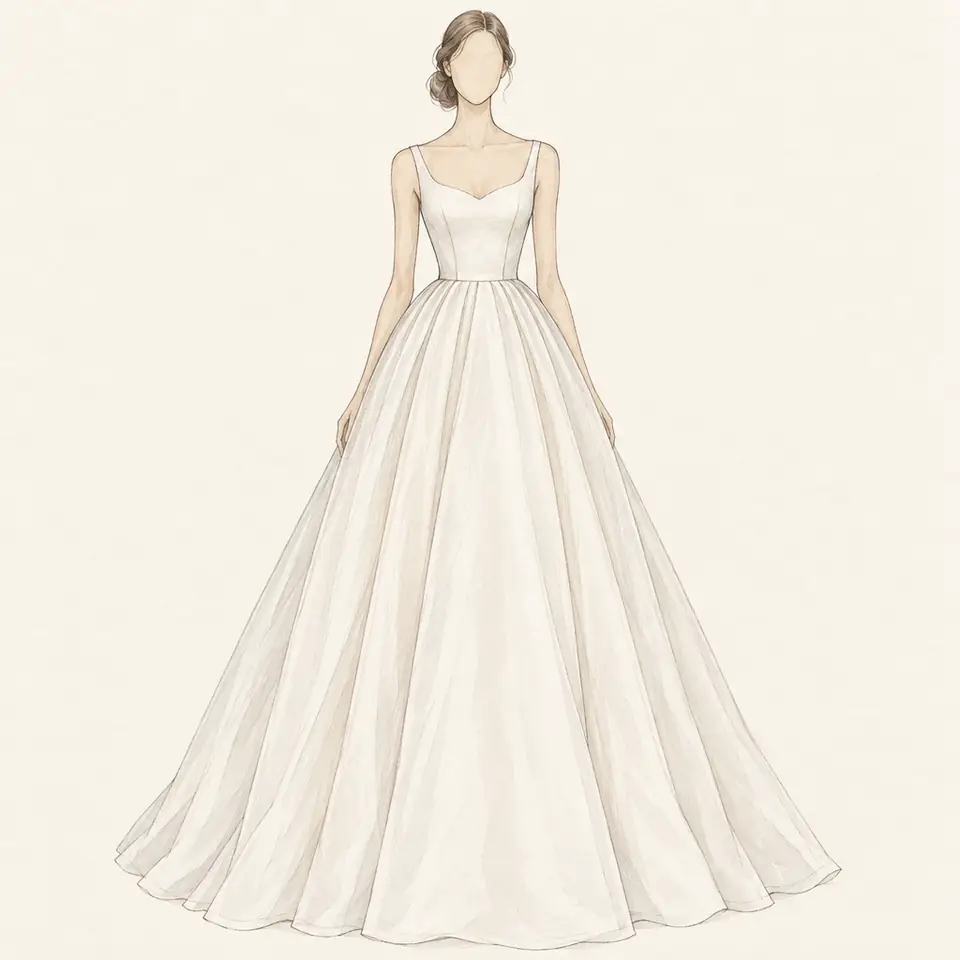
Natural. Sits at the narrowest part of the torso. The most common and most balanced.
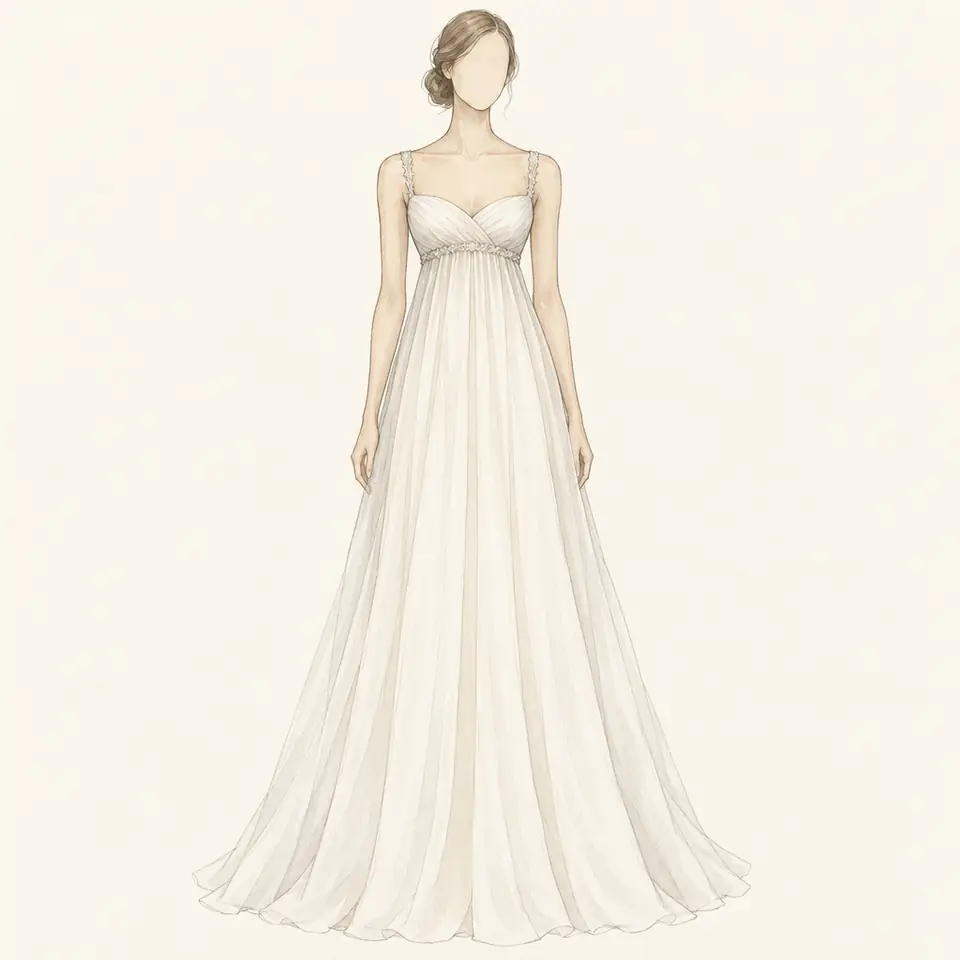
Empire. Sits just below the bust. Lengthens the legs and hides the waist entirely.
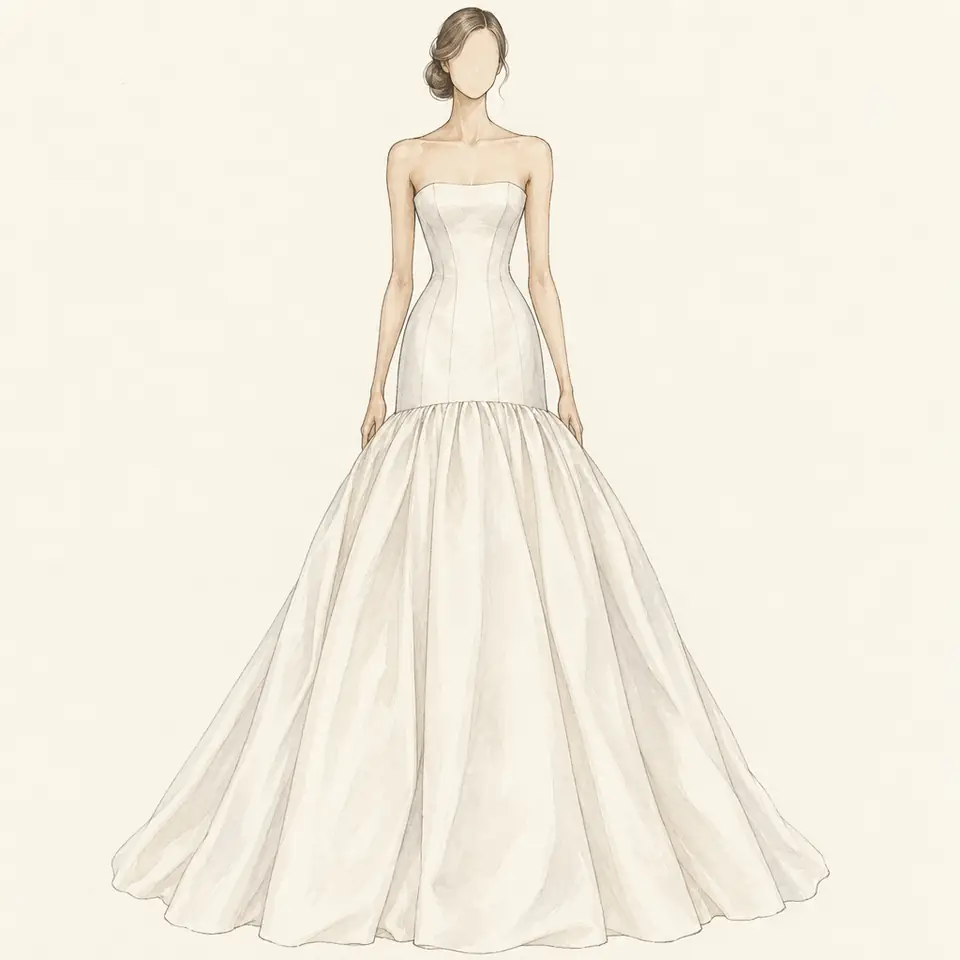
Dropped. Sits below the natural waist, around the hips. Lengthens the torso; suits a straight figure.
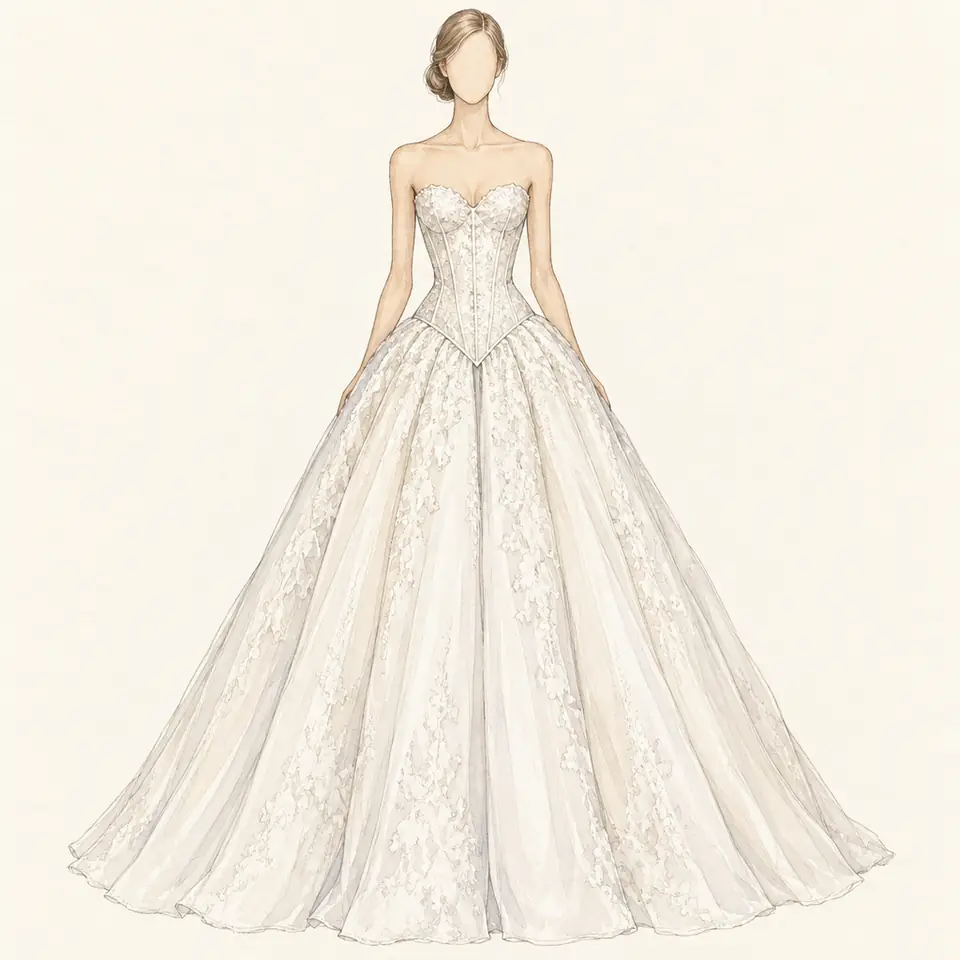
Basque. A dropped waist that dips to a point — a V — at the center front. Slimming and dramatic, especially on a ball gown.
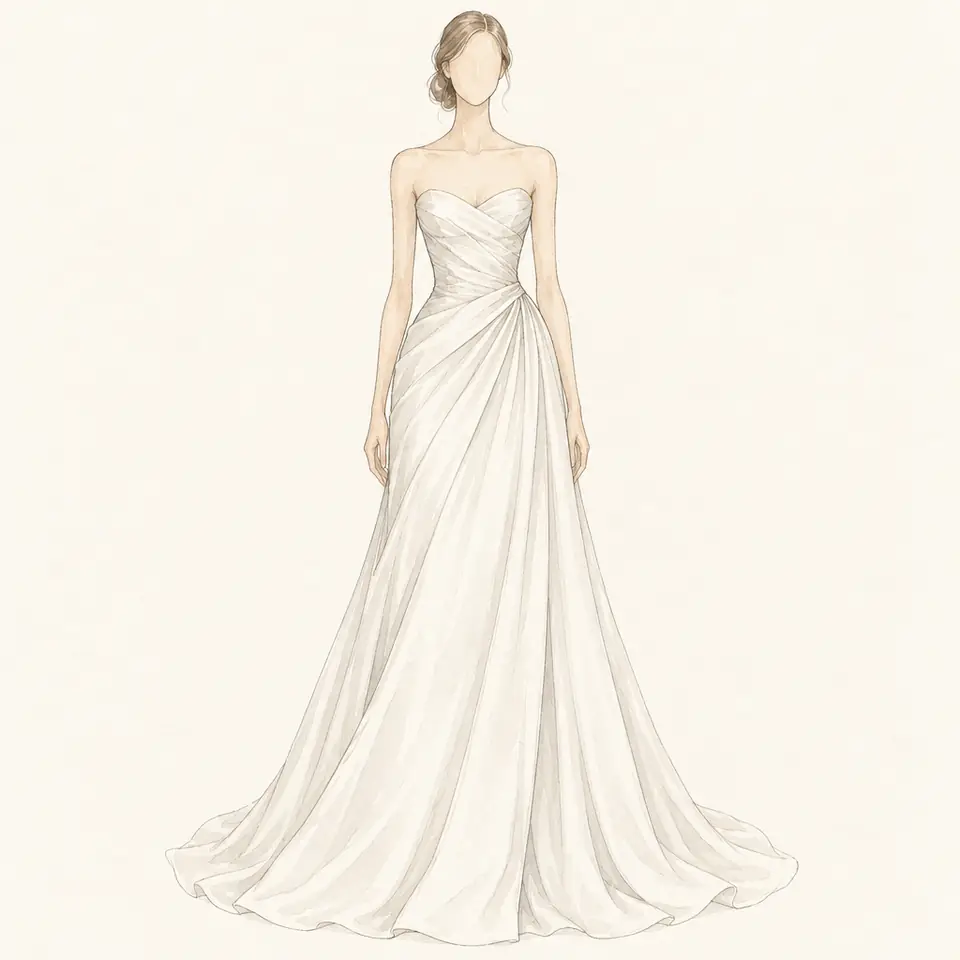
Asymmetric. Angled from one hip to the other, often with draping.
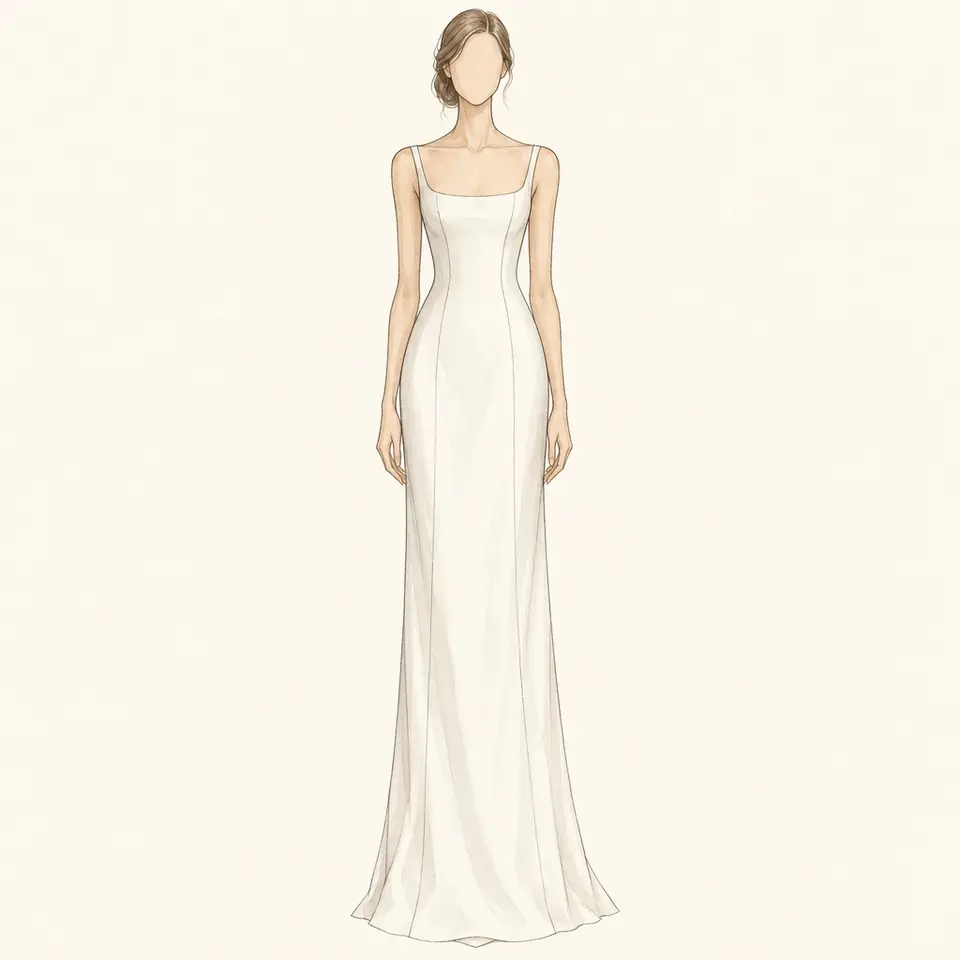
No waistline. Princess and sheath dresses may have no horizontal waist seam at all, relying on vertical seams and darts to shape the body.
Trains and bustles
The train is the part of the skirt that extends behind you on the floor. Lengths below are approximate: every maker measures slightly differently, some from the waist and some from the floor, so ask for the length in inches.
| Train | Roughly how far it extends behind you | Suits |
|---|---|---|
| Sweep or brush | Just brushes the floor — a few inches to a foot | Any wedding; easiest to manage |
| Court | About one to three feet | Formal and semi-formal weddings |
| Chapel | About three to four feet | The most popular length; formal weddings |
| Cathedral | About six to eight feet | Large churches and very formal ceremonies |
| Royal or monarch | Ten feet or more | State occasions; Princess Diana’s in 1981 ran to twenty-five feet |
Watteau trains fall from the shoulders or upper back rather than the waist, like a cape. Detachable trains unfasten after the ceremony.
Bustles lift the train off the floor for the reception, fastened with hooks, buttons or ribbons. An over-bustle (sometimes called an American bustle) pulls the train up and fastens it on the outside of the skirt, creating a gathered, draped effect; an under-bustle (French or Victorian) tucks and ties it underneath. Ask the seamstress to teach the person who will fasten it on the day, at the final fitting.
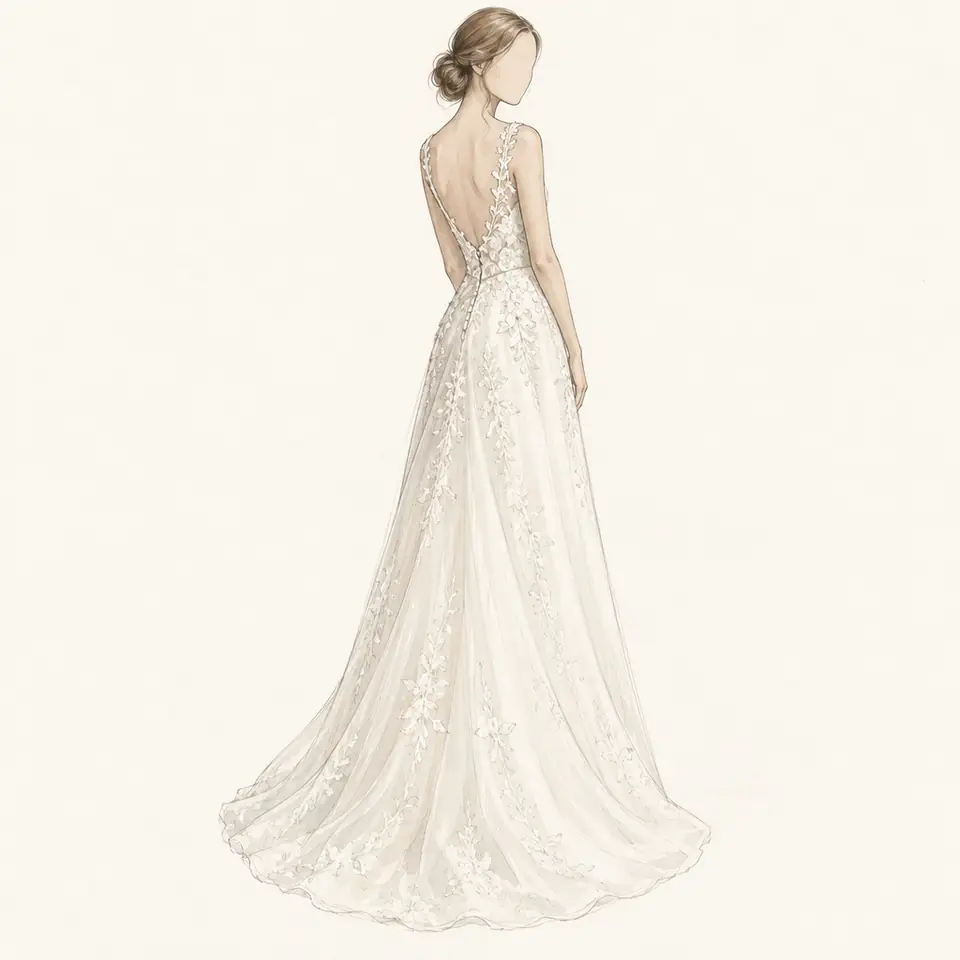 Sweep
Sweep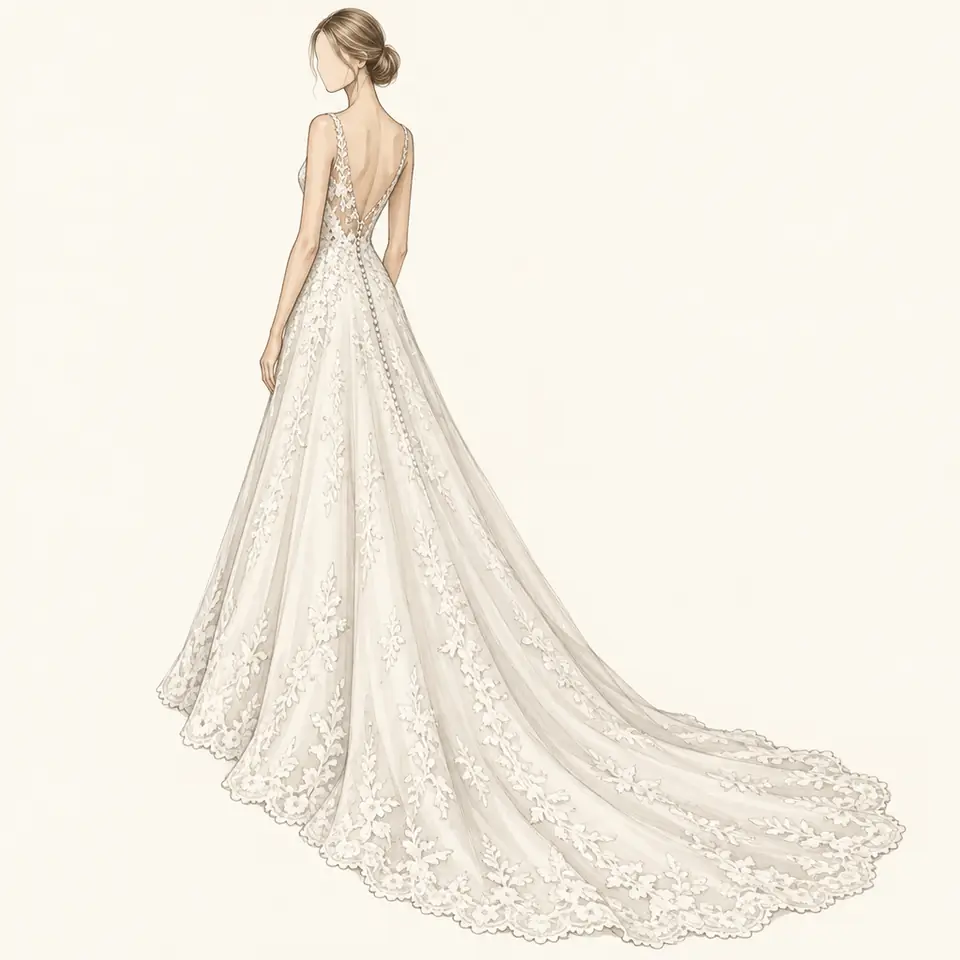 Court
Court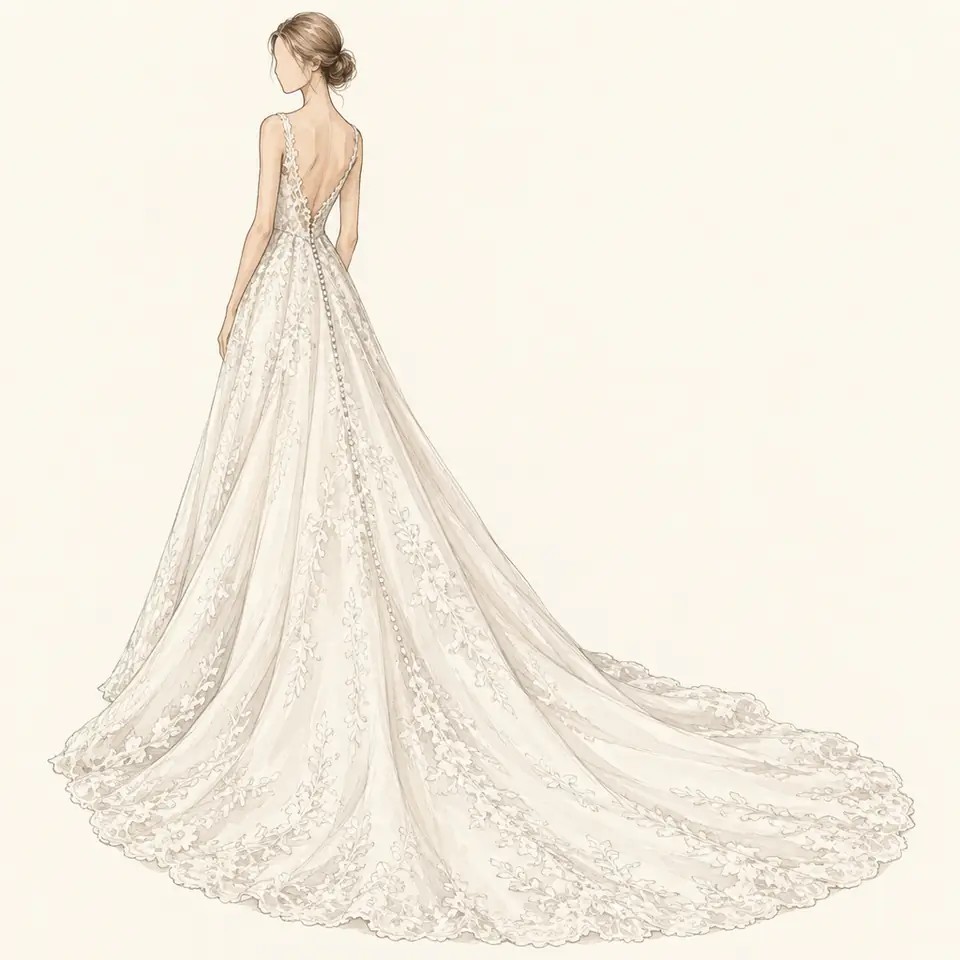 Chapel
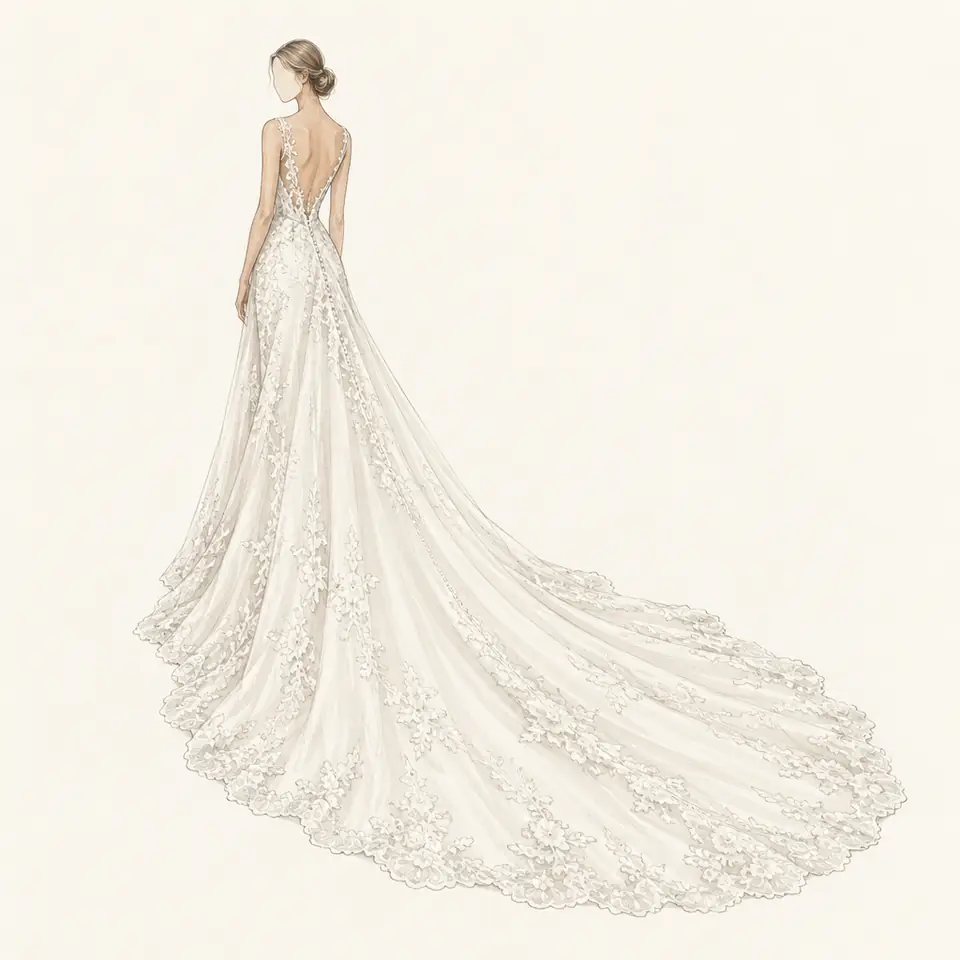 Cathedral
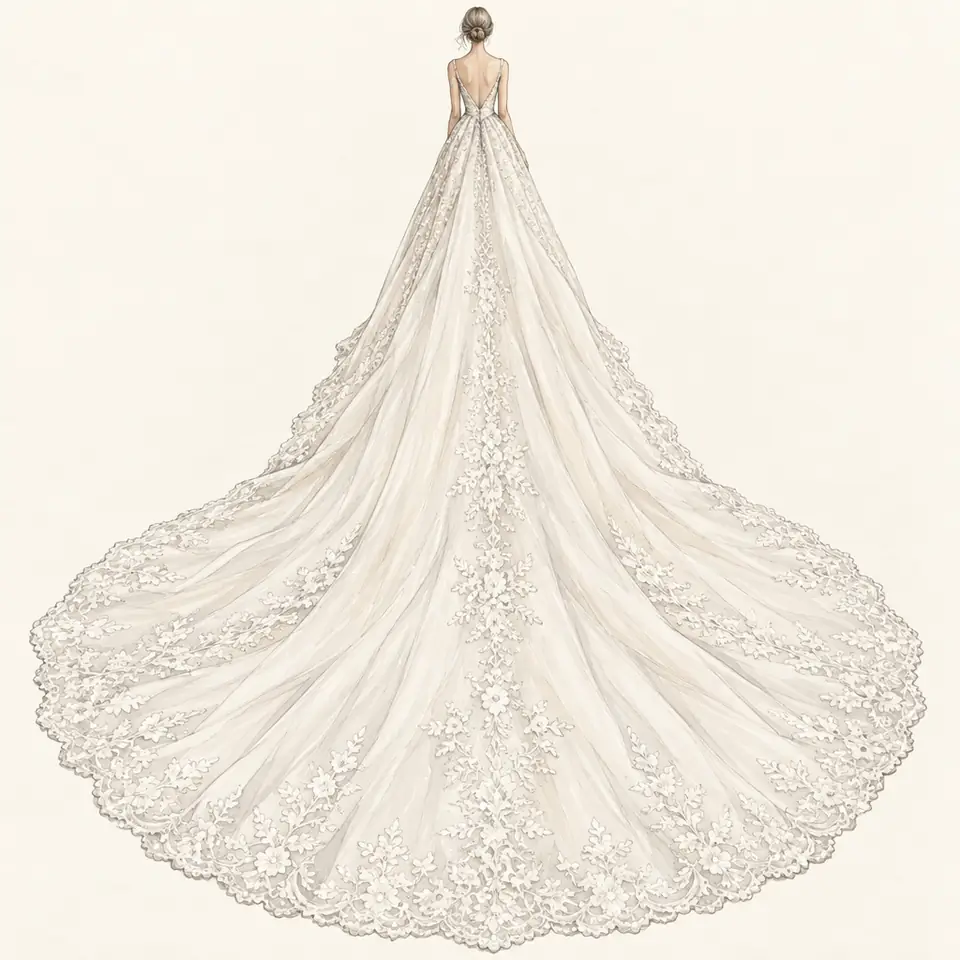 Royal
Royal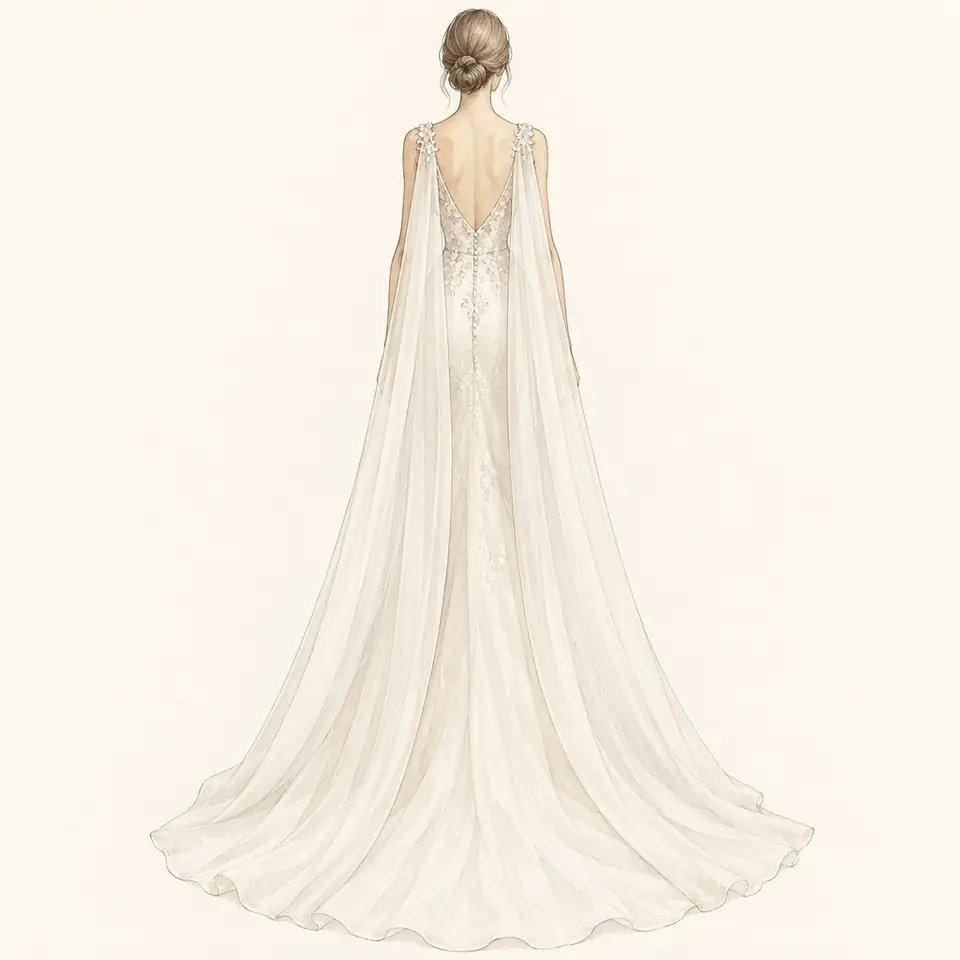 Watteau
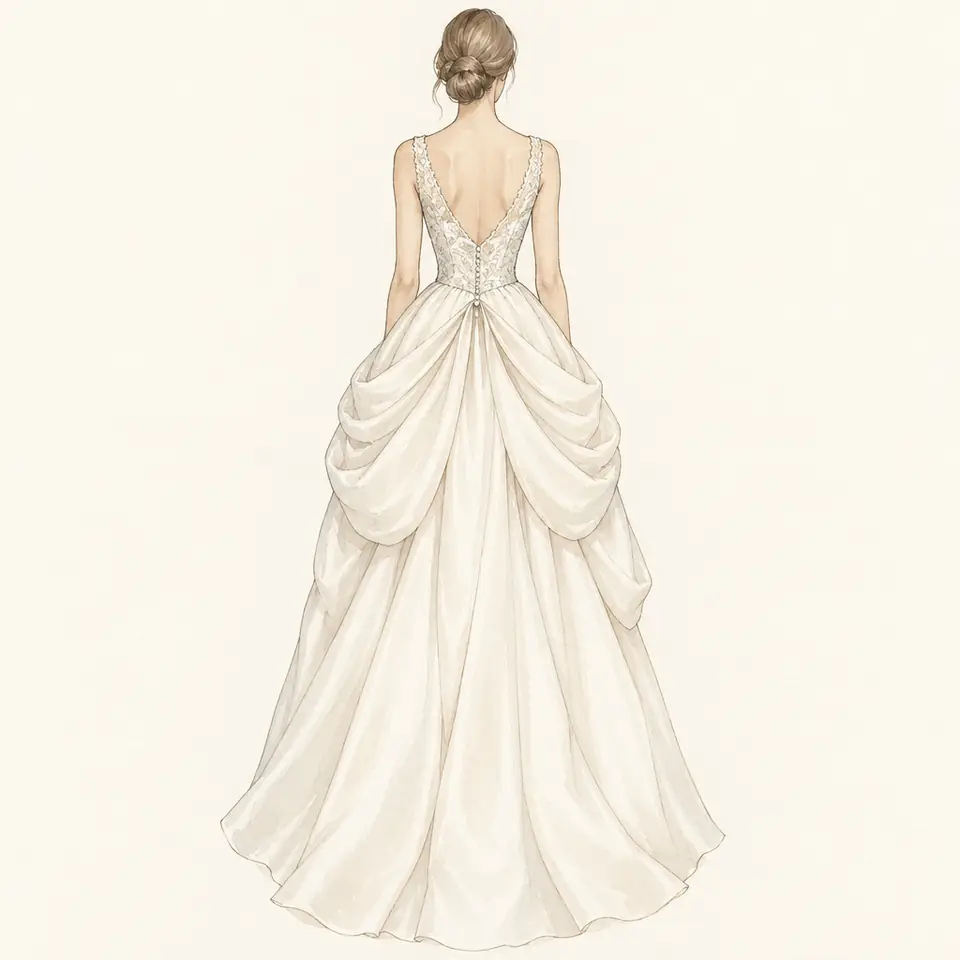 Over-bustle
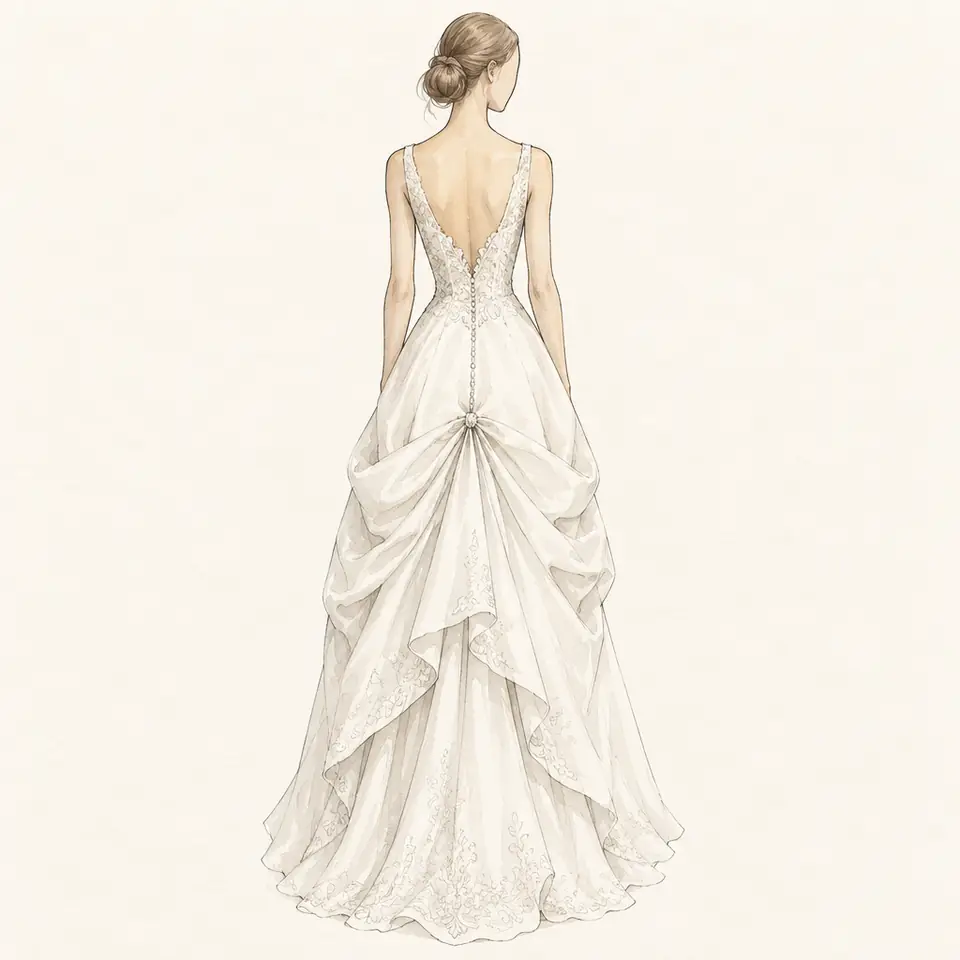 Under-bustle
Veils
Veils are chosen with the dress, not after it: the veil should never be longer than the train, and it should fall where it frames the most beautiful part of the dress — often the back. Lengths are approximate and depend on your height and where the veil is placed on your head.
| Veil | Roughly | Notes |
|---|---|---|
| Birdcage | Covers the eyes or the face to the chin | Netting on a comb; vintage and chic with shorter dresses |
| Blusher | About 25–30 inches, worn over the face | Lifted after the vows; often part of a two-tier veil |
| Shoulder (flyaway) | About 20 inches | Short, playful, several layers |
| Elbow | About 25–32 inches | Ends at the elbow or waist; suits detailed bodices |
| Fingertip | About 36–42 inches | The most popular; ends at the fingertips with arms relaxed |
| Waltz (ballet) | Between knee and ankle | Easy to dance in; lovely in motion |
| Chapel | About 90 inches | Reaches the floor with a short sweep behind |
| Cathedral | About 108–120 inches or more | Extends well beyond the train; the most dramatic |
Mantilla veils are circular, lace-edged veils worn further forward on the head and framing the face, rooted in Spanish tradition. Juliet caps are close-fitting caps from which the veil falls.
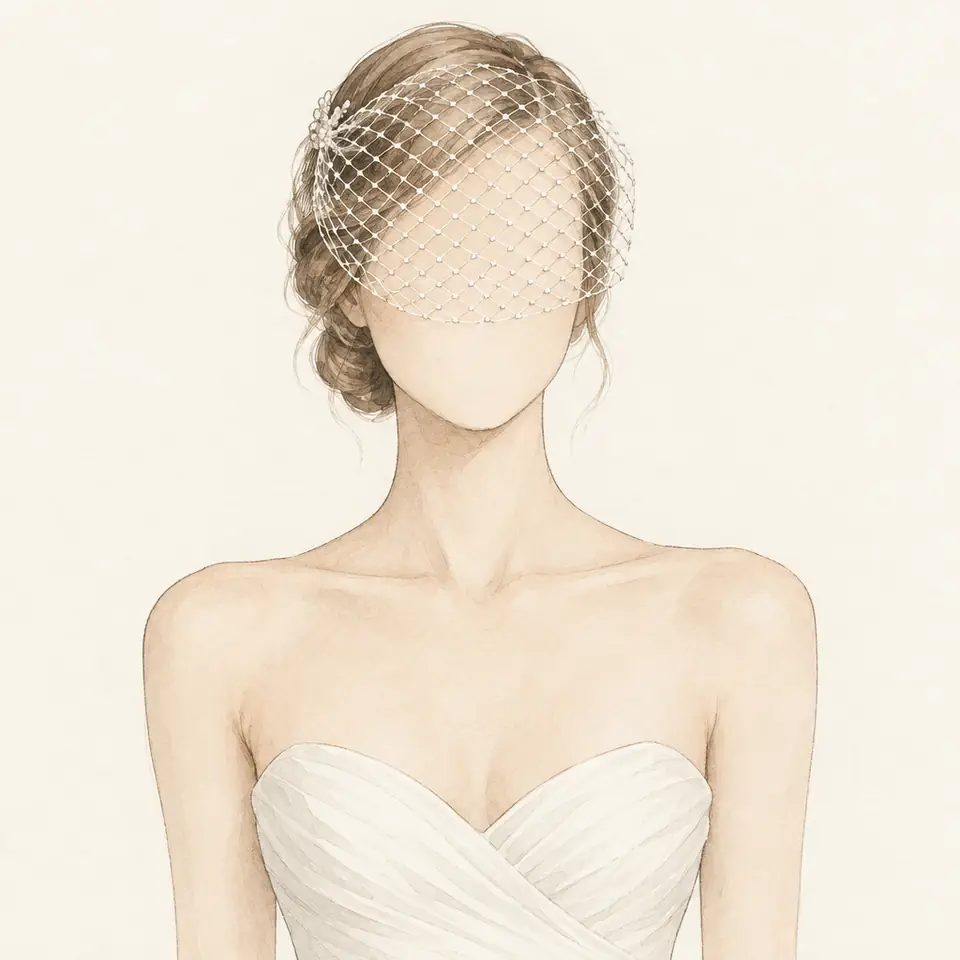 Birdcage
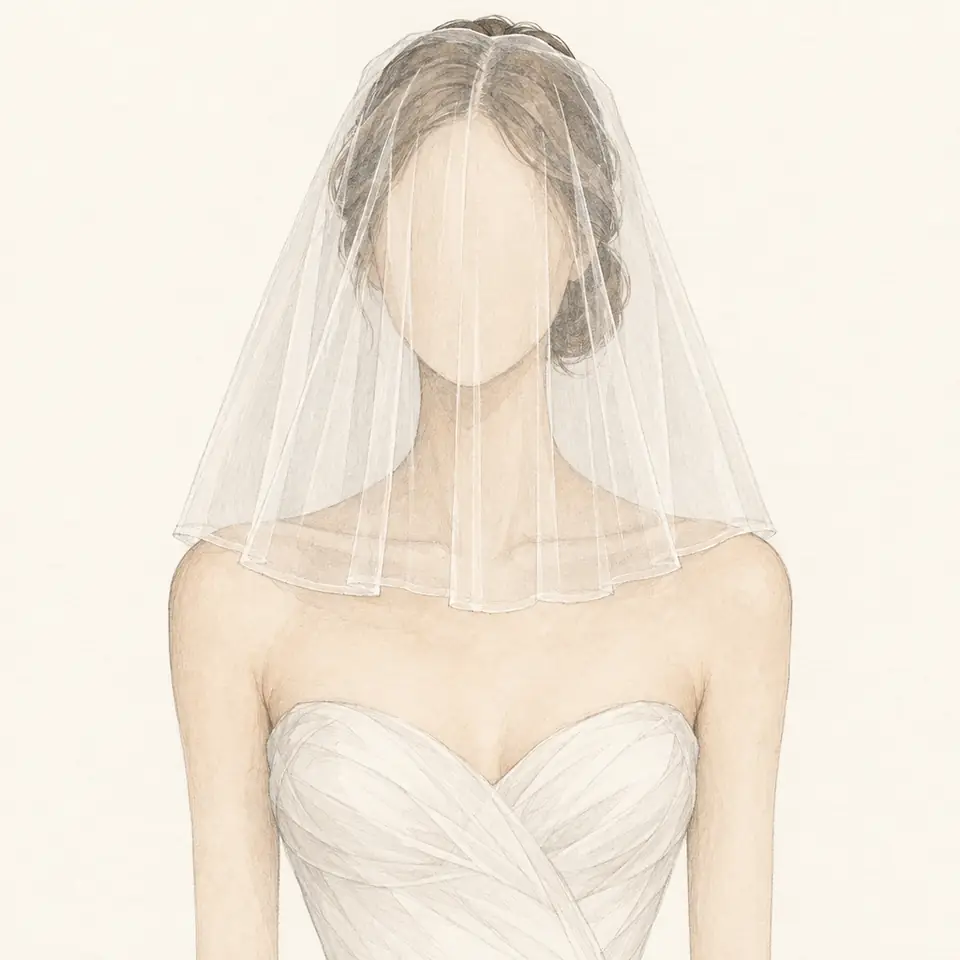 Blusher
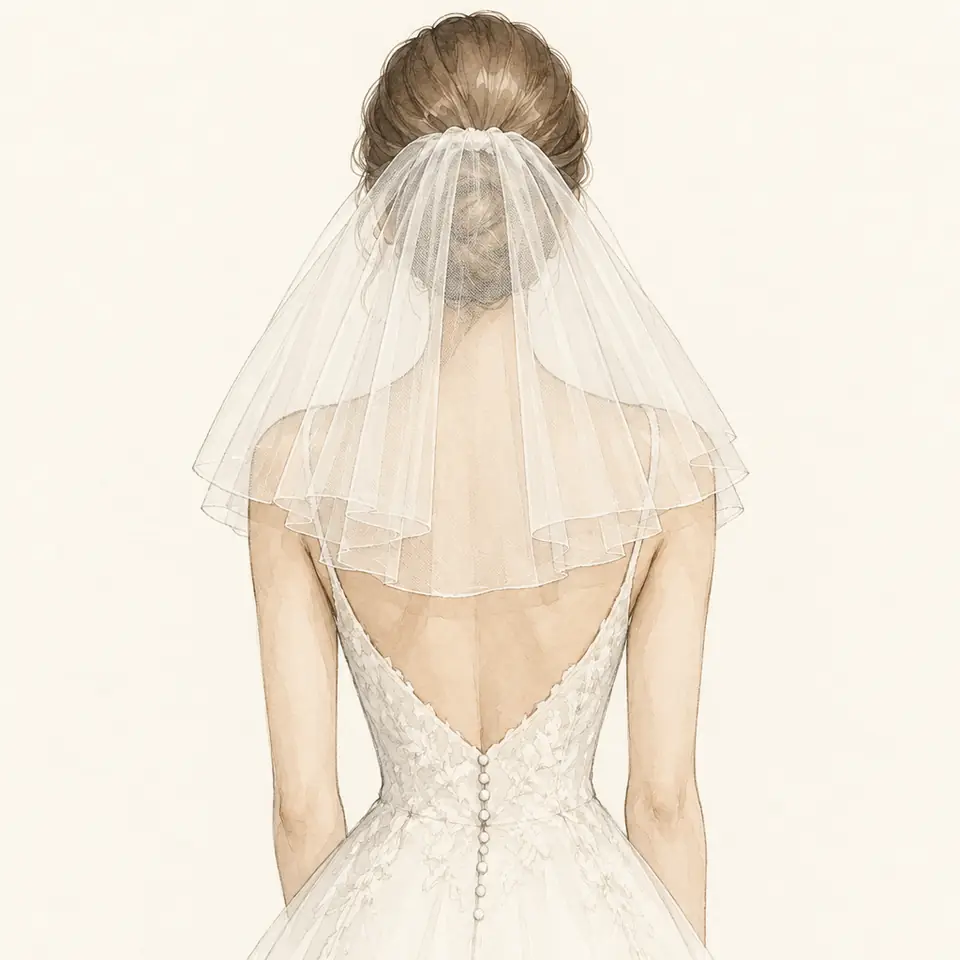 Shoulder
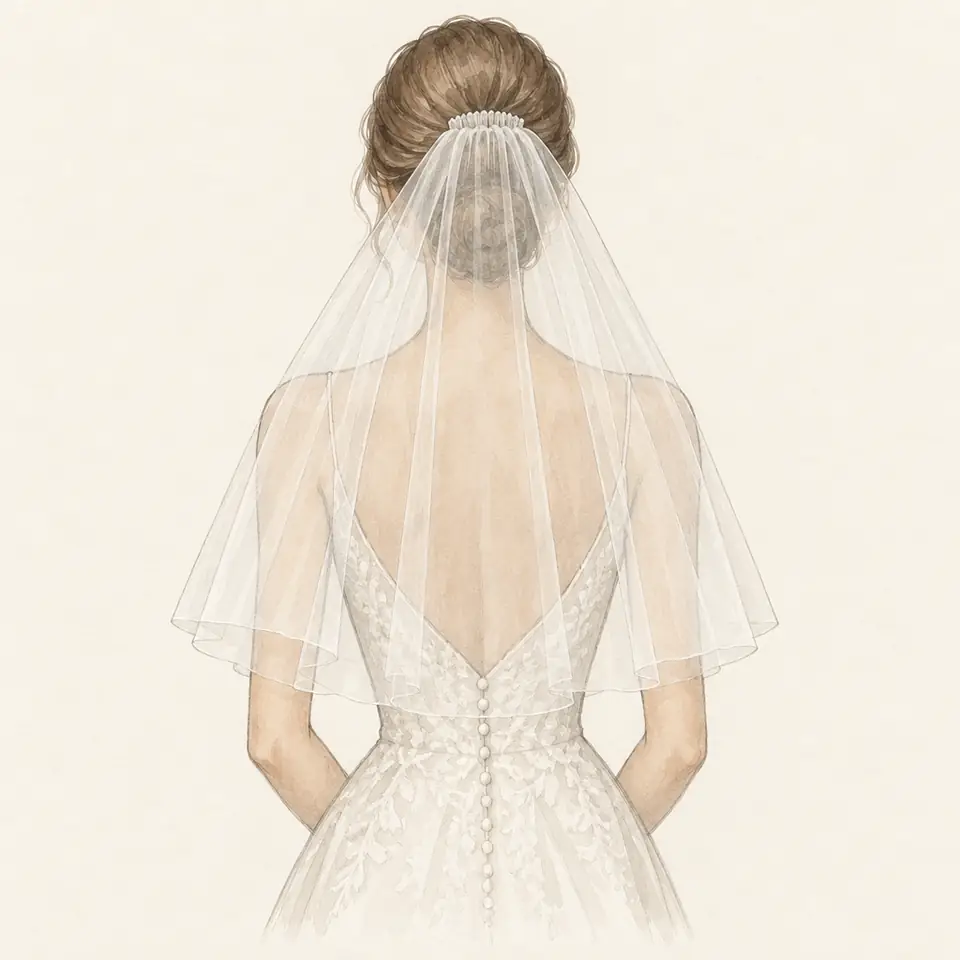 Elbow
Elbow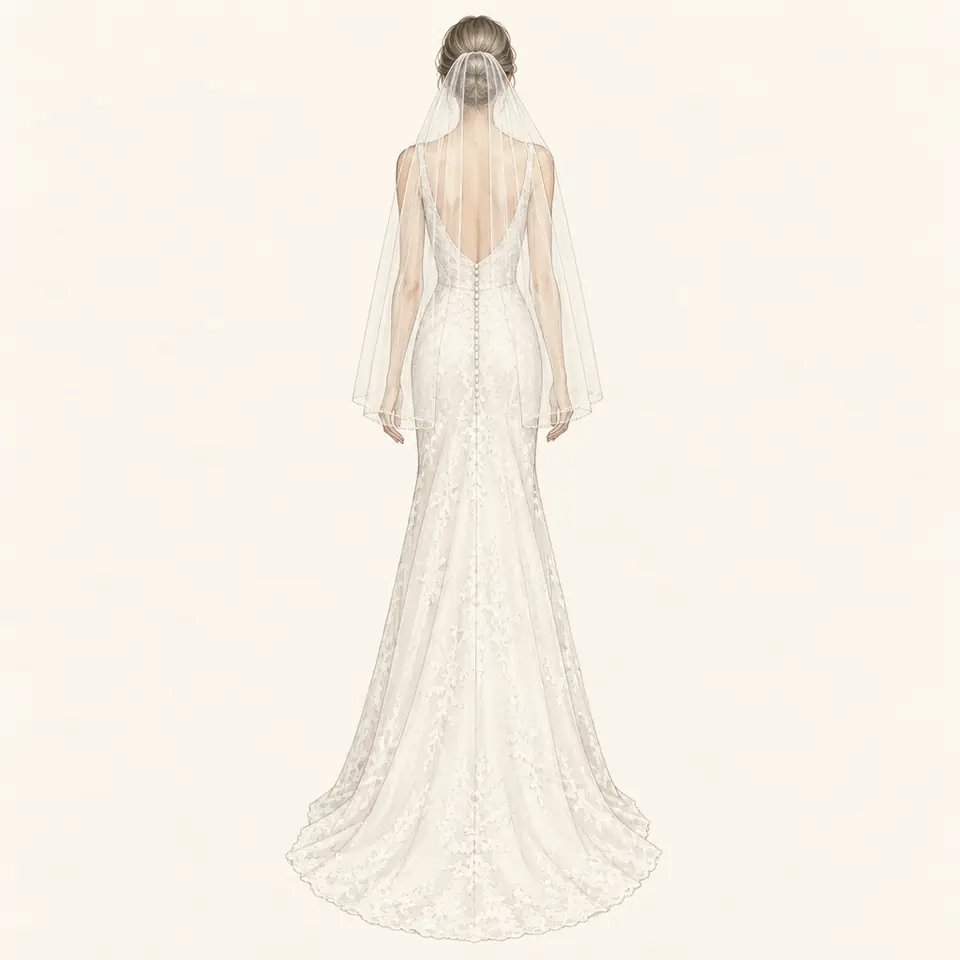 Fingertip
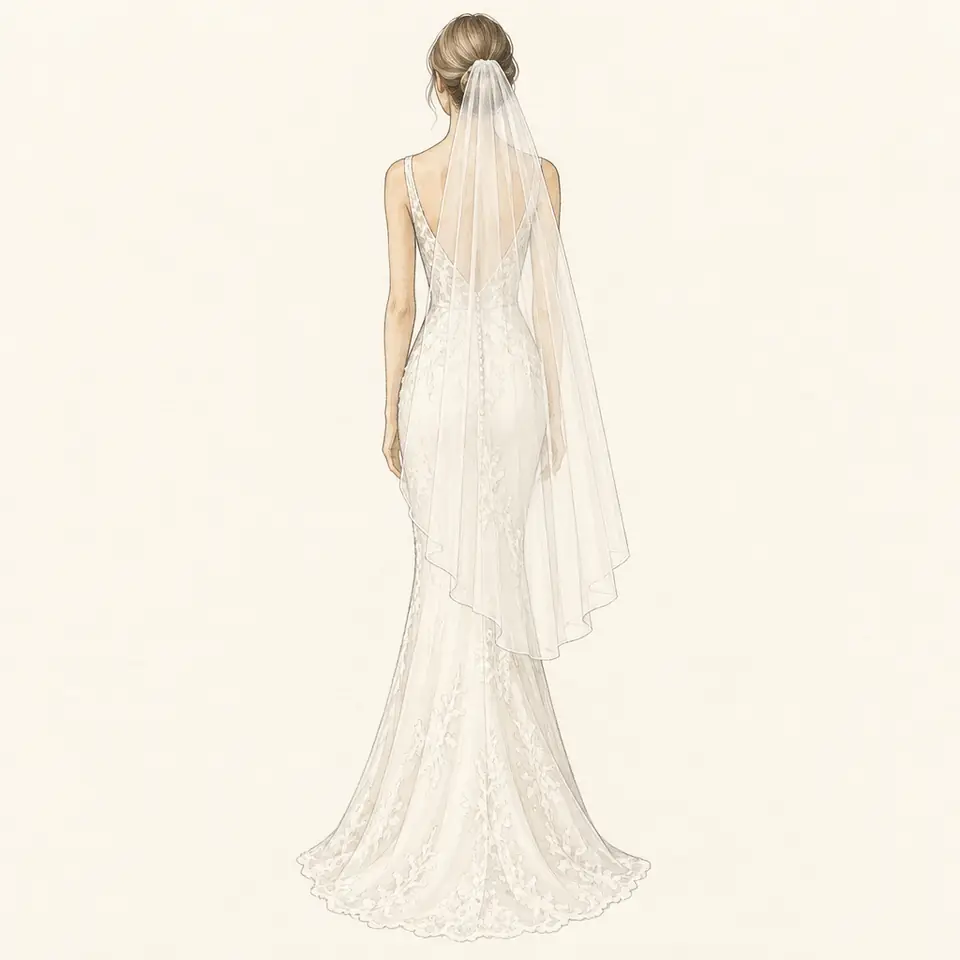 Waltz
Waltz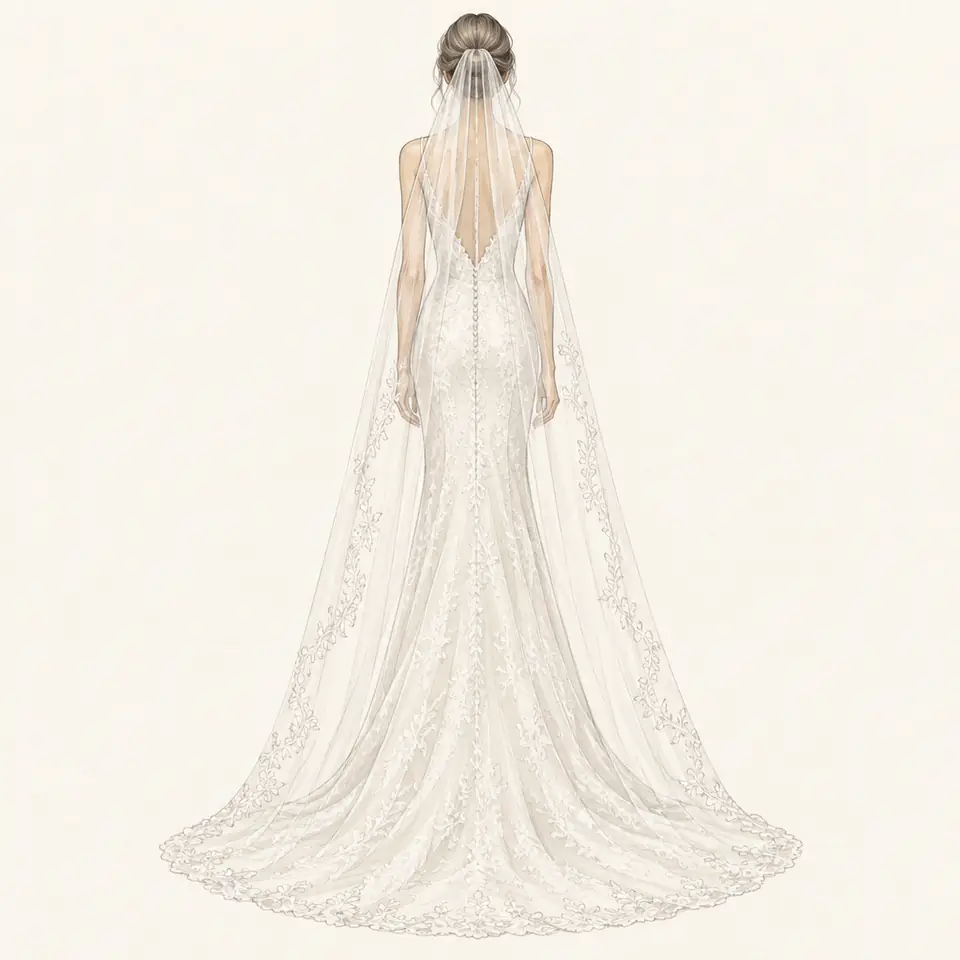 Chapel
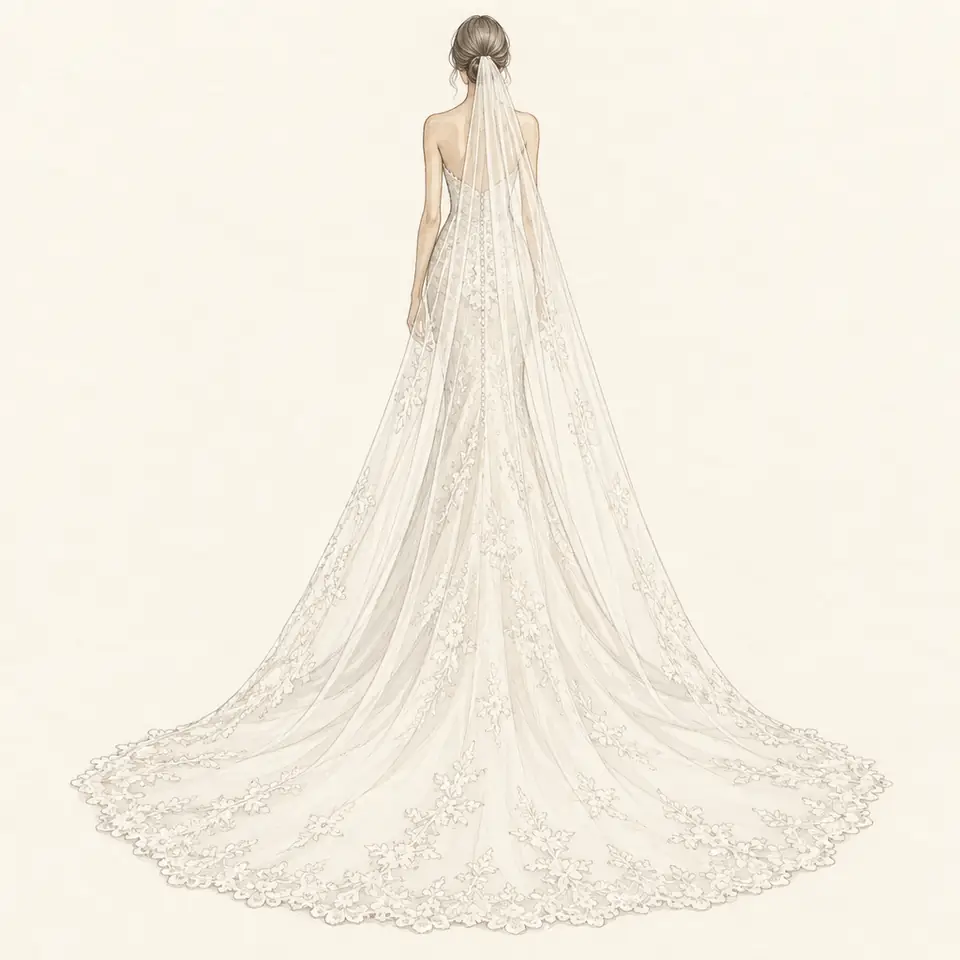 Cathedral
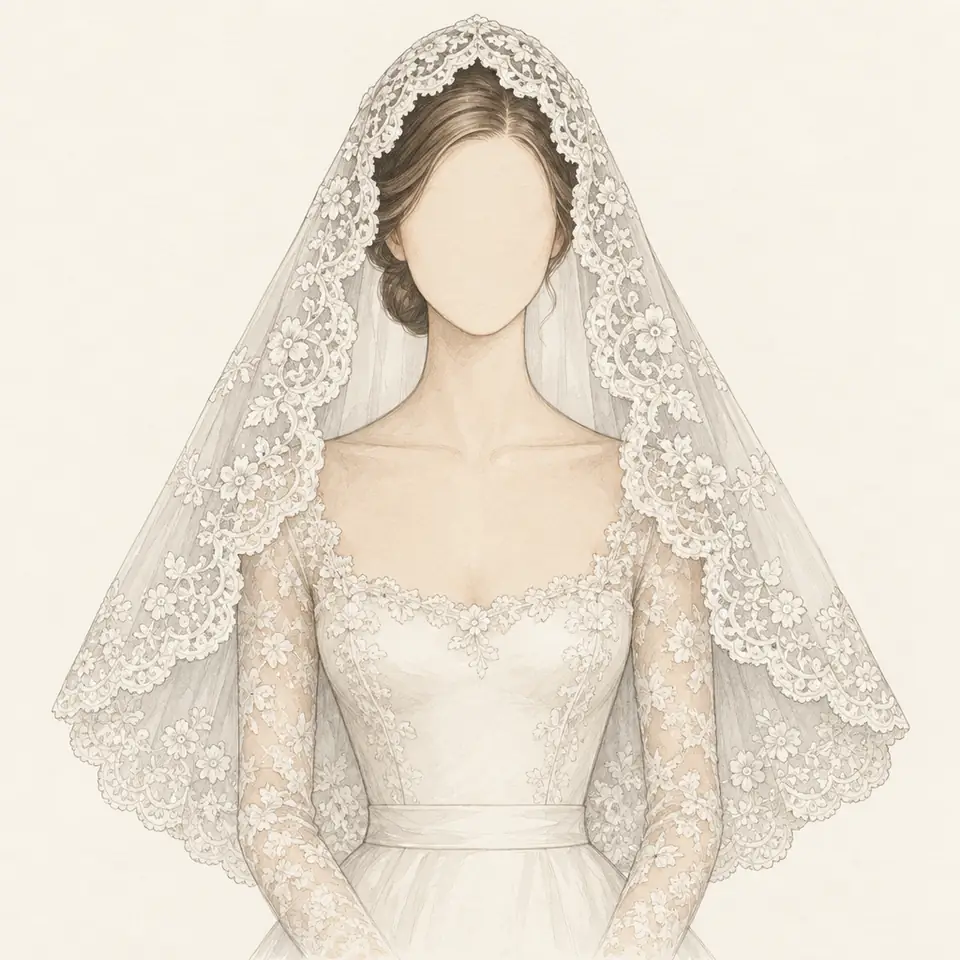 Mantilla
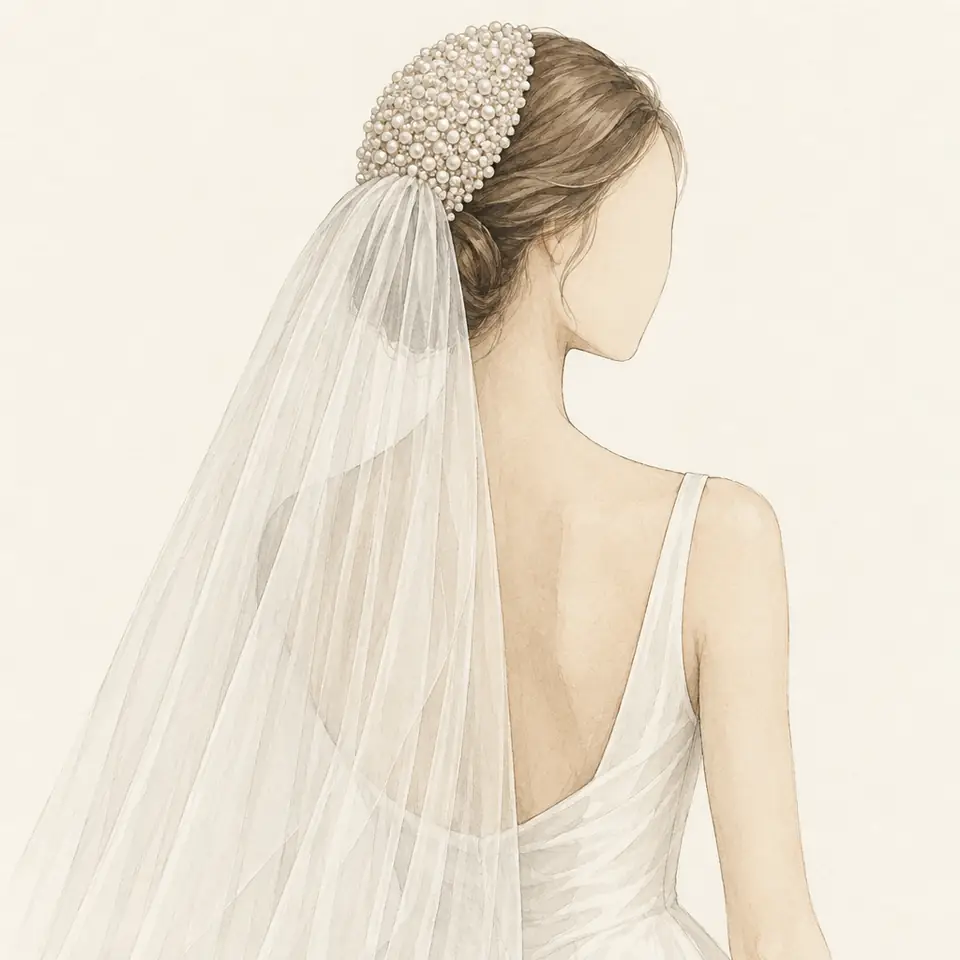 Juliet cap
Headpieces
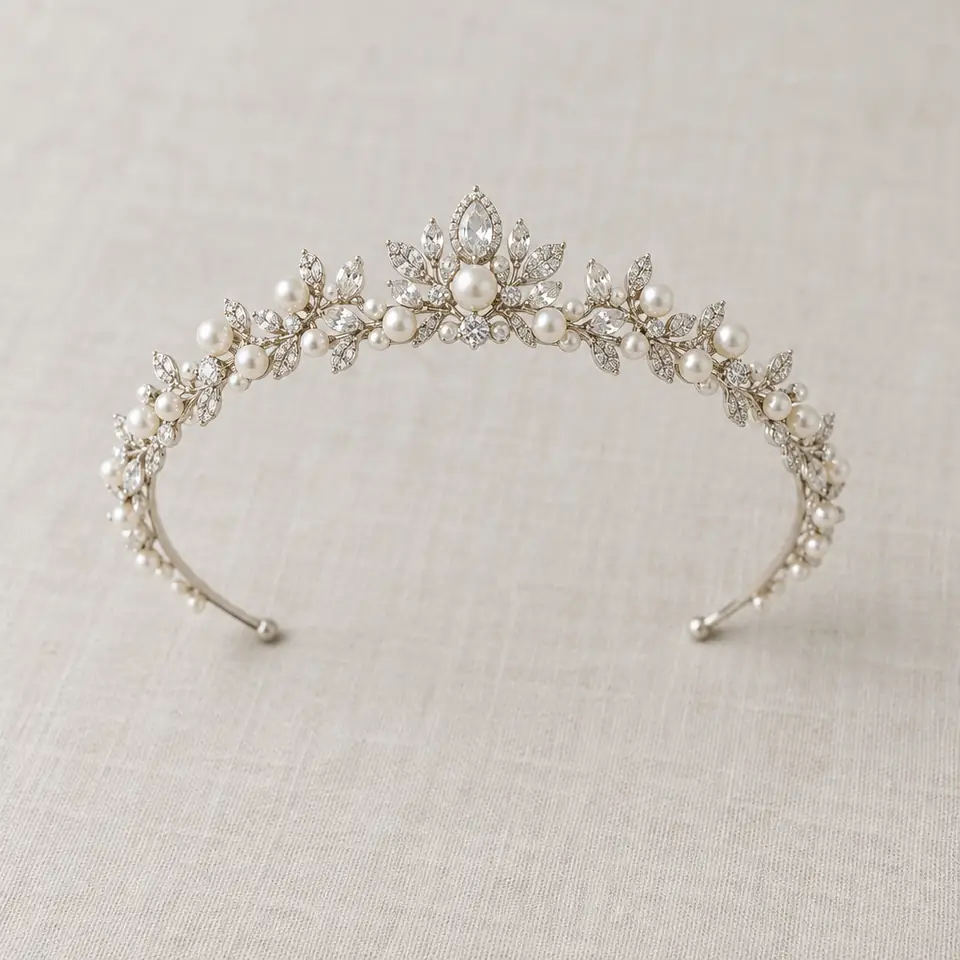
Tiara. A decorative band, open at the back, worn on top of the head. Formal; most beautiful with an updo.
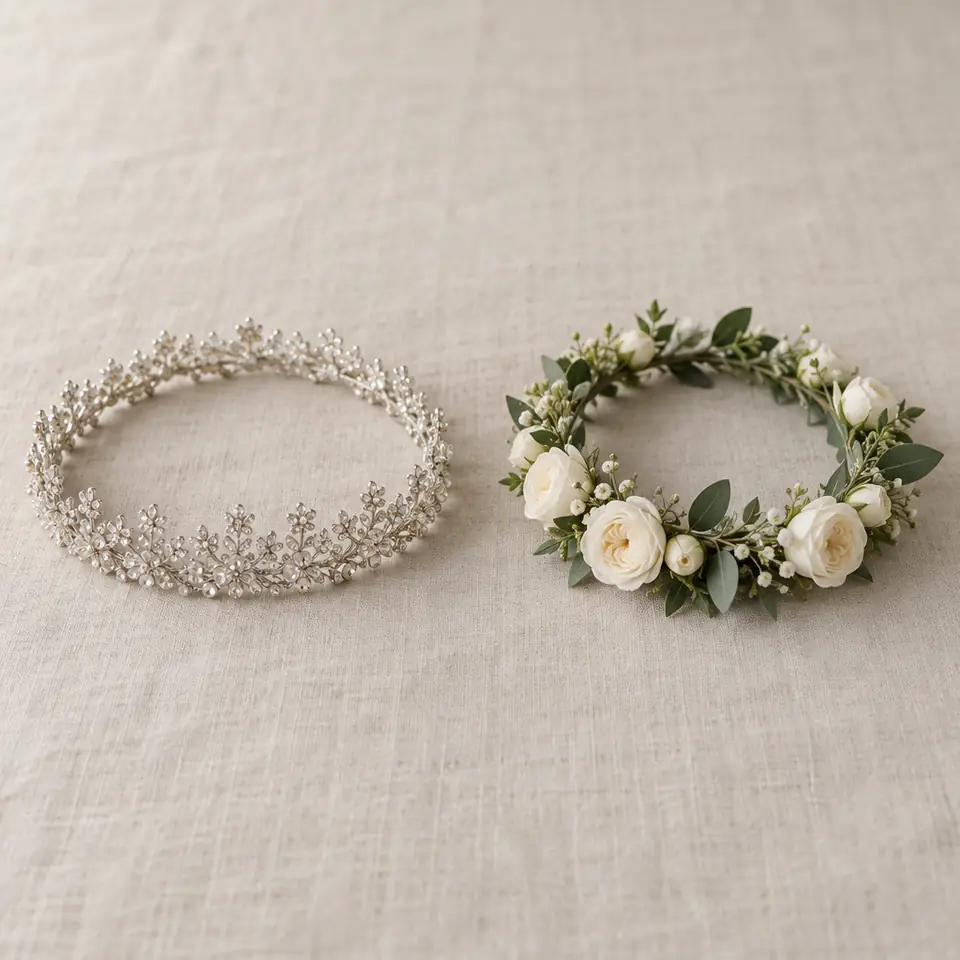
Crown. A complete circle. A floral crown is its garden-party relation.
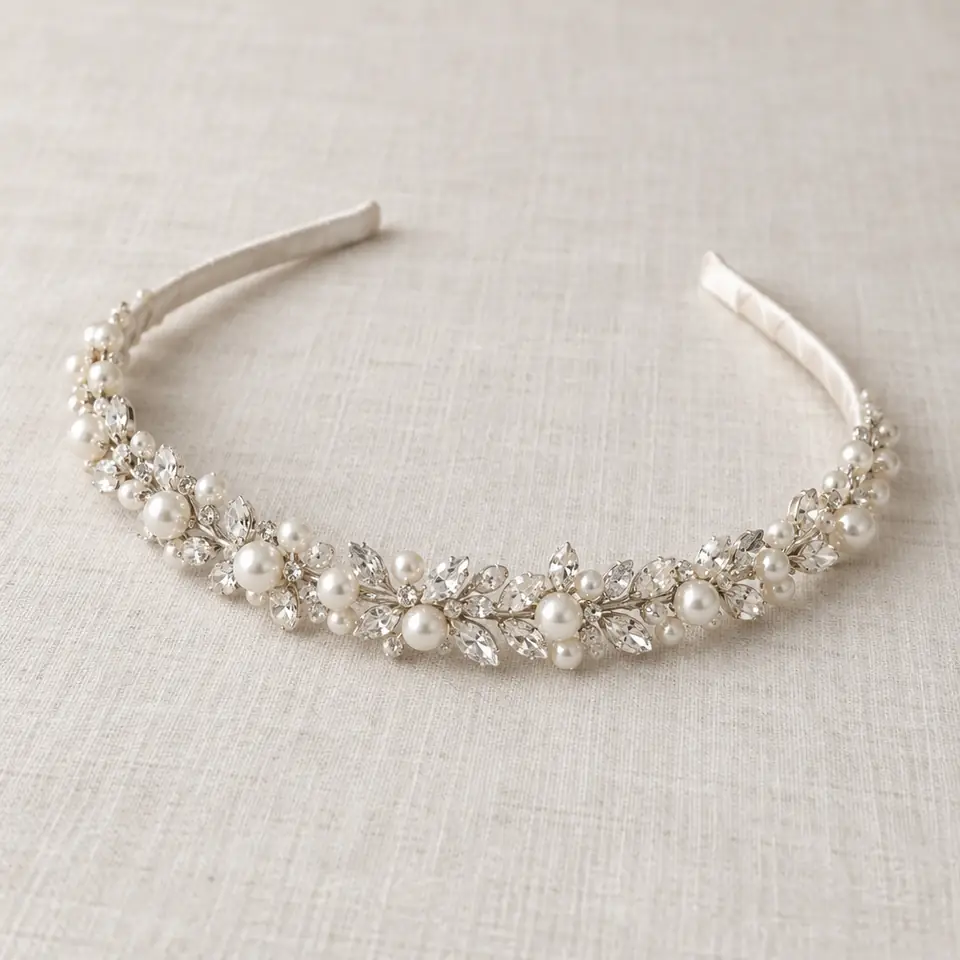
Headband. A band worn across the top of the head, from simple satin to beaded and jeweled. Holds the hair back while leaving it down behind.
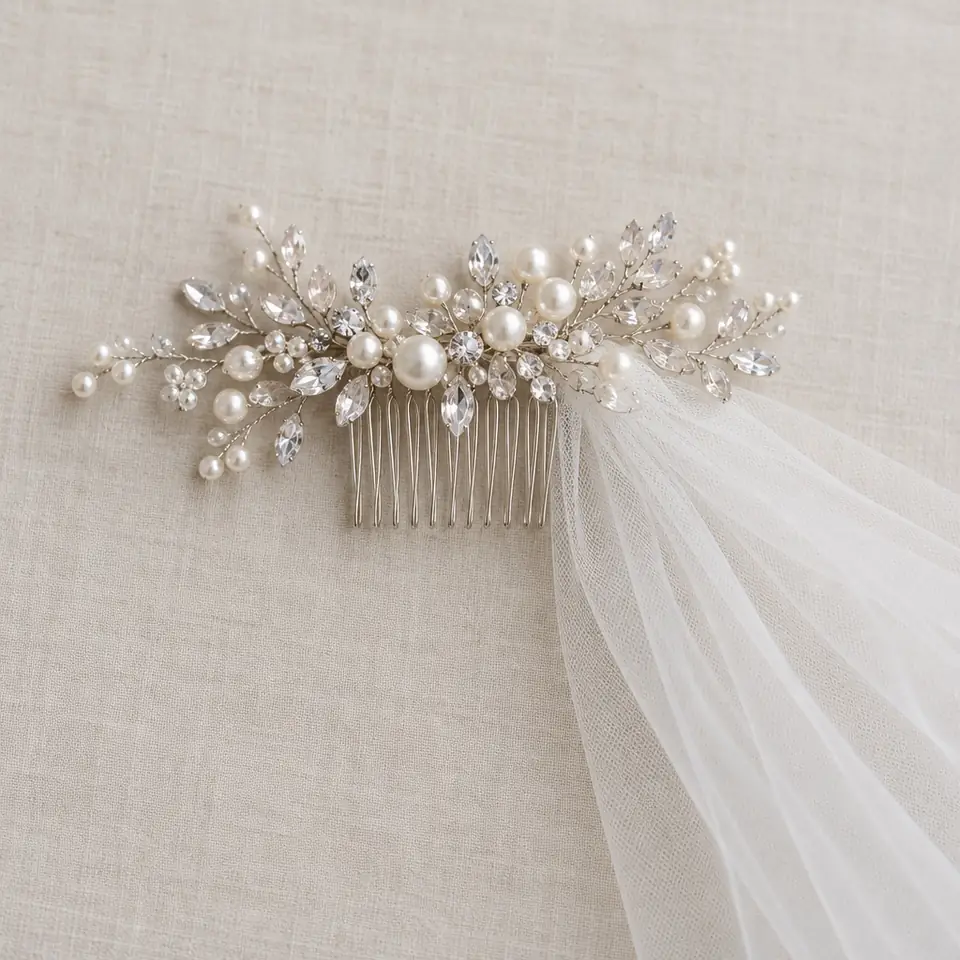
Comb. A decorative comb set into an updo or at the side. Veils are often attached to a comb.
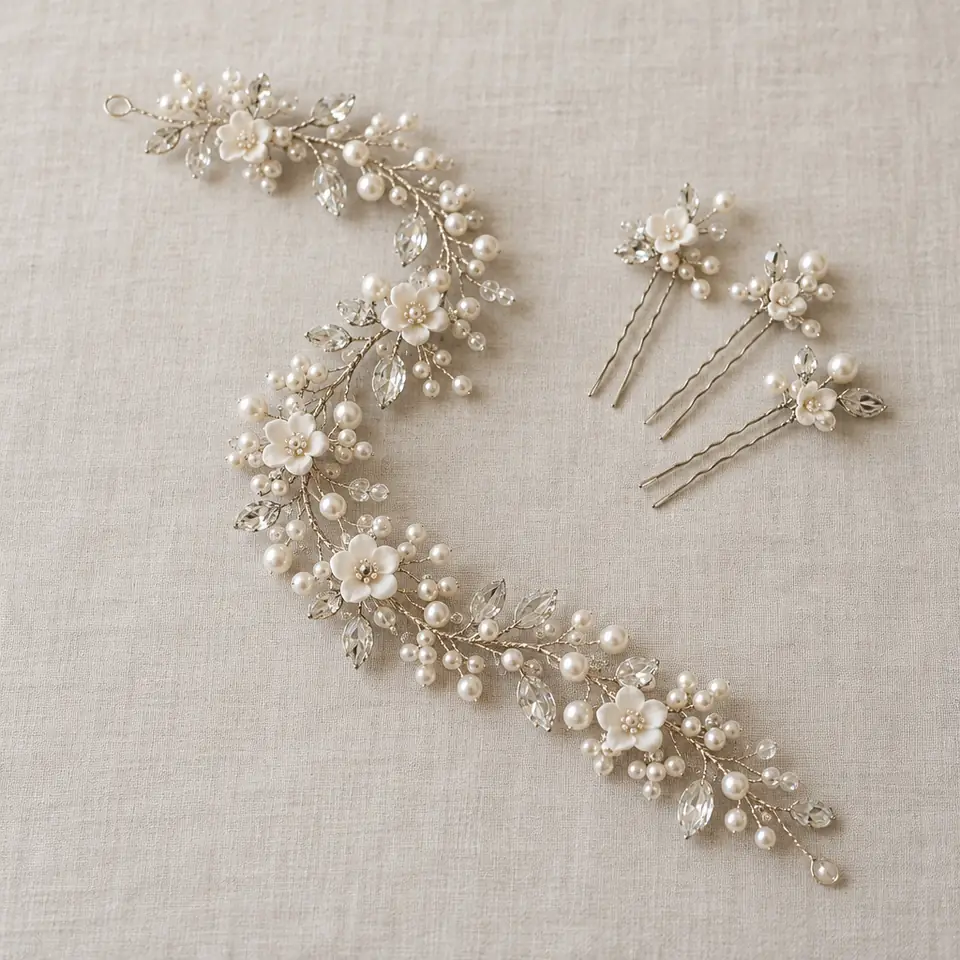
Hair vine and pins. A flexible wire of pearls, crystals or flowers woven through the hair, or a scattering of decorative pins. Delicate and modern.
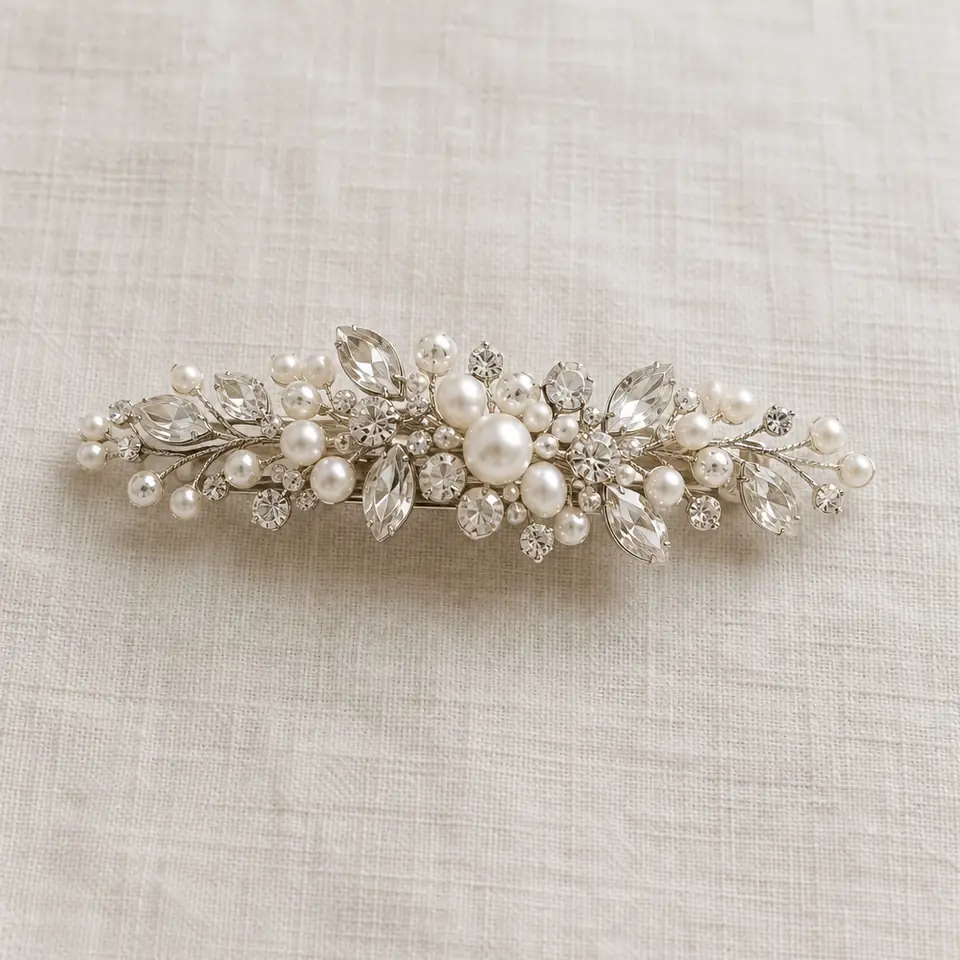
Barrette or clip. A single decorative clip holding back one or both sides.
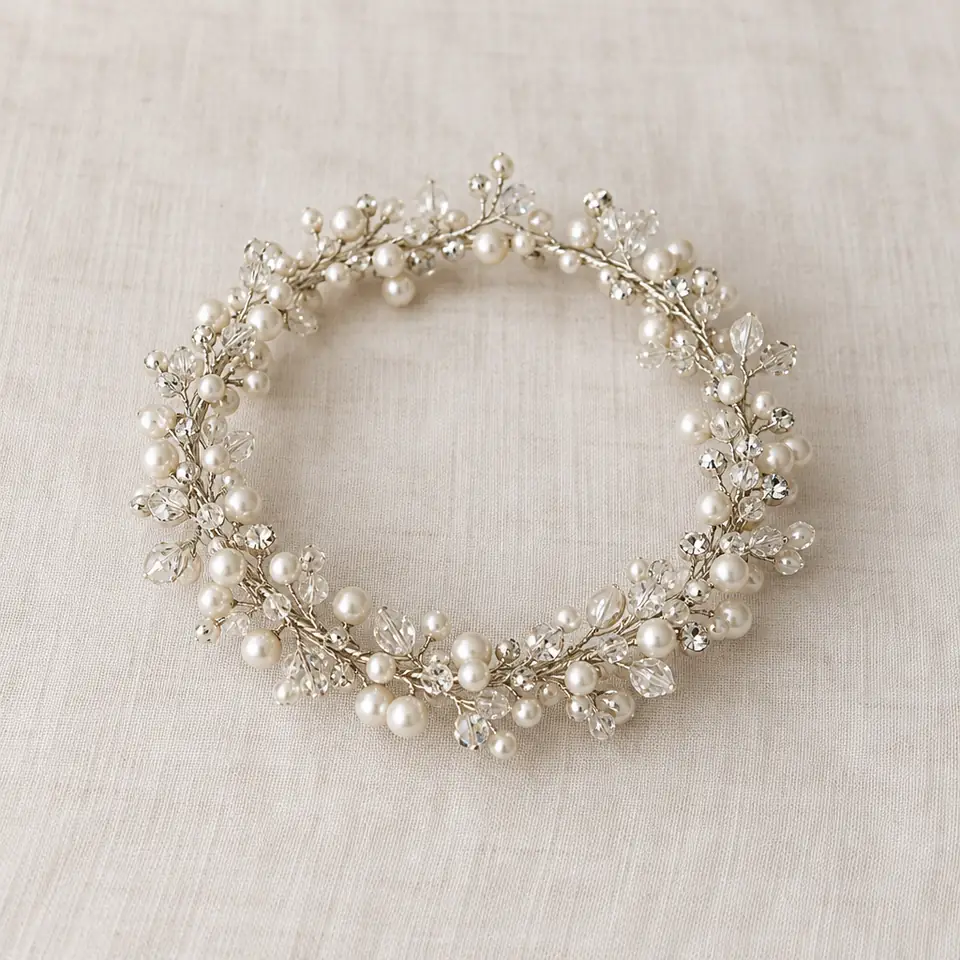
Bun wrap. A decorated ring or band around a bun or chignon, a mainstay of the 1990s that has come back.
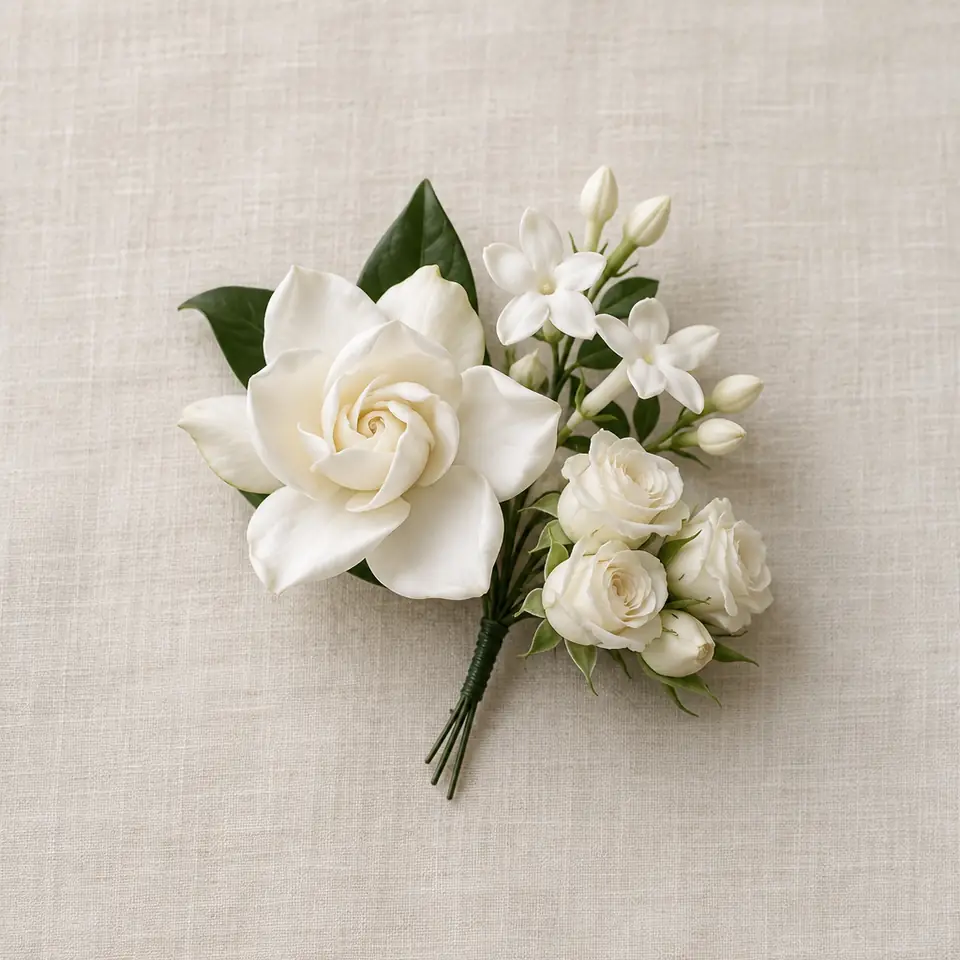
Fresh flowers. A single bloom behind the ear or a small cluster at the nape — ask the florist to wire them and supply a spare.
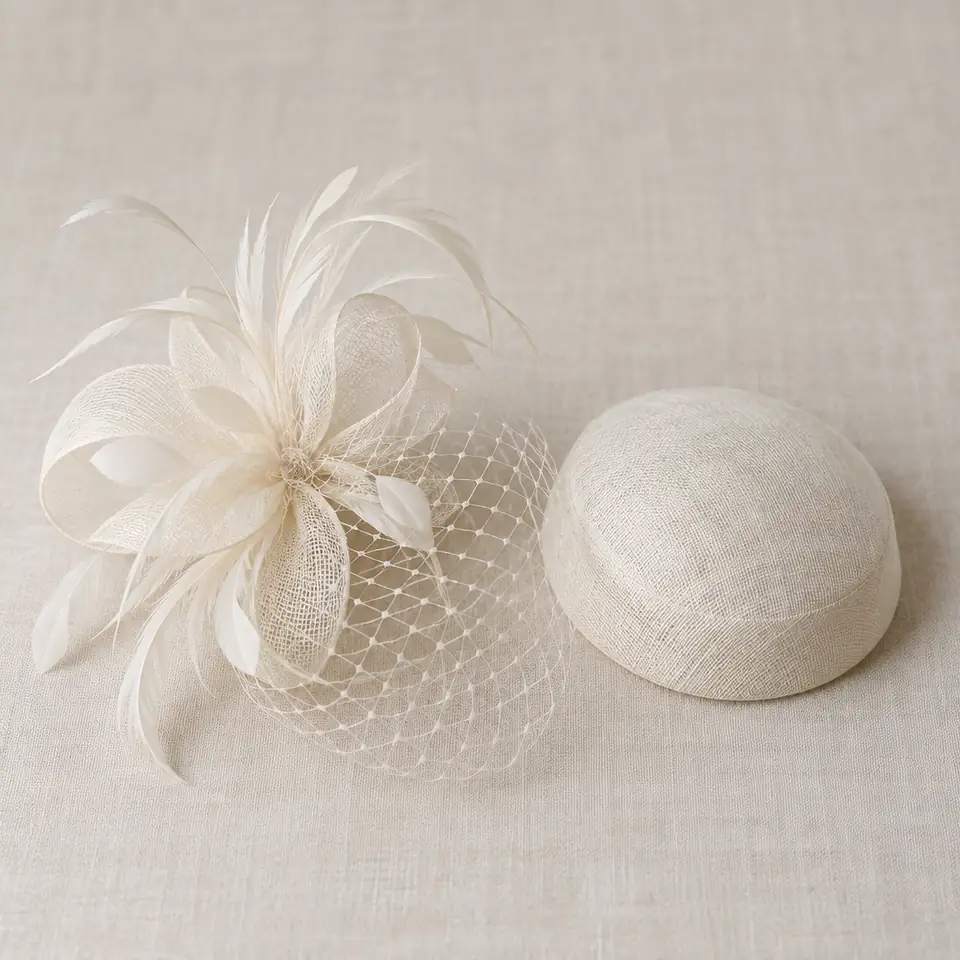
Hats and fascinators. Traditional at British weddings, and a chic choice for a civil ceremony or a second wedding.
Fabrics and lace
Fabric decides how a dress moves, how it photographs, how warm it is and a large share of its price.
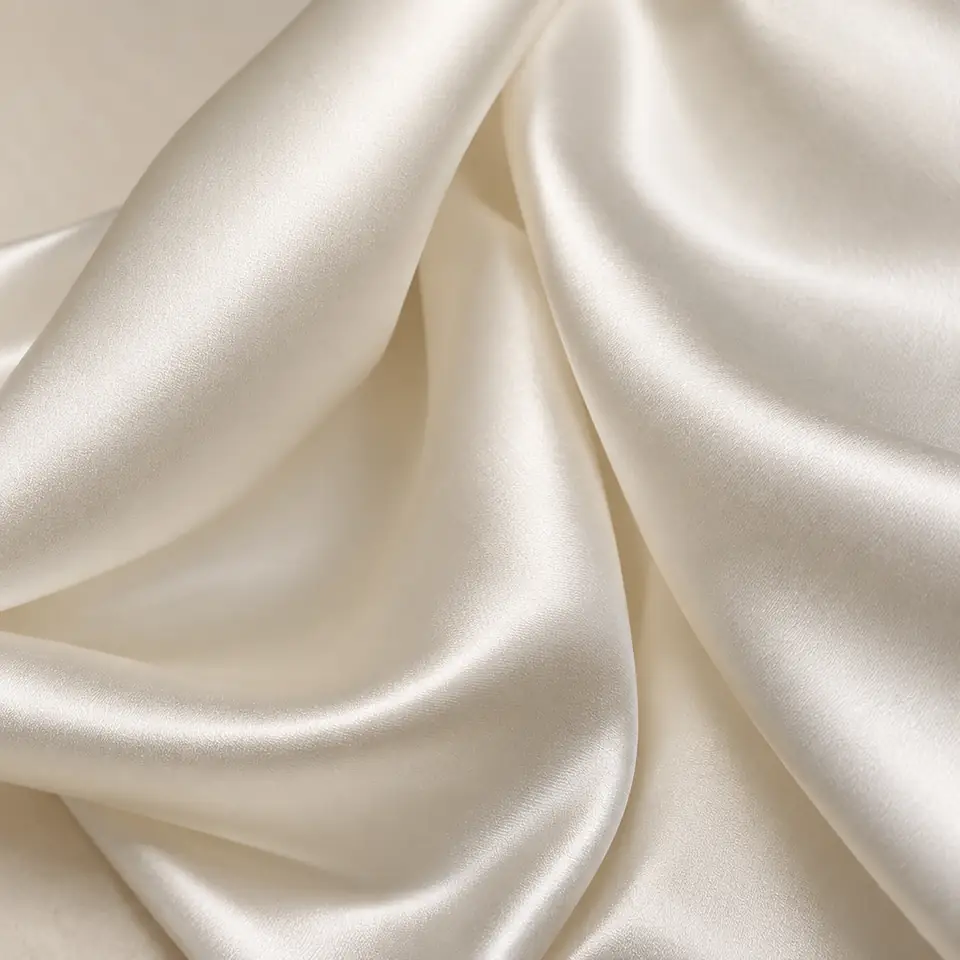
Satin is a weave rather than a fiber, with a smooth, lustrous face. Duchess satin, heavy and structured, is the classic ball-gown fabric; lighter satins drape more softly. Warm to wear.
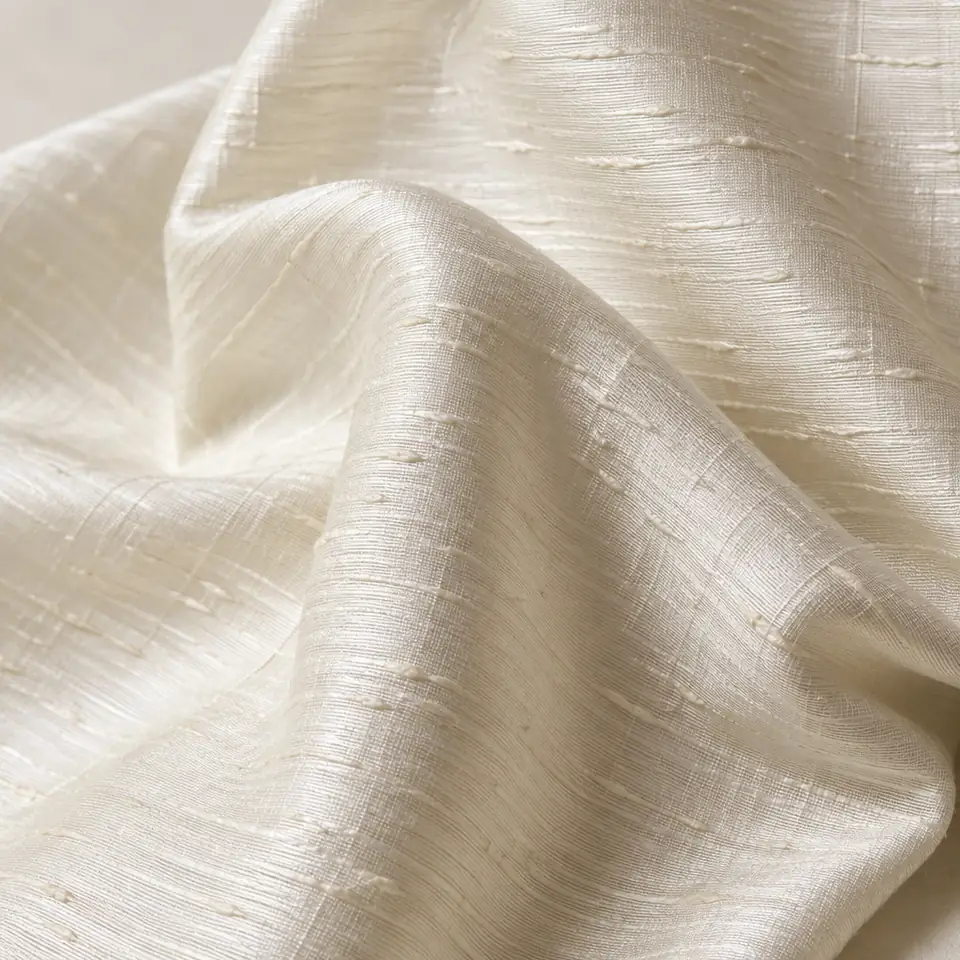
Silk shantung (also called dupioni) has a slightly irregular, “slubby” texture from uneven threads. Crisp, with a natural sheen; creases more readily than satin.
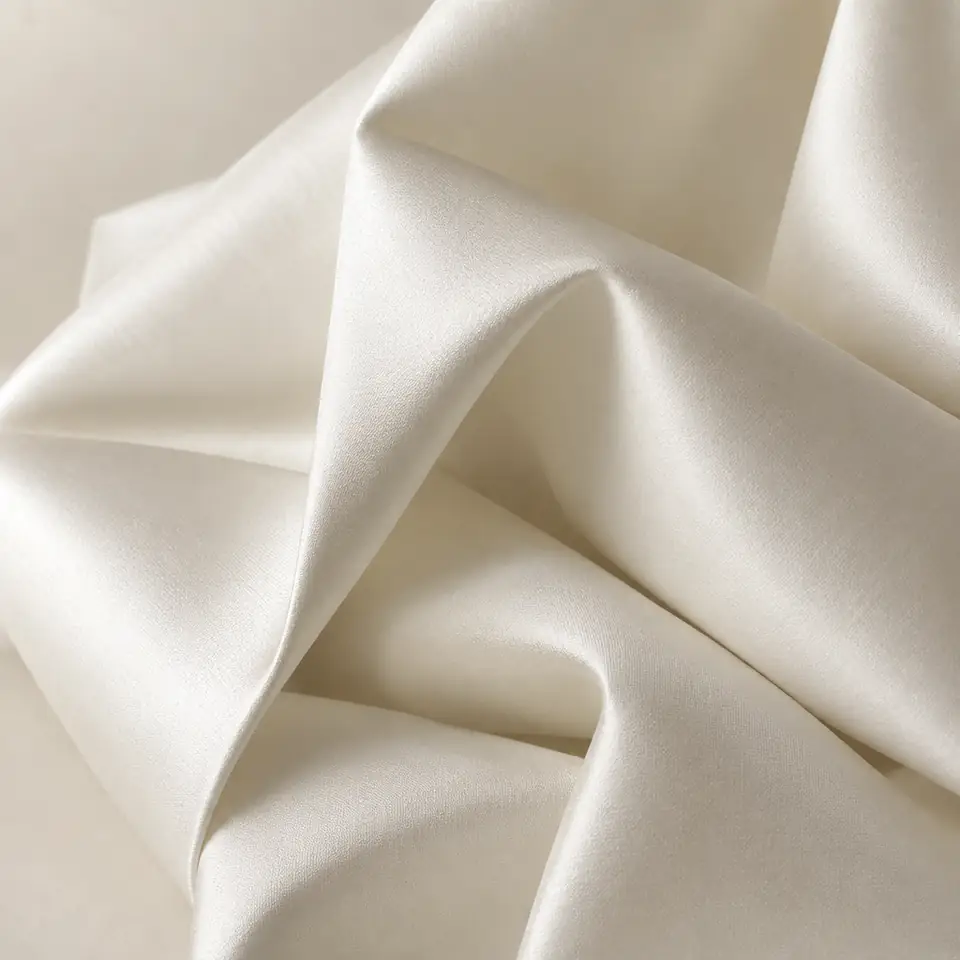
Mikado is a heavy, structured silk (or silk blend) with a subtle sheen, used for clean architectural shapes.
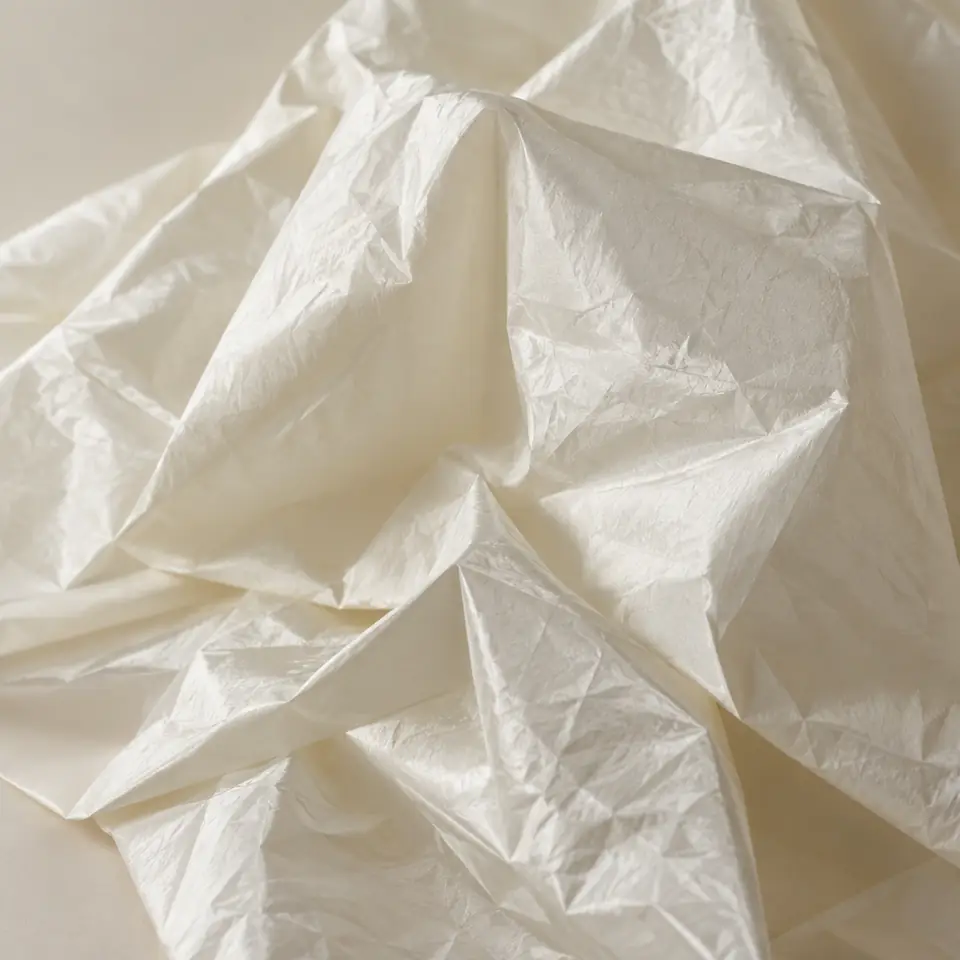
Taffeta is crisp and rustles as you move. Holds a full skirt well.
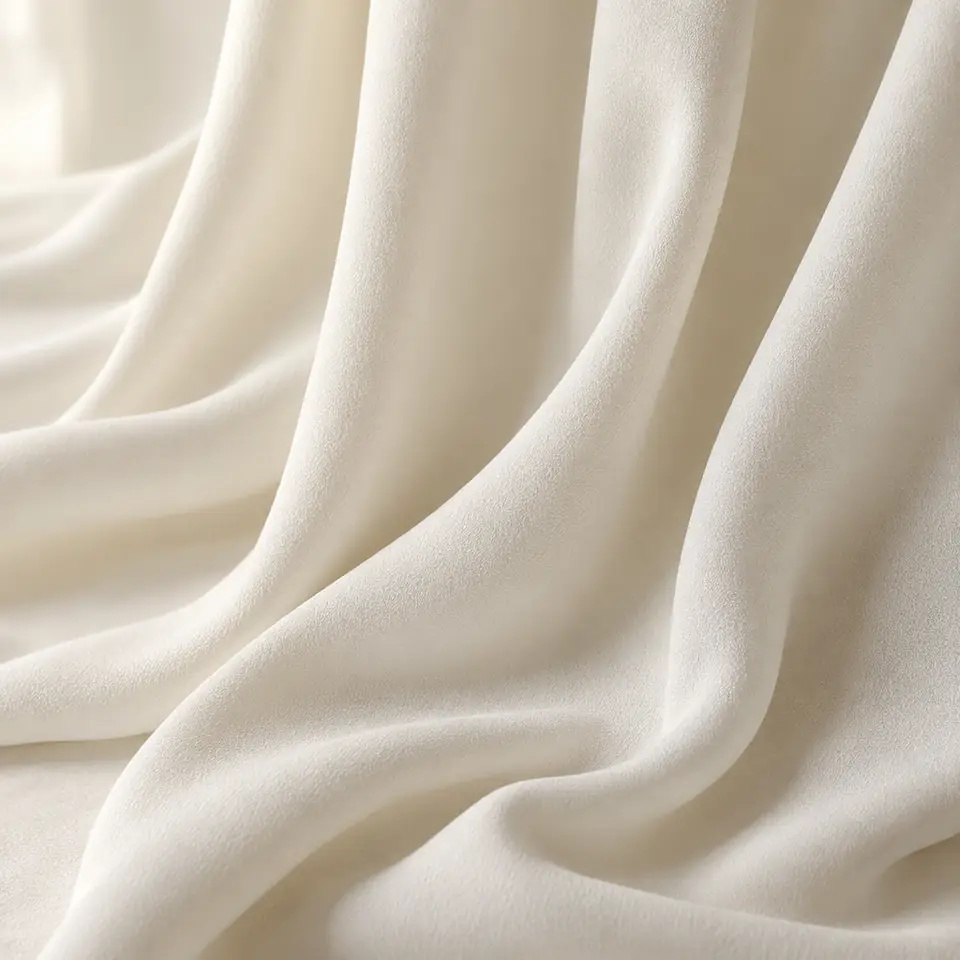
Crepe is matte, fluid and smooth. The fabric of the minimalist sheath; it shows the cut and every line beneath it.
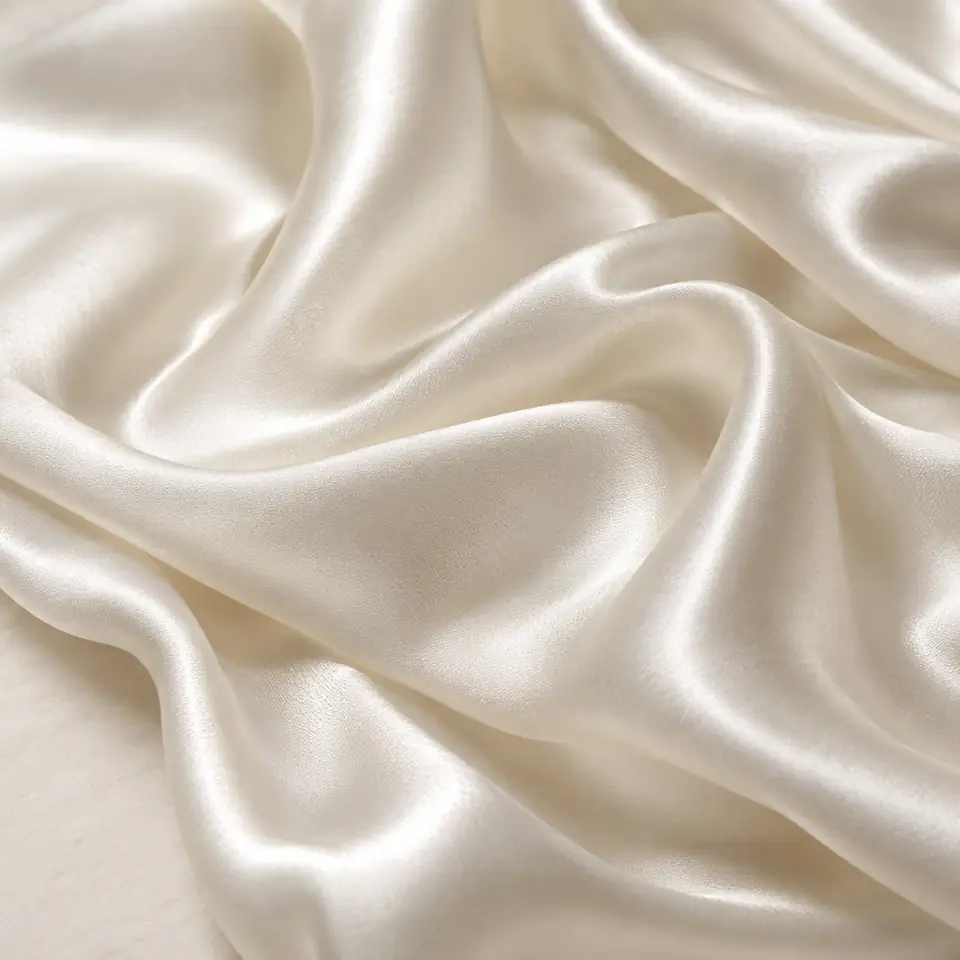
Charmeuse is a lightweight satin-weave fabric, usually silk, with a liquid drape — the classic bias-cut slip-dress fabric.
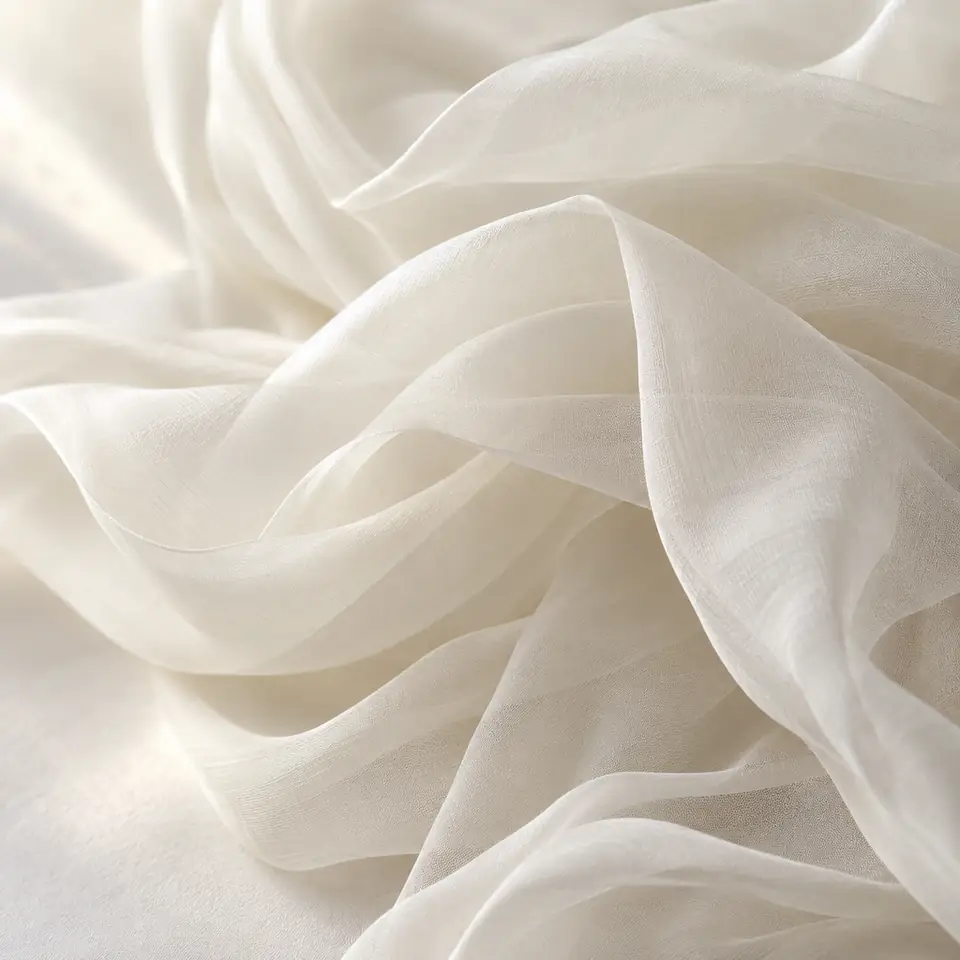
Chiffon is sheer, light and floaty, usually layered. Perfect for warm weather and beach weddings.
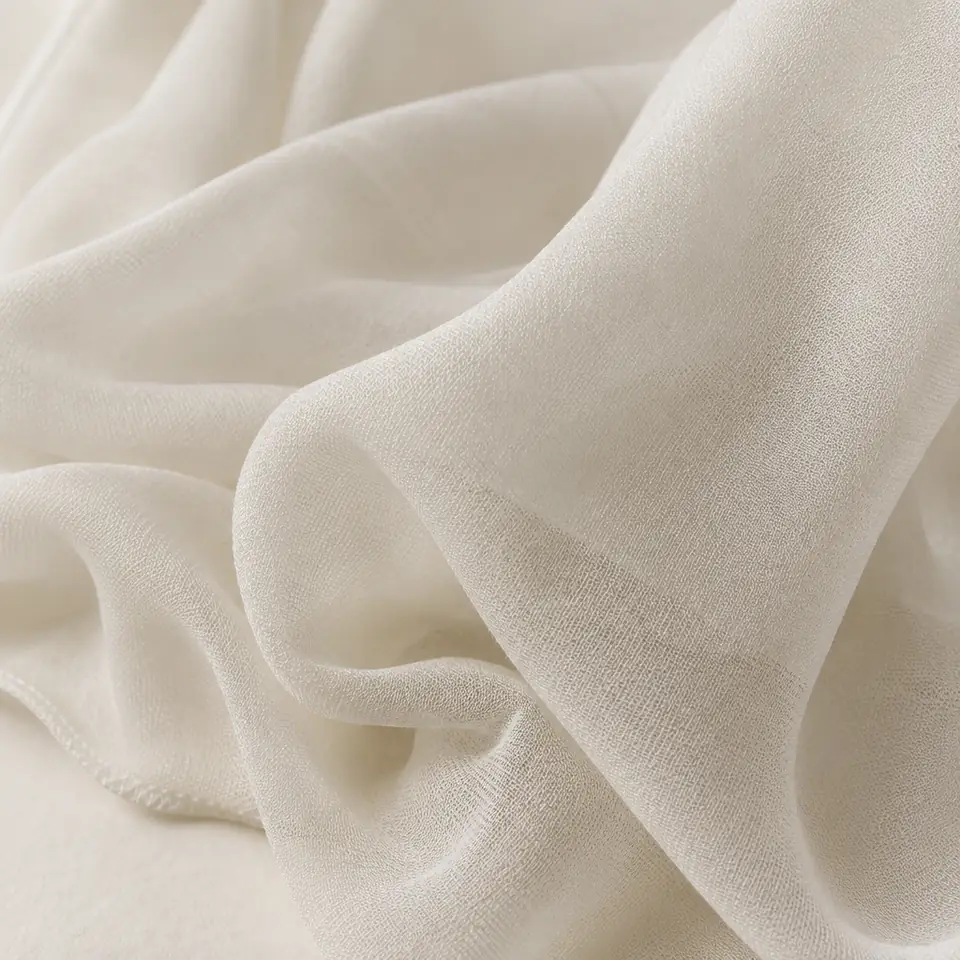
Georgette is similar to chiffon but slightly heavier and more matte.
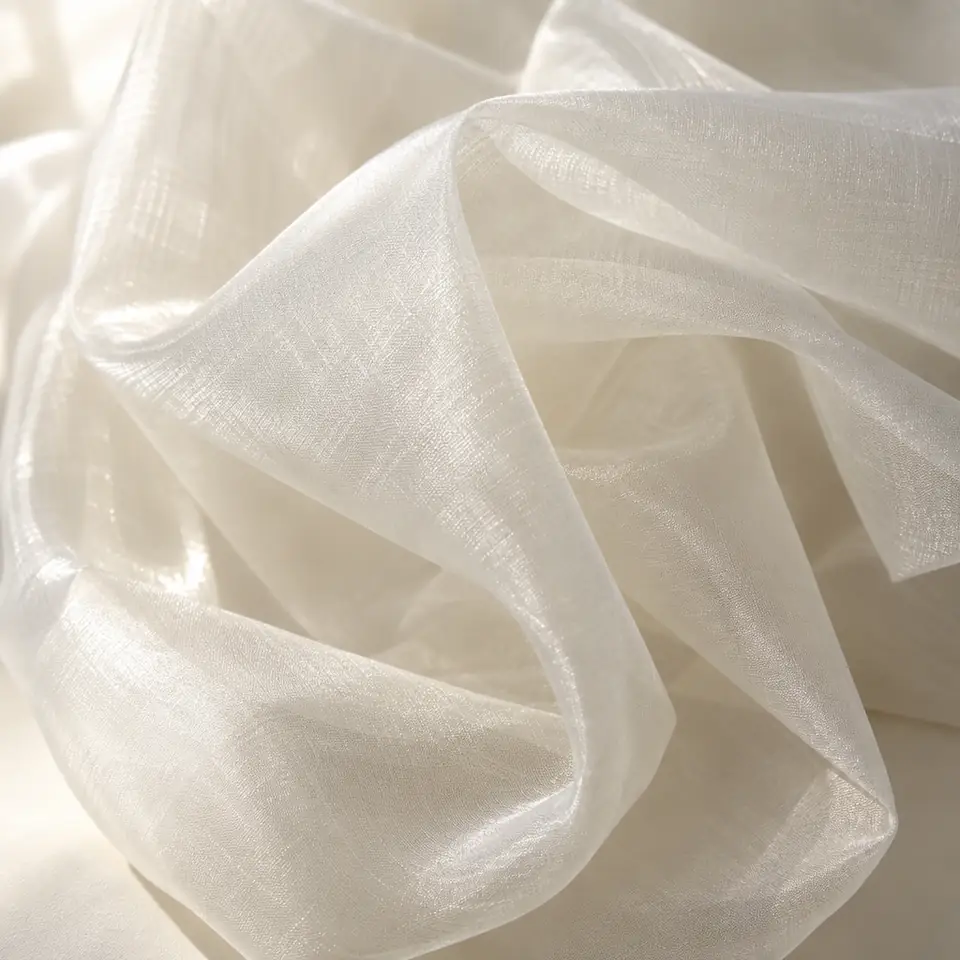
Organza is sheer like chiffon but crisp, with more body — often layered over satin to give a skirt volume and shimmer.
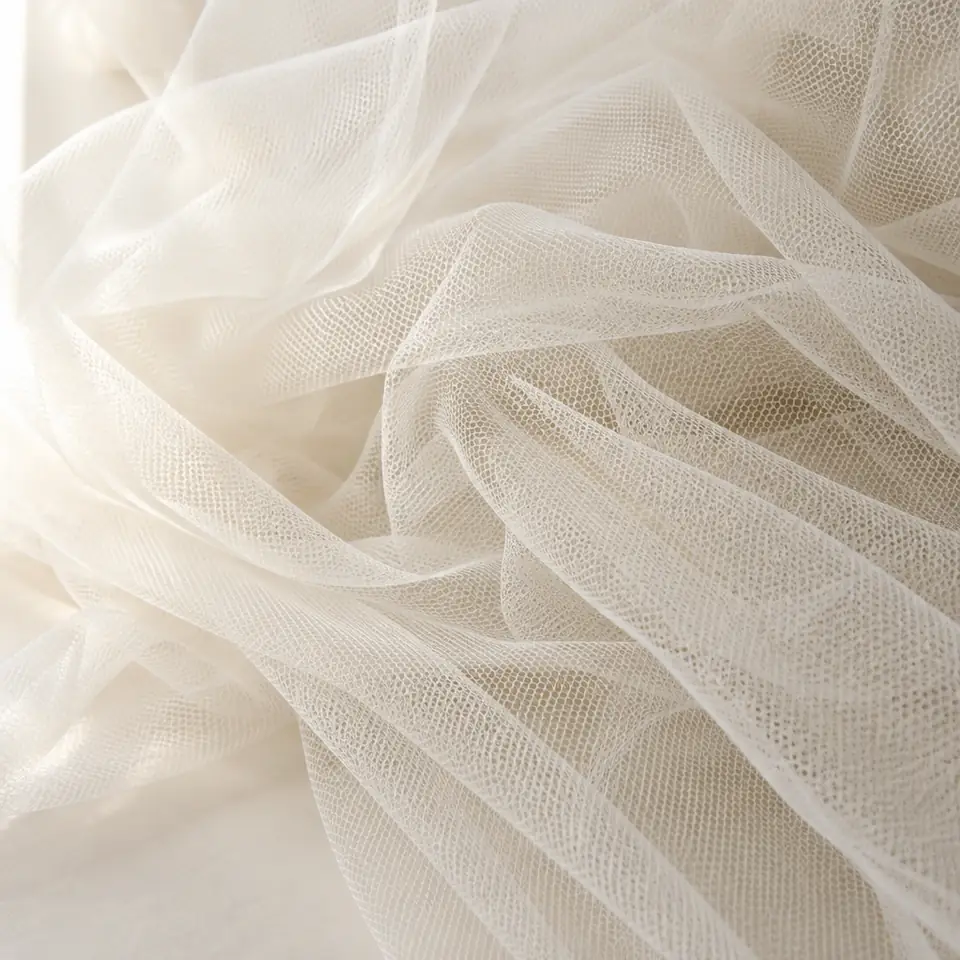
Tulle is a fine net, used for full skirts, overlays and veils. Soft tulle drapes; stiffer tulle holds a ball-gown shape.
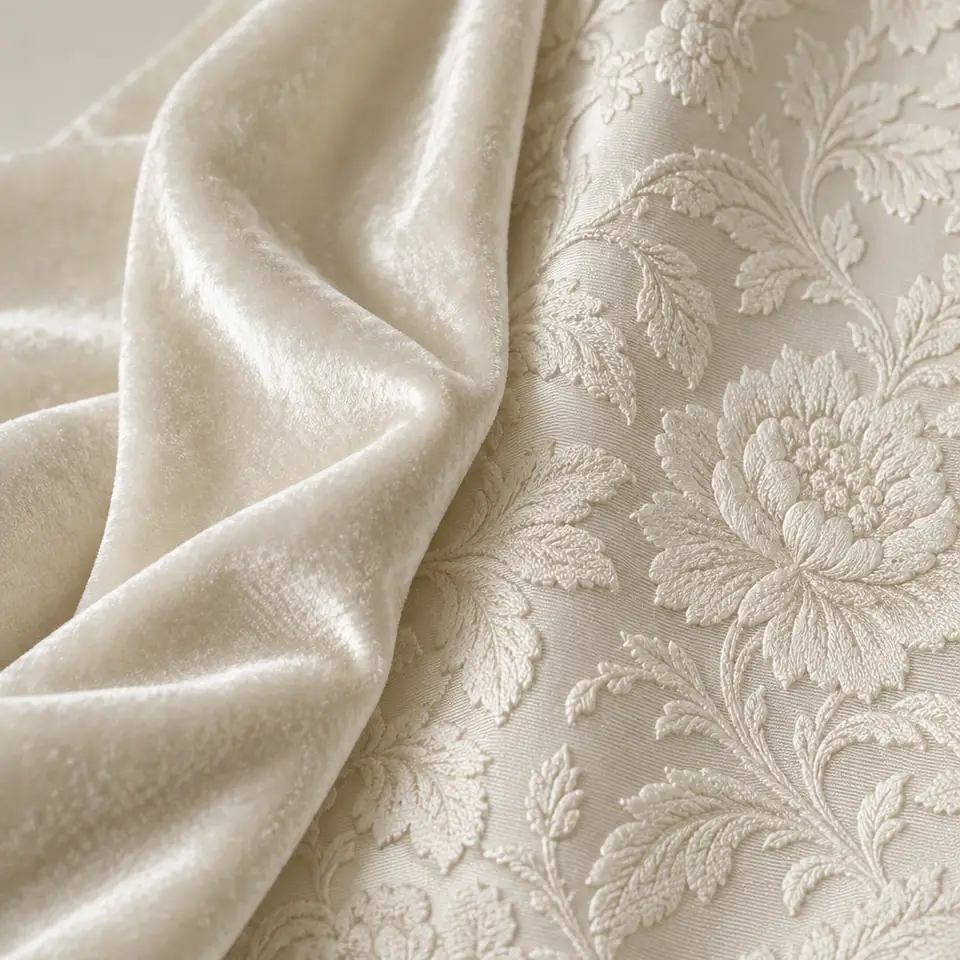
Velvet and brocade belong to winter: velvet for richness, brocade and jacquard for woven patterns.
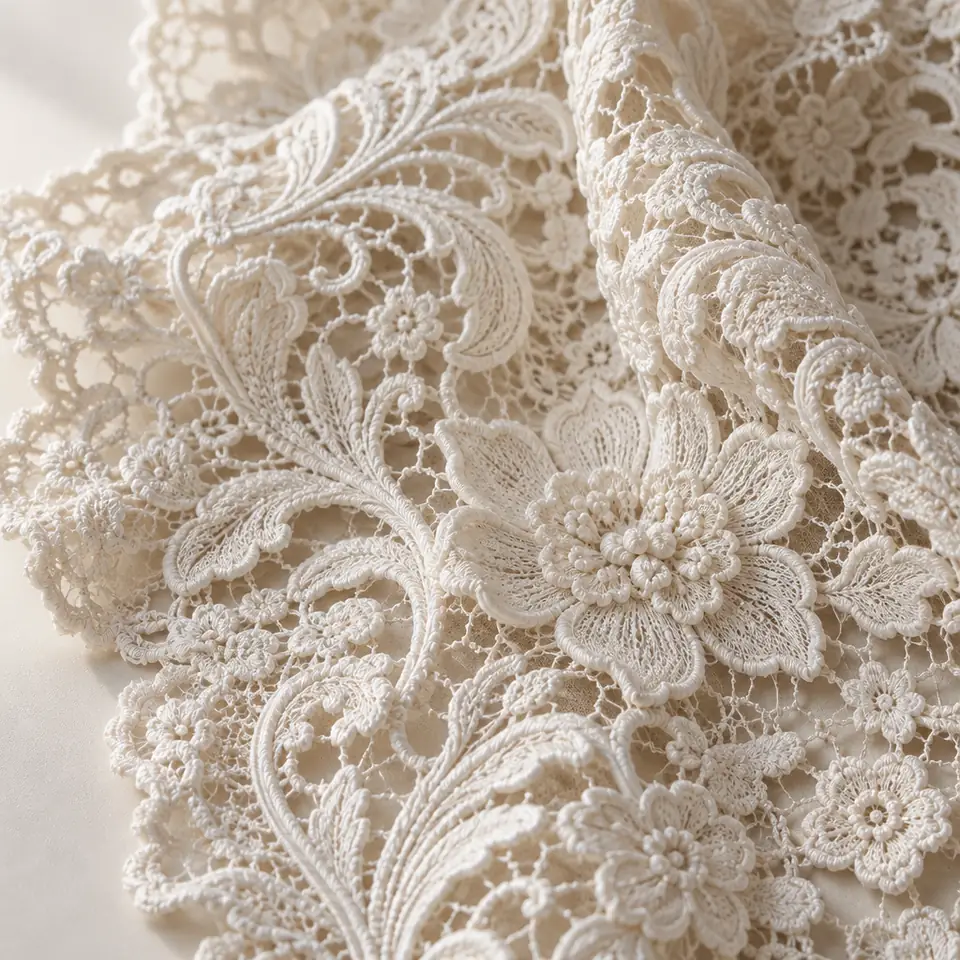
Lace comes in many kinds:
- Chantilly — fine, delicate and airy, on a net ground, often with scalloped edges.
- Alençon — detailed motifs outlined in a raised cord, giving definition and texture.
- Guipure — heavy, with motifs joined by bars rather than a net ground; bold and graphic.
- Venise — raised, heavy needle-lace motifs, with a sculptural feel.
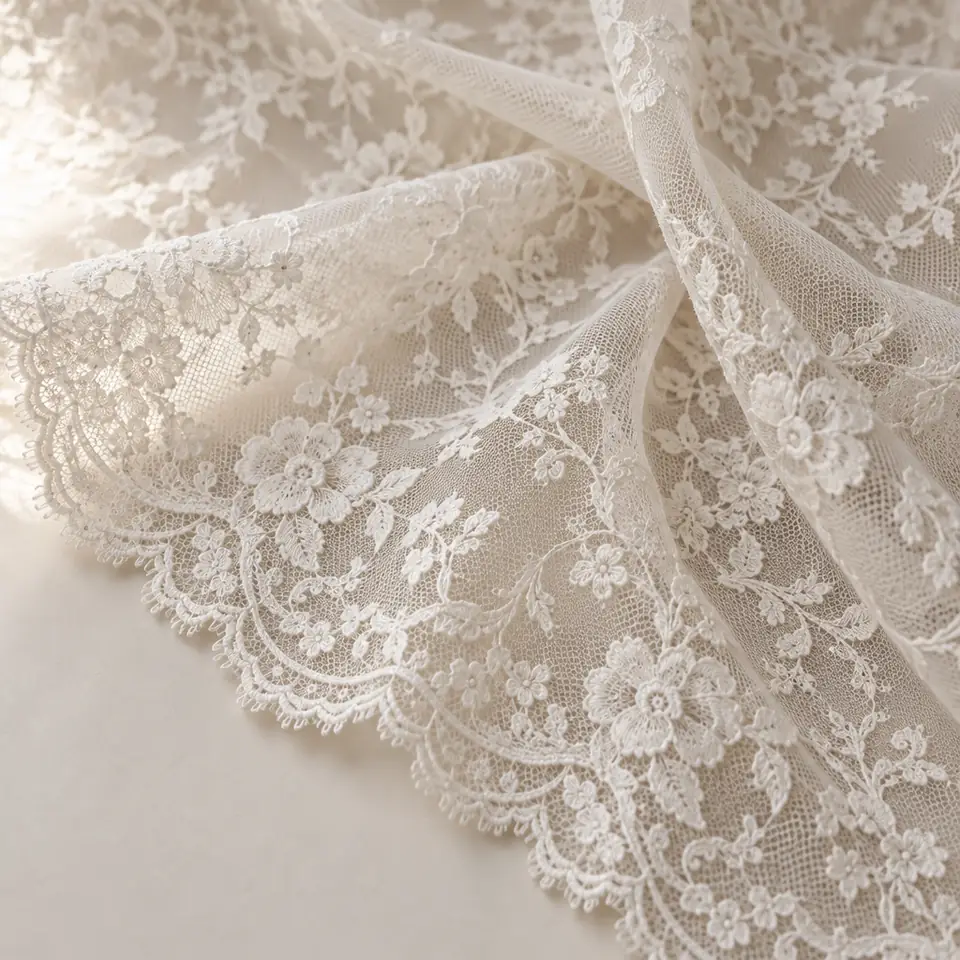 Chantilly
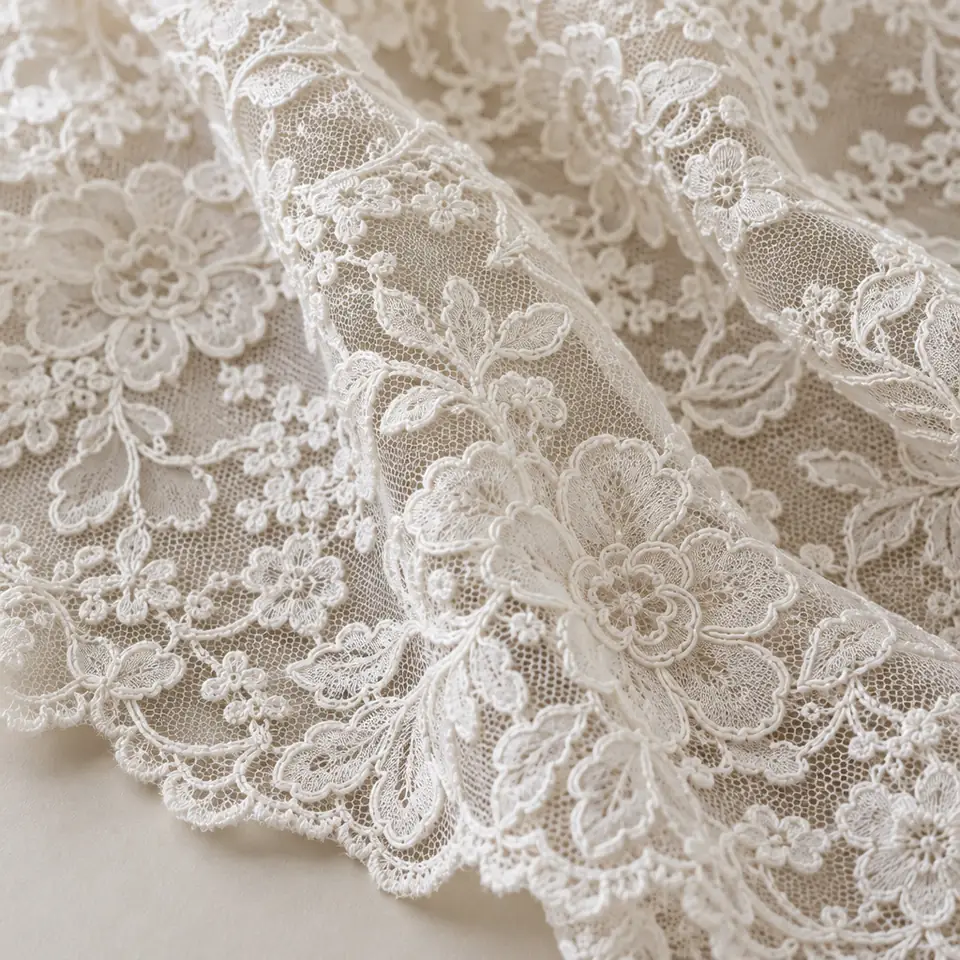 Alençon
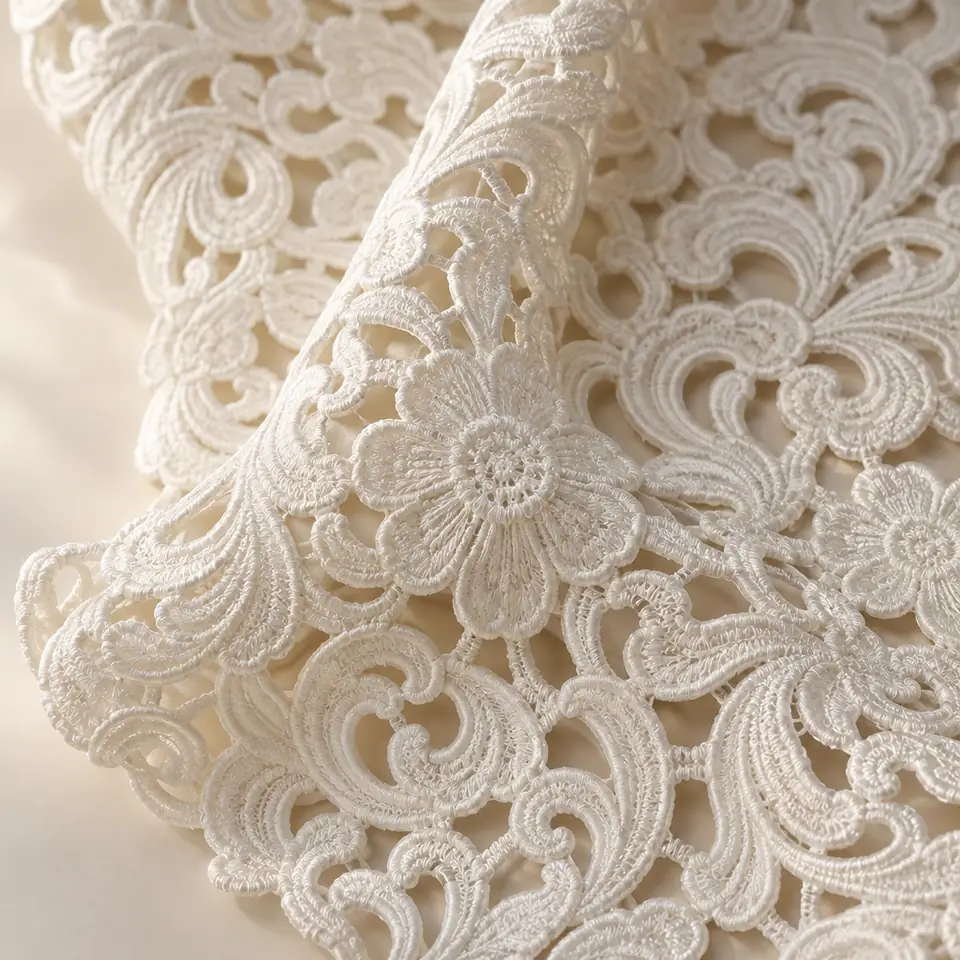 Guipure
 Venise
Shades of white
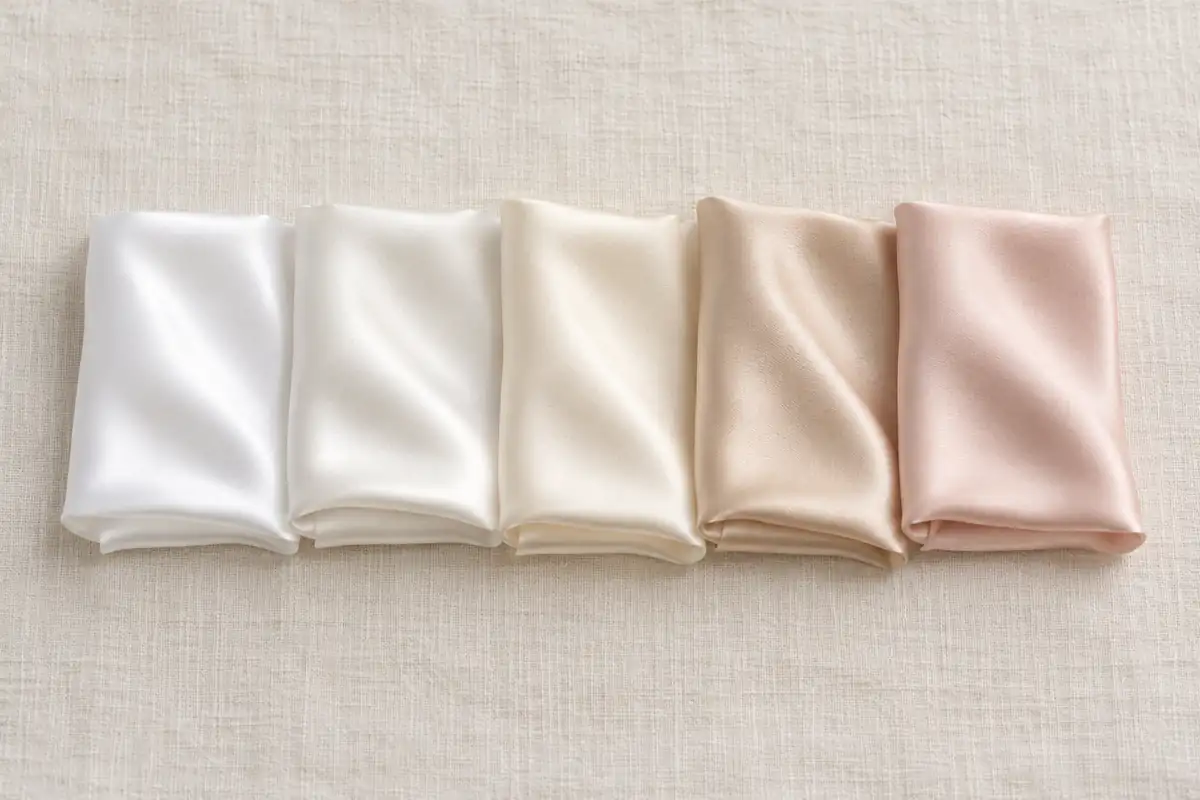
White is not one color. Bright or optic white is the starkest and suits cool and very dark complexions; soft white or diamond white has a faint warmth that flatters most people; ivory is warmer again and forgiving under candlelight; champagne and blush are unmistakably colored and read as white only from a distance. Hold each against your face in daylight, and remember that whatever sits beside the dress — the groom’s shirt, the flowers, the table linens — should be no brighter than the dress itself, or it will make the dress look yellow.
With the vocabulary settled, Finding the Dress covers the appointments themselves, wedding shoes explains why the shoes must be bought before the hem is cut, and hair and makeup takes you through the morning.
Written and edited by the Today’s Weddings editors. How we research and check what we publish is set out in our editorial standards. Spotted something wrong? Tell us.