Wedding Dress Styles: A Guide to Every Look
Silhouette tells you the shape of a dress; style tells you what it says. The seven looks brides return to, the cultural dresses worn with pride around the world, and how to find yours.
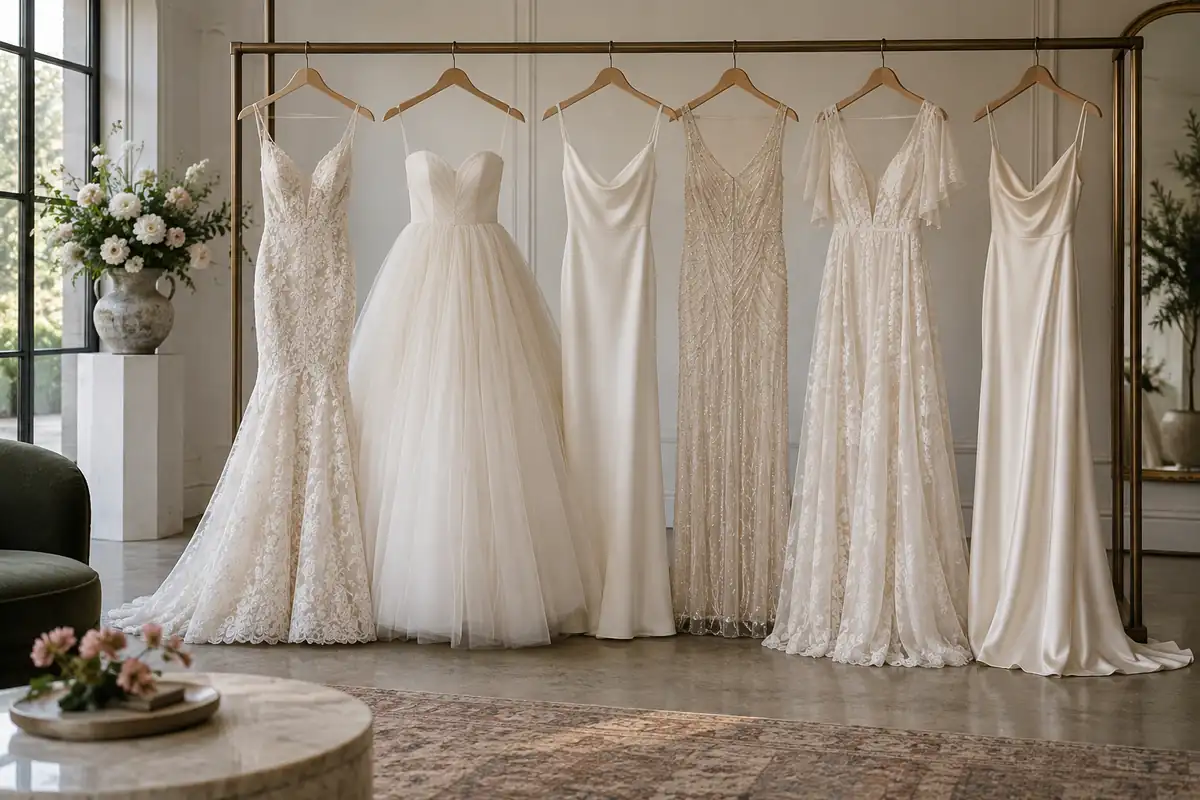
Two brides can choose the same A-line gown and look as though they are attending different weddings. One wears it in heavy duchess satin with a cathedral veil; the other in bias-cut crepe with bare shoulders and a single strand of pearls. The silhouette is identical. The style, meaning the mood, the references and the story the dress tells, is not.
The Wedding Dress, Decoded explains the building blocks: silhouettes, necklines, sleeves and fabrics. This guide is about what those pieces add up to. Nearly every wedding dress belongs to one of seven families, and knowing yours makes every appointment shorter and every decision easier.
The classic ball gown
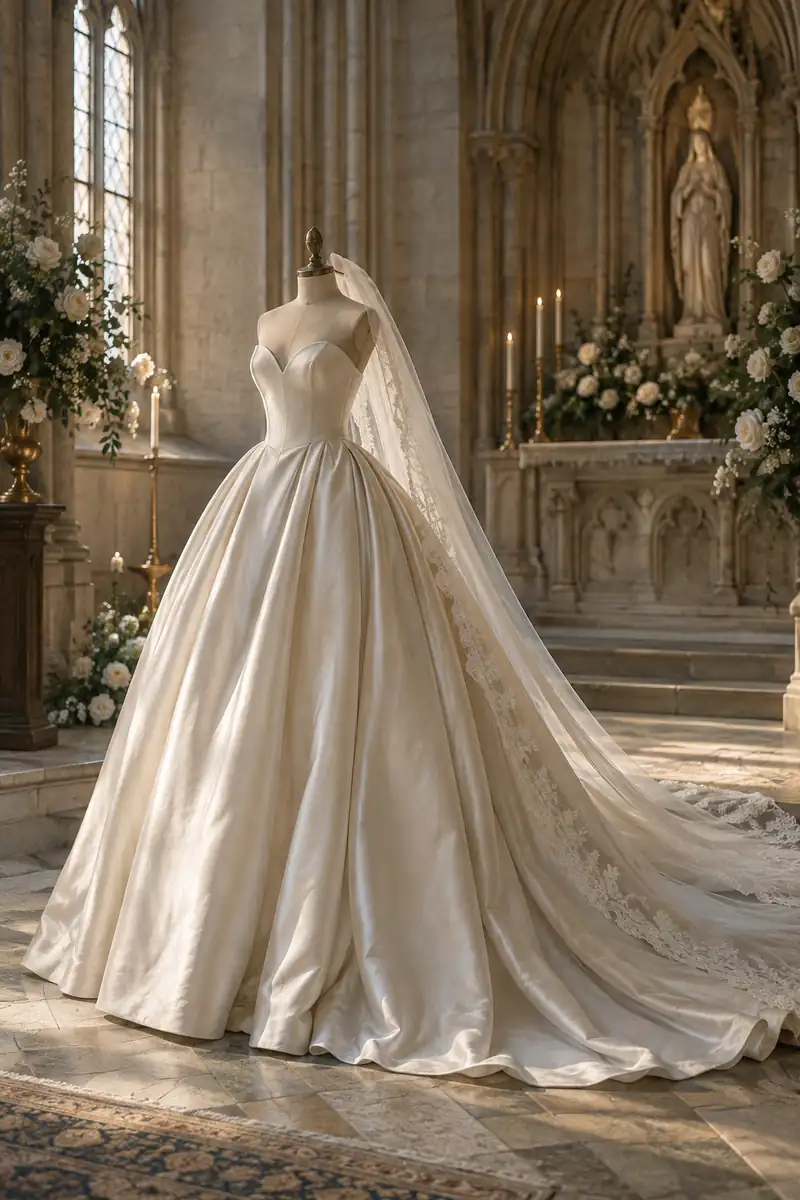
A fitted bodice, a full skirt, a long train and a veil: the dress most people picture when they hear the word “bride.” Its modern template was set by royal and near-royal weddings of the mid-twentieth century. Grace Kelly’s 1956 gown by Helen Rose, with its lace bodice and silk skirt, is still the reference, and Catherine Middleton’s 2011 Alexander McQueen dress was widely compared to it.
What defines it: structure, volume and formality. Duchess satin, mikado, taffeta and layered tulle; strapless or sweetheart necklines, or long lace sleeves; a waist that is clearly marked.
Where it belongs: cathedrals, ballrooms, grand hotels and evening weddings with a black-tie dress code.
Keep in mind: a full skirt is warm and heavy. Plan for a bustle and consider a lighter second dress for dancing (see reception and second dresses).
The modern minimalist
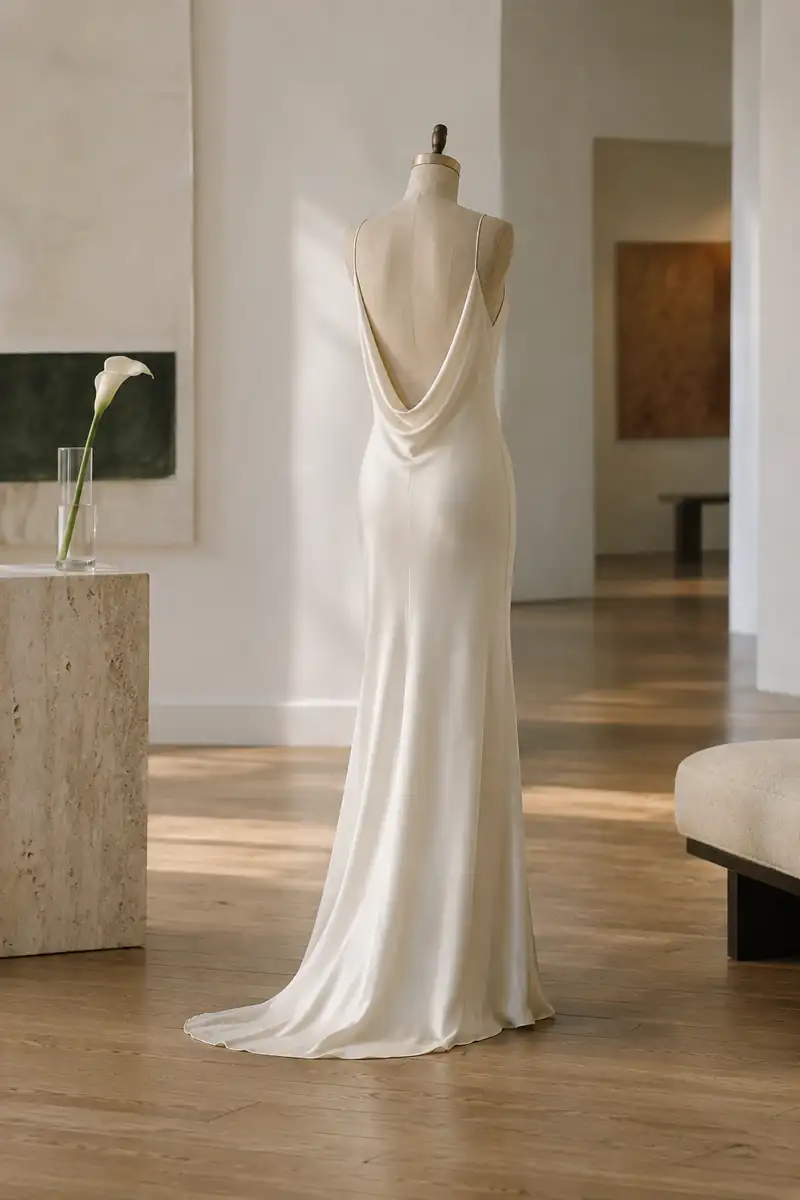
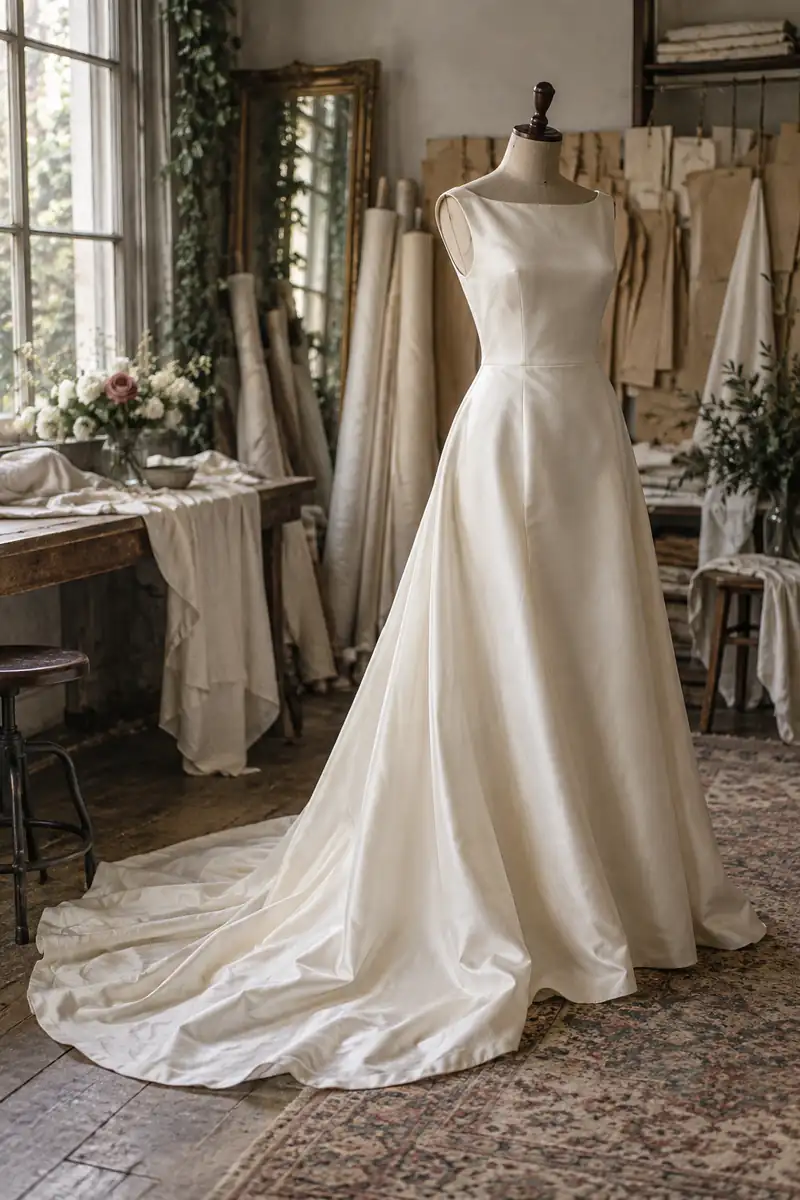
Clean lines, no lace, no beading, and nowhere to hide. The minimalist dress depends entirely on cut and fabric, which is why the best ones are often expensive despite their simplicity. Its patron saint is Carolyn Bessette, whose bias-cut silk crepe slip by Narciso Rodriguez, worn on Cumberland Island in 1996, turned the plain dress into the height of sophistication. Interest in it surged again in 2026 after the FX series Love Story, and designers from Monique Lhuillier to Kyha answered with pared-back satin gowns in their spring 2027 collections.
What defines it: crepe, heavy silk satin or mikado; column, sheath, slip or clean A-line shapes; architectural details such as a sculpted neckline or an open back instead of ornament.
Where it belongs: city halls, galleries, modern restaurants, rooftops and contemporary venues.
Keep in mind: minimal dresses show everything underneath. The foundation garments and the fit matter more here than in any other style.
The romantic and bohemian
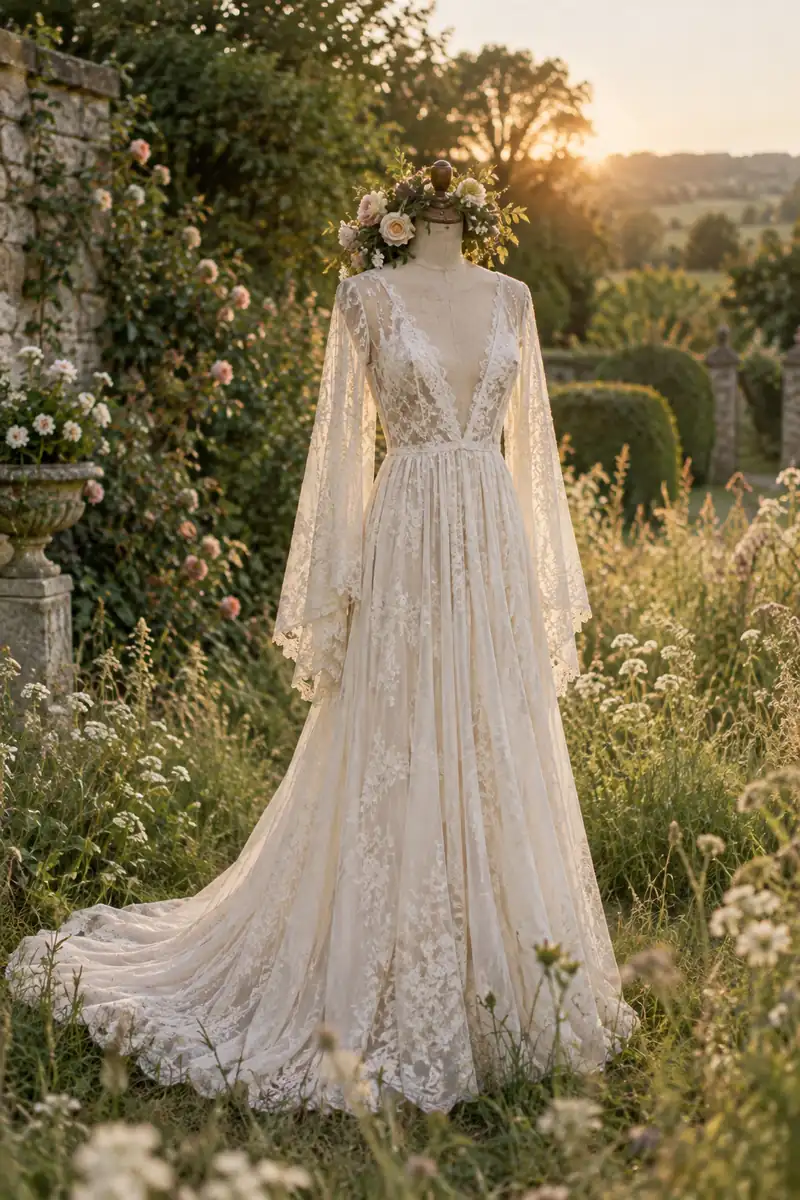
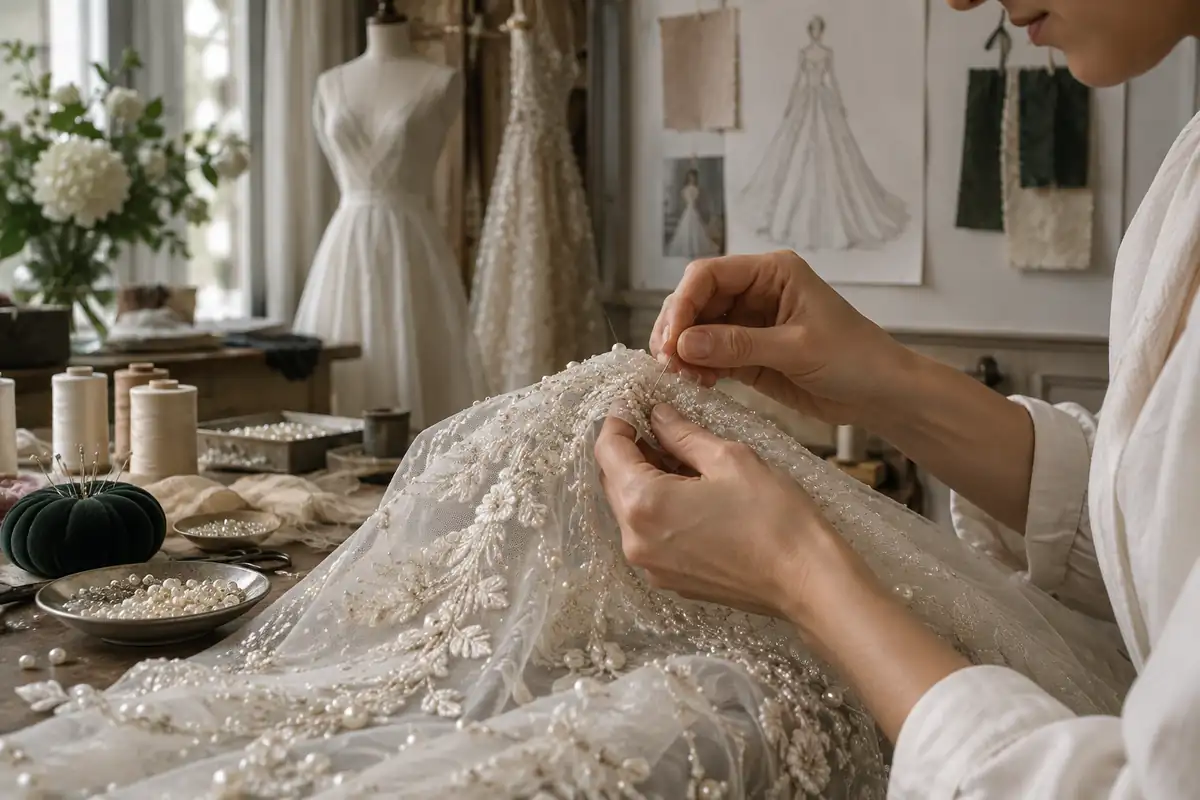
Soft, light and textural: lace, chiffon, embroidery, flowers in the hair. At its most refined this is the English country-garden look, all fine lace and long sleeves; at its most relaxed it is the bohemian dress, with a loose, flowing skirt, a plunging neckline, fringe or crochet, worn with bare feet or flat sandals.
What defines it: Chantilly and guipure lace, chiffon and georgette, bell or bishop sleeves, empire and A-line shapes, illusion backs, floral appliqué, flower crowns.
Where it belongs: gardens, vineyards, barns, meadows, beaches and summer weddings outdoors. Nothing suits late-afternoon light better.
Keep in mind: layers of lace can be surprisingly warm, and light fabrics snag on bark, gravel and rough stone.
The vintage-inspired, by decade
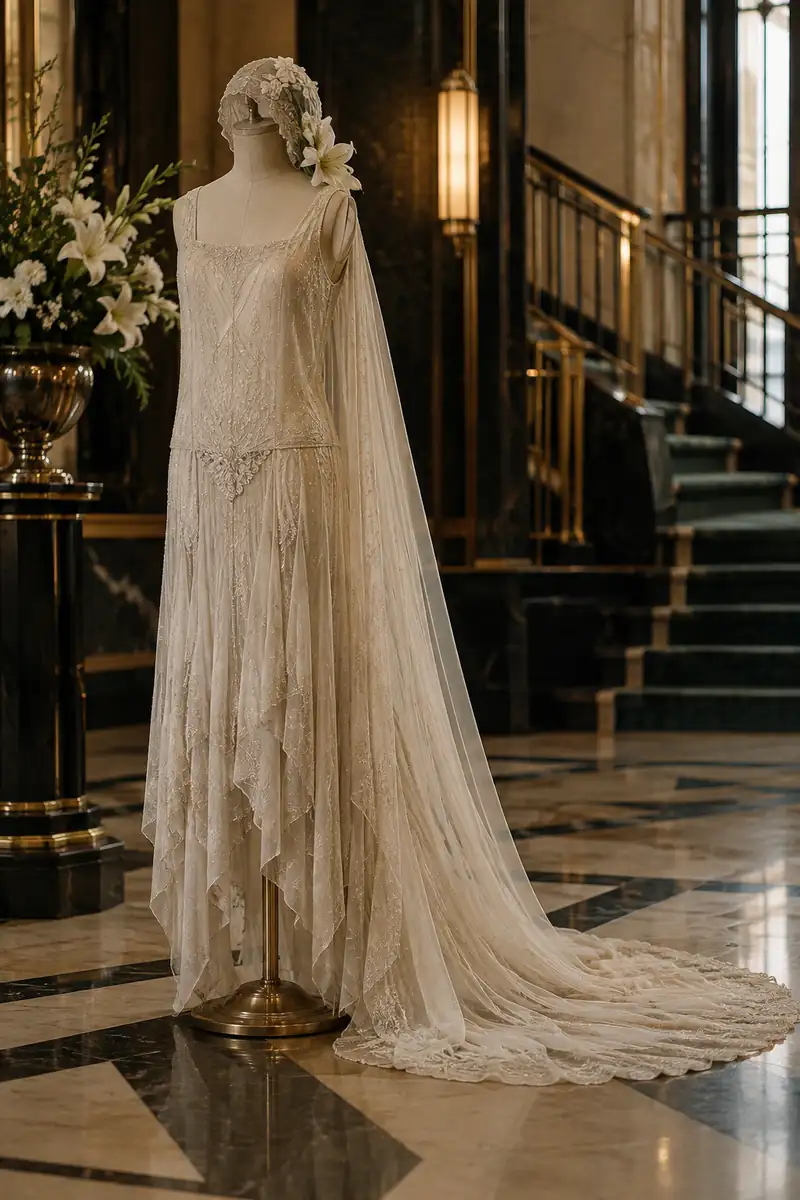
Vintage style borrows the silhouette and details of a particular era without being old itself. It pays to know the decades apart, because each has a distinct shape:
- The 1920s: a dropped waist, a straight, loose line and beading or fringe; often shorter in front with a longer train behind, worn with a cap or cloche-style veil.
- The 1930s: bias-cut satin that skims the body, with cowl necklines and low backs. The ancestor of the modern slip dress.
- The 1950s: the nipped waist and full skirt, often at tea length. Audrey Hepburn’s 1954 Balmain dress, with its flared tea-length skirt, puff sleeves and high collar, is the model.
- The 1960s: simple shift and A-line shapes, high necks, short veils, even mini dresses. Hepburn wore a pale pink Givenchy mini to her second wedding in 1969.
- The 1970s: high necks, long sleeves, lace and cotton, the prairie look and, for the daring, trouser suits.
- The 1990s: the slip dress and the plain column: minimalism before it had a name.
For the whole story, era by era, see wedding dresses by decade.
Where it belongs: anywhere with its own sense of period, such as an Art Deco hotel or a historic house.
Keep in mind: true vintage dresses were made for different bodies and underwear, and old silk can be fragile. Have a specialist assess one before you buy; our guide to secondhand, rental and sample dresses explains what to check.
The glamorous and Old Hollywood
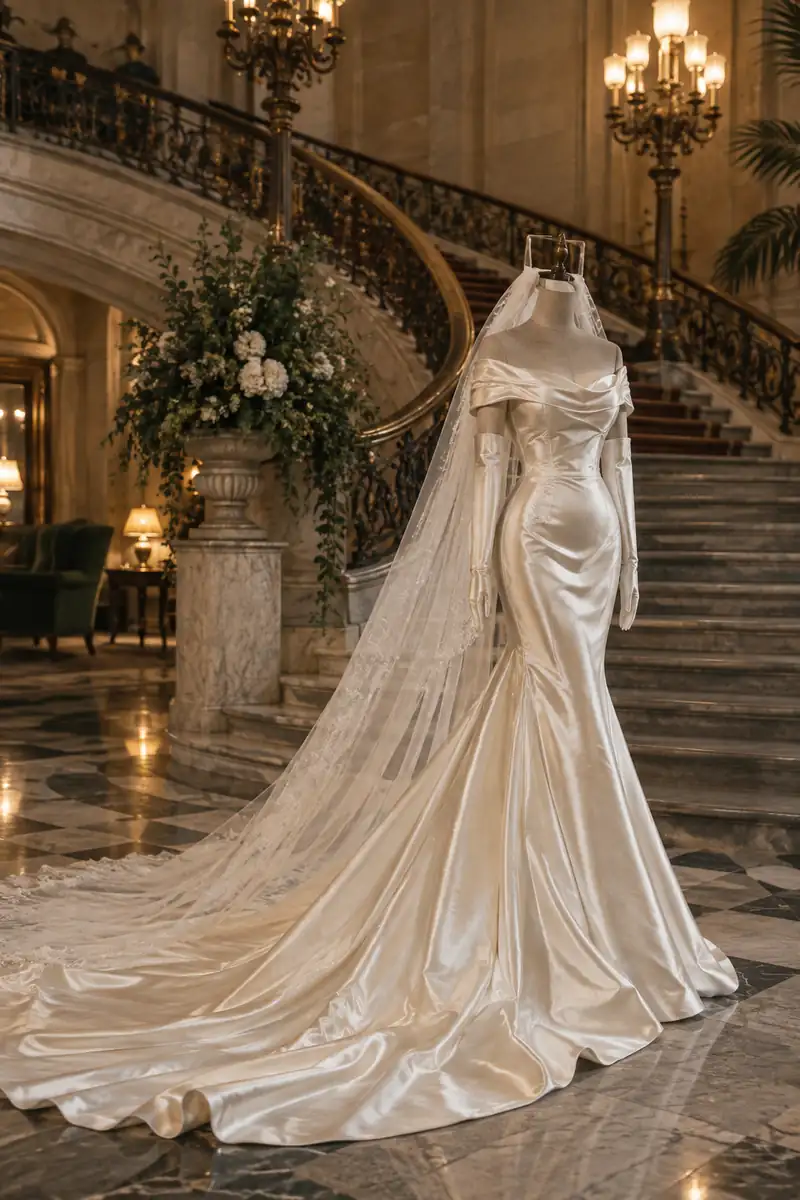
Satin that pours, a fitted silhouette, a long train and immaculate hair. This is the red-carpet bride, and its references are the studio costume designers of the 1930s to the 1950s. Helen Rose of MGM dressed both Elizabeth Taylor (1950) and Grace Kelly (1956) for their weddings. In 2025, Selena Gomez’s Ralph Lauren ceremony gown, with a high halter collar and a deep V at the back, was widely described as an Old Hollywood look, and Lauren Sánchez said her Dolce & Gabbana lace gown began with a photograph of Sophia Loren.
What defines it: heavy satin and crepe, mermaid and trumpet silhouettes, off-the-shoulder and halter necklines, beading used sparingly, long gloves, a statement veil.
Where it belongs: evening weddings, black tie, grand hotels, supper clubs, anywhere with a staircase.
Keep in mind: the fitted silhouettes that define this look restrict movement. Sit, climb stairs and dance in the dress at every fitting.
The fashion-forward and editorial
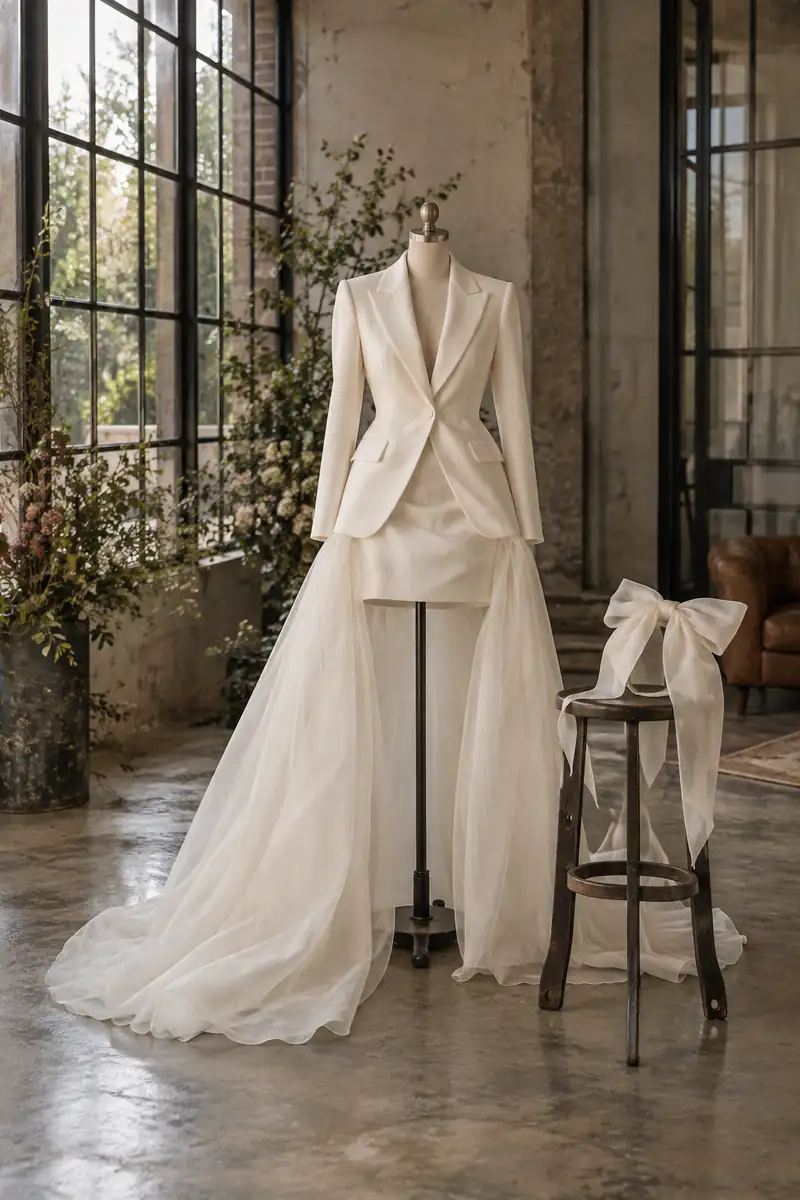
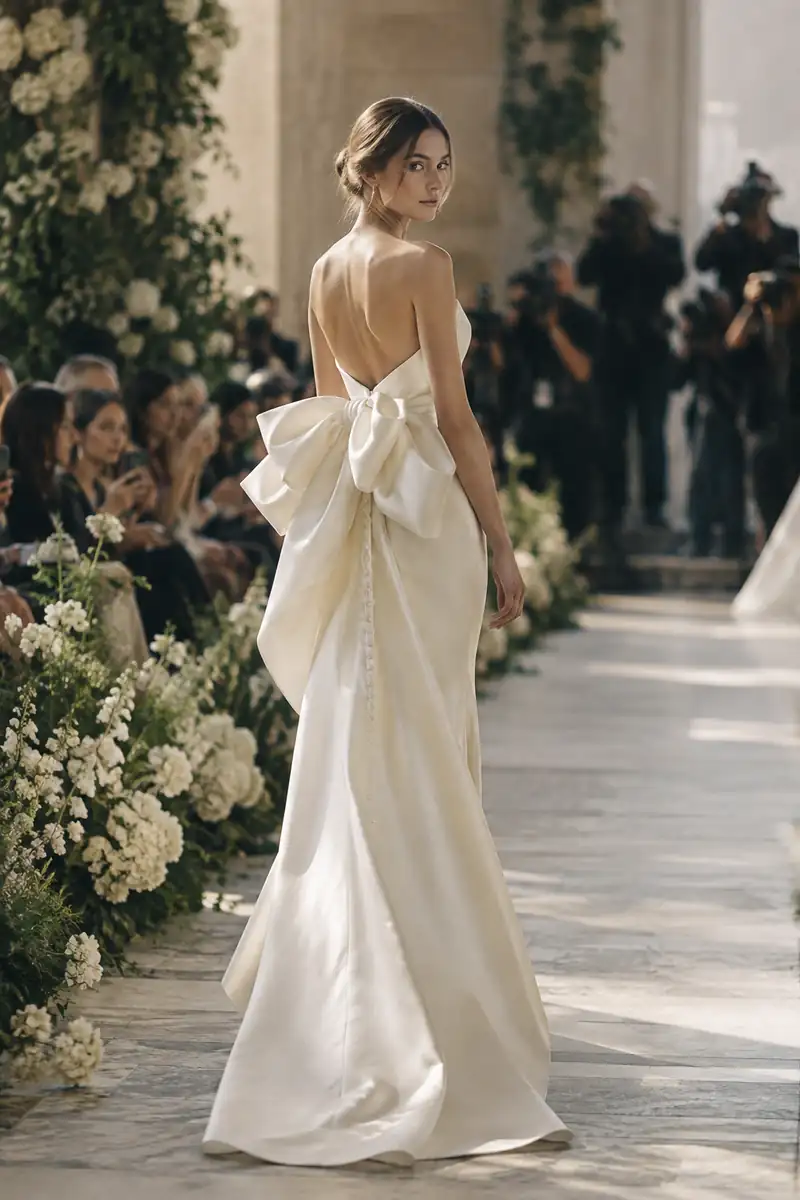
Some brides want the dress to be clearly of its moment. That can mean separates, a tailored jacket over a mini skirt, a cape, trousers, sculptural shoulders, color, or a headpiece where the veil would be. On the April 2026 runways in New York, Danielle Frankel showed hand-cut silk organza and metal embroidery, Markarian paired blazer-like tops with miniskirts, and Honor sent out a pale pink gown (see the 2026 trends).
What defines it: unexpected proportions, mixed fabrics, detachable pieces, color, separates, suits and jumpsuits.
Where it belongs: urban venues, courthouse weddings with a party afterward, destination weddings with a strong design sense. See also courthouse and civil wedding dresses.
Keep in mind: trends date fastest in photographs. Balance something daring with one classic element, such as a traditional veil.
Cultural and fusion dresses
For much of the world, the wedding dress is not white at all. Many couples now wear two outfits, one for each family’s tradition, or commission a fusion dress that brings them together. The rule is the same as for any couture gown: learn what each element means, and buy from makers who know the tradition.
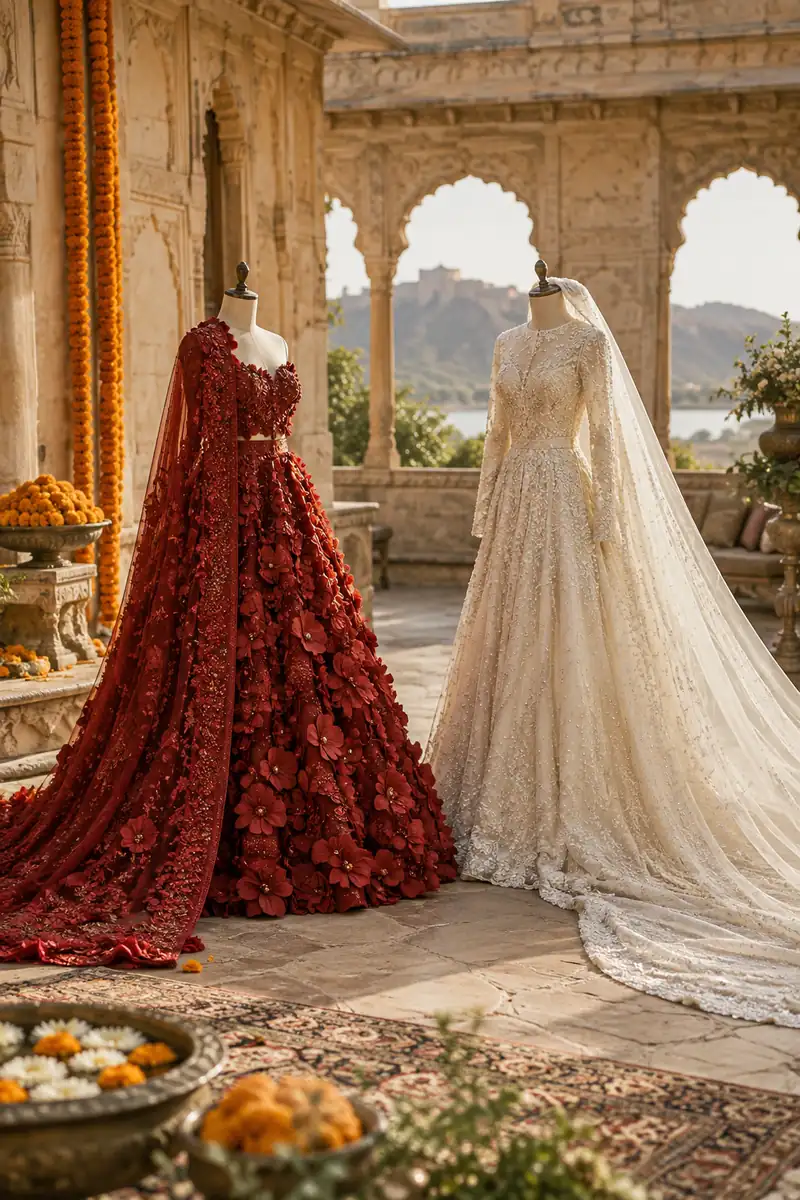 The lehenga, South Asia
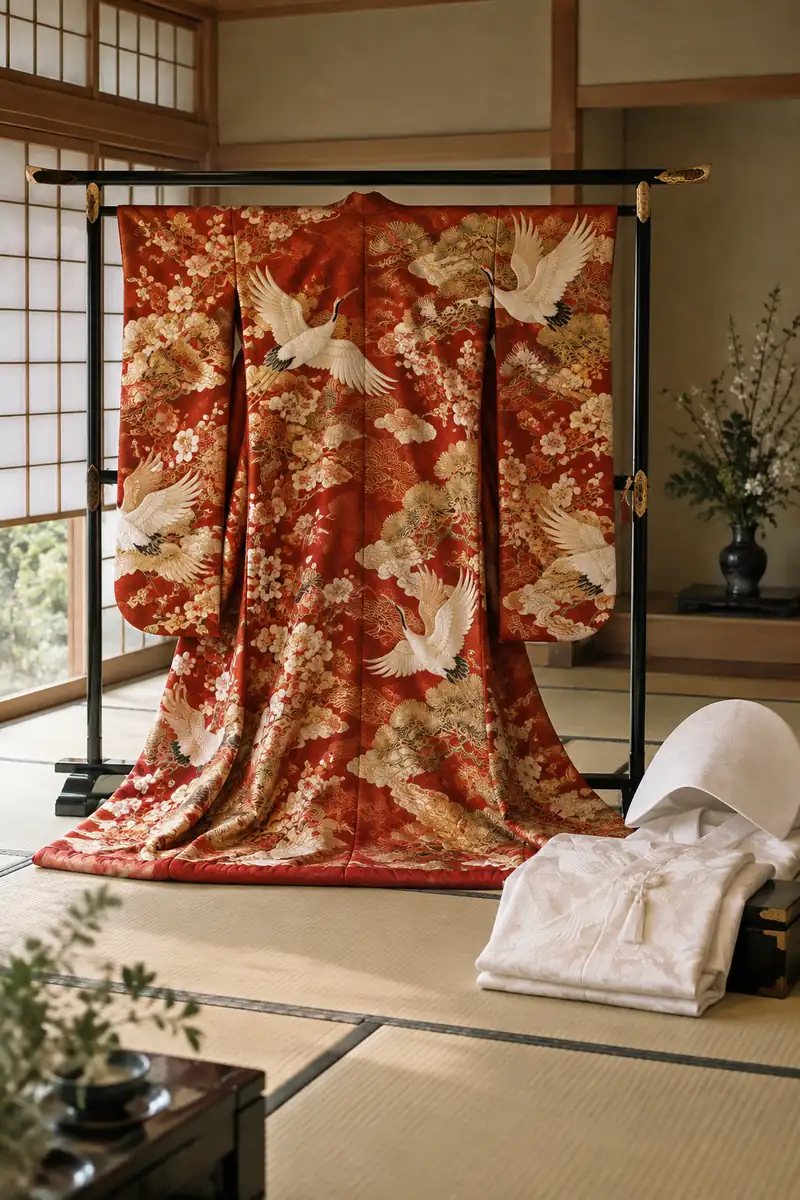 The uchikake, Japan
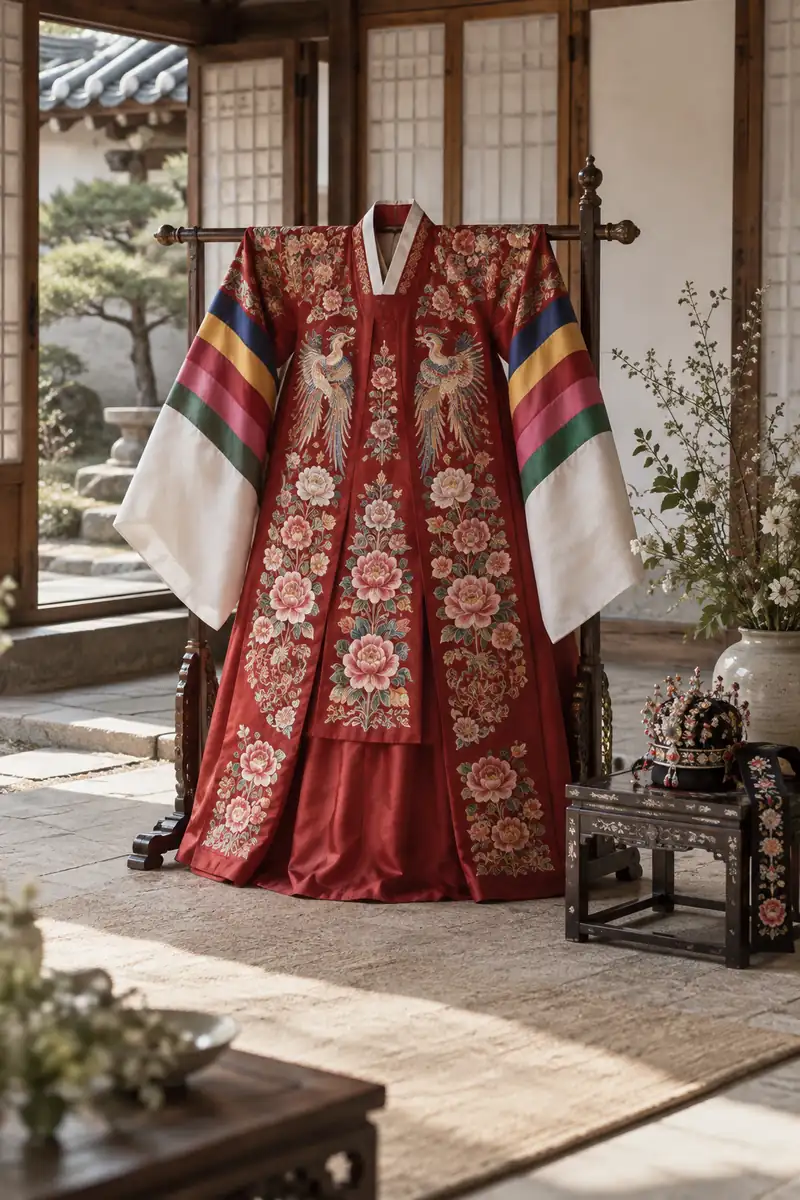 The hwarot, Korea
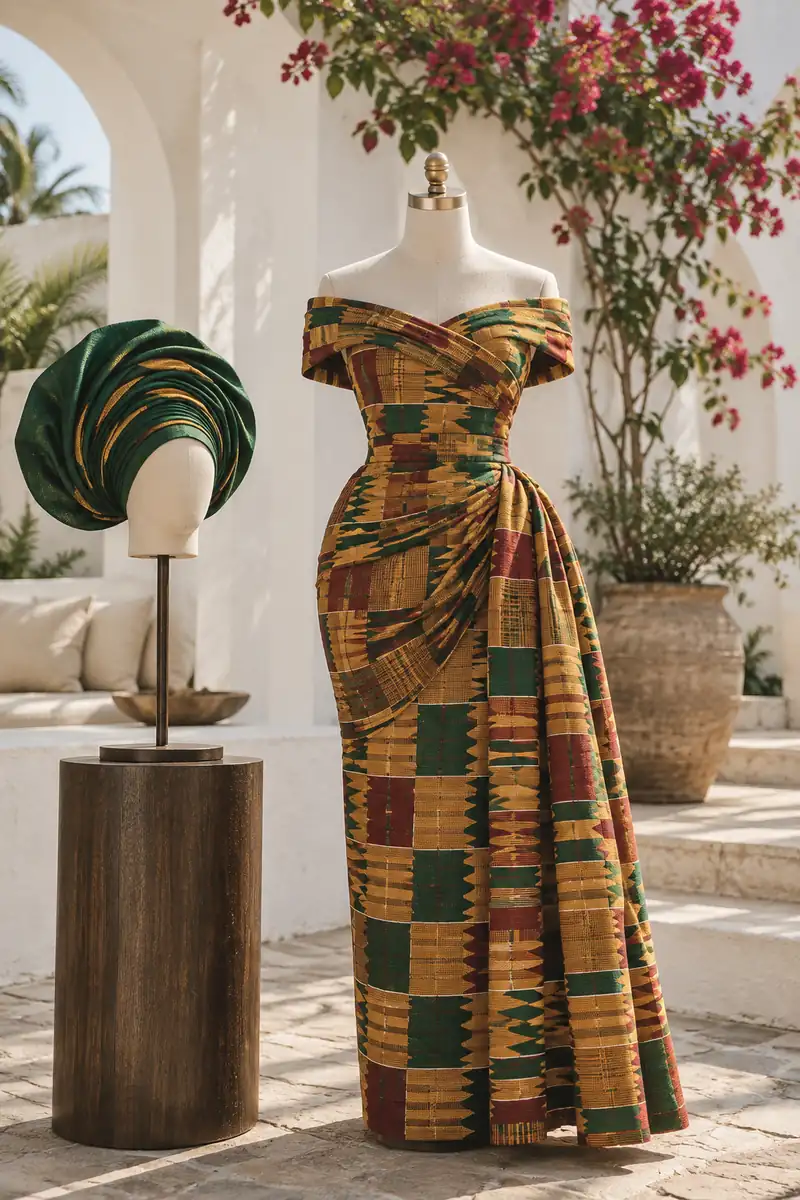 Kente and aso oke, West Africa
The lehenga (South Asia). An ankle-length skirt worn with a fitted blouse (choli) and a long scarf (dupatta). Bridal lehengas are heavily embroidered, often in red, and can take months to make: the crimson Sabyasachi lehenga Priyanka Chopra wore in 2018 took 110 embroiderers 3,720 hours, according to the designer.
The qipao or cheongsam (China). Two names, Mandarin and Cantonese, for the same fitted, high-collared dress that took its modern form in Shanghai in the 1920s. Many Chinese brides, and brides marrying into Chinese families, wear one for part of the day, sometimes in a modern version with a lace bodice or a looser skirt.
The kimono (Japan). For a Shinto ceremony, the bride traditionally wears the shiromuku, a kimono ensemble in pure white. The uchikake, a heavy, padded over-kimono worn only by brides or on stage, is usually red or white and richly decorated with auspicious motifs. Some brides change from white to color during the day.
The hanbok (Korea). Traditional bridal dress includes the hwarot, a ceremonial robe with striped sleeves worn over a scarlet skirt, and the jokduri headdress. Many Korean and Korean American couples wear hanbok for the pyebaek, the formal bow to the family.
The áo dài (Vietnam). The long tunic over trousers is standard wedding dress in Vietnam, sometimes paired with the traditional khăn vấn headdress.
Kente and aso oke (West Africa). Kente is the hand-woven strip cloth of Ghana’s Asante and Ewe weavers, each pattern named for a proverb or event and each color carrying meaning: gold for royalty and wealth, green for growth and renewal. Aso oke is the hand-woven cloth of the Yoruba, worn at weddings as a wrapper, blouse and the sculpted gele headwrap.
For more, see wedding traditions around the world and Puerto Rican wedding traditions. If you are wearing color, our guide to colored wedding dresses covers the practicalities, and modest wedding dresses covers coverage requirements for religious ceremonies.
Matching the style to the venue and season
| Setting | Styles that suit it | Fabrics to favor |
|---|---|---|
| Cathedral or large church | Classic, Old Hollywood, modest | Duchess satin, mikado, lace with a lining |
| Ballroom or grand hotel, evening | Classic, Old Hollywood, fashion-forward | Satin, crepe, beading |
| Garden, vineyard or barn | Romantic, bohemian, vintage | Lace, chiffon, organza |
| Beach or tropical destination | Bohemian, minimalist slip, short dress | Chiffon, georgette, light crepe |
| City hall or courthouse | Minimalist, vintage, separates, suit | Crepe, silk, tailoring |
| Winter or mountain | Classic, vintage, Old Hollywood | Velvet, brocade, heavy satin, long sleeves |
Summer asks for breathable fabrics and fewer layers. Winter is the season for long sleeves, velvet and capes. Spring and autumn leave the widest range open. The best time of year to marry covers what each season means for the rest of the day, and if you are traveling, see destination weddings.
How to find your style
Collect twenty images you love, then look for what repeats. It is rarely the silhouette. More often it is the fabric, the neckline or how much ornament there is. Two brides who both “love lace” may mean heavy guipure and whisper-fine Chantilly.
Look at your wardrobe. The clothes you feel best in are a better guide than any quiz.
Consider the whole picture. The dress sets the tone for the wedding colors, the hair and makeup and the shoes.
Try one dress from outside your style. The minimalist who tries a ball gown, or the romantic who tries a sleek crepe column, learns something either way. Finding the Dress explains how to make each appointment count, and our wedding dress shopping guide sets out the timeline.
Stay honest about your budget. Some styles cost more to make well. What a wedding dress costs explains why.
For inspiration from the brides who defined each look, see the most famous celebrity wedding dresses and royal wedding dresses.
Written and edited by the Today’s Weddings editors. How we research and check what we publish is set out in our editorial standards. Spotted something wrong? Tell us.