Wedding Content Creators: What They Do and What They Cost
The phone-in-hand newcomer at the wedding is not a replacement for the photographer. Here is what a content creator actually delivers, what couples are paying, and how to make both work on the day.
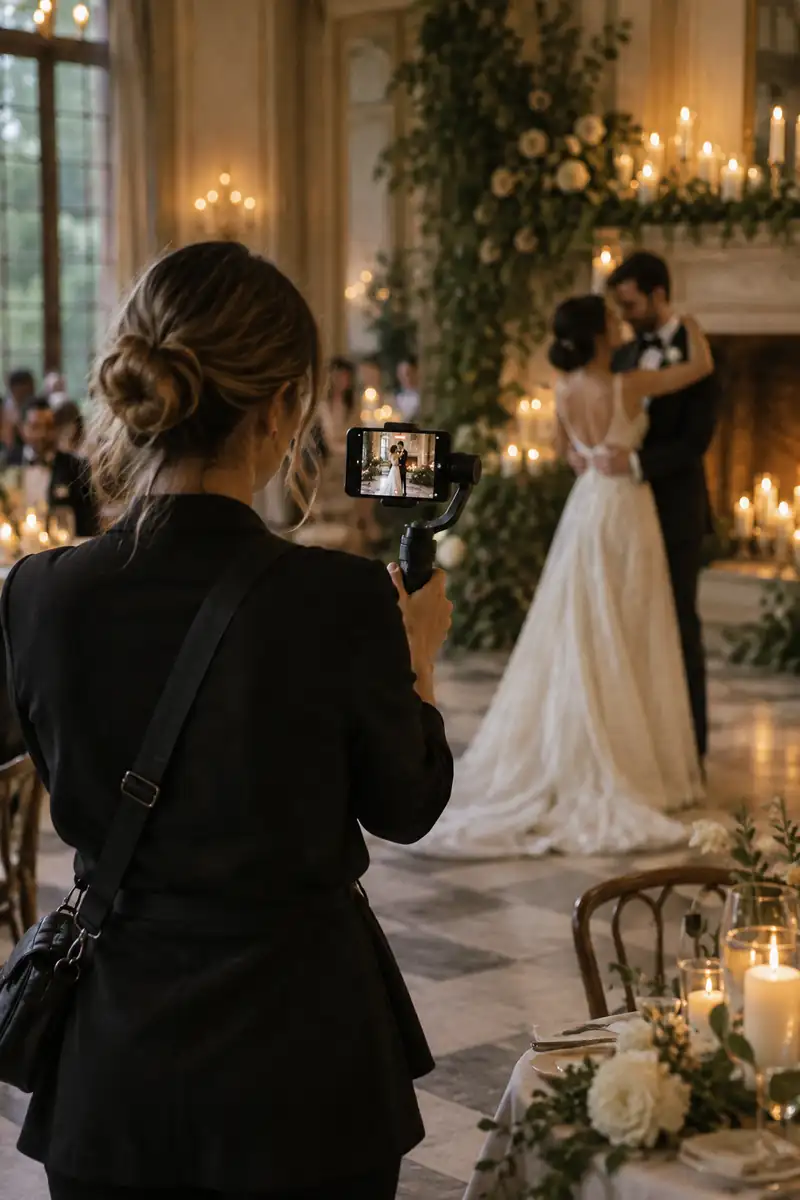
For most of the last forty years, wedding coverage came in two forms: the photographer, who delivered a gallery weeks later, and the videographer, who delivered a film months later. The wedding content creator is the first genuinely new job at the wedding in a generation. They arrive with a phone, follow the day from the getting-ready to the send-off, and hand over the footage the same night — vertical, casual, and built for Instagram and TikTok rather than for the mantelpiece.
It is a real service, and for many couples a very good one. It is also widely misunderstood, most often by couples who assume it can stand in for a photographer. It cannot, and the best creators will tell you so themselves.
What a content creator actually does
A content creator documents the day as a guest would see it, only better: the dress being buttoned, the groomsmen’s reaction, the first look from behind the photographer’s shoulder, the toast from the second row, the dance floor at eleven. They shoot on a current smartphone in the native vertical format that social platforms favor, and they concentrate on moments and texture rather than on formal composition.
The deliverables vary by creator but usually include raw clips, a selection of edited short videos, and behind-the-scenes photographs. Zola’s guidance, updated in March 2026, notes that delivery typically comes within 24 hours of the wedding; many creators send a first batch the same night, by AirDrop or a shared link, so that the couple can post before the party is over.
What they do not deliver is the archive: high-resolution photographs printed large, carefully lit portraits, family formals, a full edited film with clean audio of the vows. Those remain the work of a photographer and videographer.
What it costs in 2025 and 2026
Pricing is still settling, because the job is new, but the data now exists. Zola’s 2026 Wedding Spend Survey found that more than 60 percent of couples who hired a content creator spent between $500 and $999. Packages above that range usually add hours, a second creator, more edited reels, faster turnaround, or coverage of the rehearsal dinner and the day after. Travel fees apply for destination weddings.
For comparison, The Knot’s 2026 Real Weddings Study found that couples married in 2025 spent an average of $3,000 on a photographer and $2,300 on a videographer. A content creator, in other words, typically costs a fraction of either — which is exactly why some couples are tempted to hire one instead of a videographer, and why that choice deserves thought.
The demand is growing. Zola’s 2026 survey found that one in five couples (21 percent) now hire at least one “unique or niche” vendor, and that content creators account for 22 percent of those hires, the largest single category.
The content creator gives you the wedding the night of the wedding. The photographer gives you the wedding for the rest of your life. Most couples who can afford both are glad they had both.
Content creator, photographer or videographer
| Content creator | Photographer | Videographer | |
|---|---|---|---|
| Equipment | Smartphone | Professional cameras, lenses, lighting | Cinema cameras, separate audio |
| Format | Vertical clips and photos | High-resolution stills | Horizontal edited film |
| Delivery | Same night to a few days | Weeks | Months |
| Purpose | Sharing now | The permanent record | The permanent record, with sound |
| The Knot 2026 average | — | $3,000 | $2,300 |
If the budget allows only one, hire the photographer. If it allows two, the choice between a videographer and a content creator is a choice between a film you watch on anniversaries and footage you share this week. Our guide to hiring a photographer covers the contract and shot list, and the archive essay do I really need a wedding video? makes the case for film.
How to hire one
Look at complete weddings, not highlight reels. Ask to see everything a creator delivered from one wedding, so you can judge consistency rather than their three best clips.
Ask the right questions:
- How many weddings have you covered, and how many hours is a standard package?
- What exactly will I receive — raw clips, edited reels, photographs — and how many of each?
- When will I receive the first footage, and when the rest?
- Will you post the content on your own accounts? When, and with whose permission?
- Who owns the footage, and can we use it however we like?
- Have you worked alongside a photographer and videographer before? Can I speak to one of them?
Get it in writing. Deliverables, turnaround, hours, overtime rate, travel fees, and posting rights all belong in the contract. Zola’s guidance specifically recommends settling content usage rights before you sign.
How they work alongside the photographer
A content creator in the wrong place can ruin the photograph everyone else will keep. The solution is a conversation before the day, not a negotiation during it.
Tell your photographer first. Some photographers welcome creators; a few have contract clauses about other image-makers. Ask before you book.
Introduce them early. A short call among the photographer, videographer, content creator and your planner, two or three weeks out, is enough to agree on positions for the processional, the vows, the first kiss and the first dance.
Set the priority. For the ceremony, the photographer and videographer take the aisle and the key angles; the creator works from the side or behind. During portraits, the creator films behind the photographer, not beside them.
Share the timeline. Give every vendor the same schedule. The reception, hour by hour is a useful template.
Etiquette
For the couple: decide whether guests will be filmed and posted, and say so. If you are also asking guests to put their phones away, a content creator lets you have both a phone-free ceremony and same-day footage; our guide to the unplugged wedding ceremony explains how to ask. Feed your creator the way you would your photographer, and include them in the vendor tip plan.
For the creator: stay out of the aisle, the officiant’s sightline and the photographer’s frame. Ask before filming children, elderly relatives or anyone who seems reluctant, and don’t post a guest’s face publicly without the couple’s consent.
For guests: a creator is working, not socializing. Let them film, and don’t ask them to take your personal photographs.
A content creator is best understood as the friend with the best phone and the most time, hired to capture the day as it felt. Book the photographer first, add the creator if the budget allows, and introduce them to each other long before the wedding.
Written and edited by the Today’s Weddings editors. How we research and check what we publish is set out in our editorial standards. Spotted something wrong? Tell us.