Prince William and Kate Middleton’s Wedding, 2011
An avenue of trees inside Westminster Abbey, a lace gown by Sarah Burton for Alexander McQueen and a bouquet with myrtle from Queen Victoria’s bush. The royal wedding, reconsidered for the twenty-first century.
Guests entering Westminster Abbey on April 29, 2011, found not a formal flower arrangement but a small wood: an avenue of 20-foot trees, six field maples and two hornbeams, standing along the nave. It set the tone for a wedding that kept the full ceremony of a British royal occasion while making it feel lighter and more personal. Catherine Middleton’s dress, by Sarah Burton for Alexander McQueen, did the same thing for the royal wedding gown.
| At a glance | |
|---|---|
| Date | Friday, April 29, 2011 |
| Place (ceremony) | Westminster Abbey, London |
| Reception | Lunchtime reception given by the Queen at Buckingham Palace; evening dinner given by the Prince of Wales |
| The dress (designer) | Sarah Burton for Alexander McQueen |
| Guests | About 1,900 at the Abbey |
| Officiant | Rowan Williams, Archbishop of Canterbury |
The couple
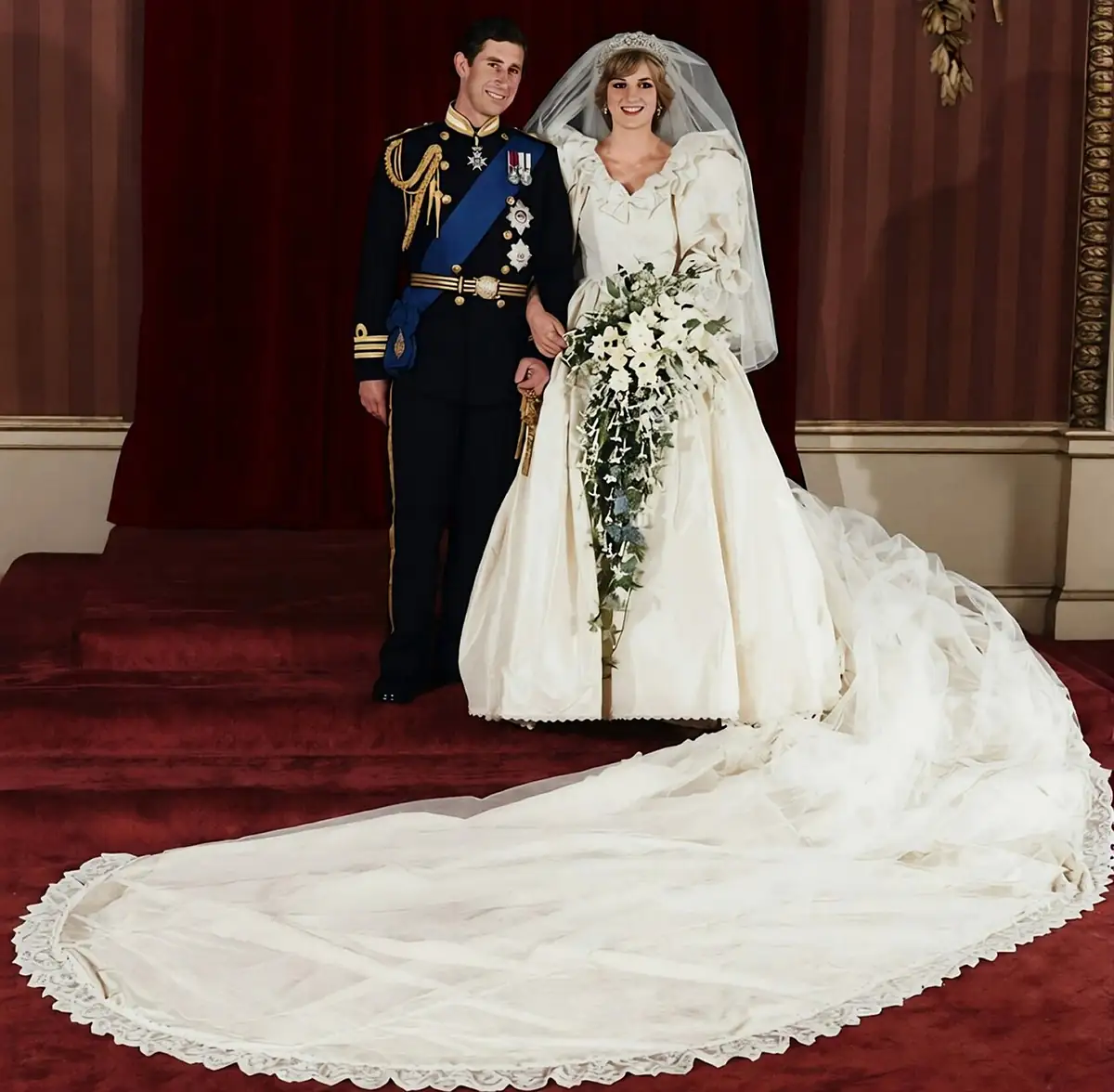
They met in 2001 as students at the University of St Andrews in Scotland and began dating in 2003. They became engaged in October 2010 on a private holiday in Kenya, and William gave Catherine the sapphire and diamond ring his father had given to his mother, Diana, in 1981; you can read about that wedding here.
On the wedding day it was announced that the couple would be known as the Duke and Duchess of Cambridge. Since 2022, after the accession of King Charles III, they have been the Prince and Princess of Wales.
The ceremony
The service began at 11 a.m. The Dean of Westminster, John Hall, conducted it; the Archbishop of Canterbury, Rowan Williams, married the couple; and the Bishop of London, Richard Chartres, preached. Prince Harry was his brother’s best man and Pippa Middleton her sister’s maid of honor, with four young bridesmaids and two pages.
The bride walked up the aisle to Sir Hubert Parry’s “I was glad,” composed in 1902. The congregation sang “Guide Me, O Thou Great Redeemer,” “Love Divine, All Loves Excelling” and “Jerusalem,” and John Rutter wrote a new anthem for the occasion. Her ring was made of Welsh gold, following royal tradition; William chose not to wear one. The peak television audience in Britain was 26.3 million.
The dress
Sarah Burton, the creative director of Alexander McQueen, designed a gown of ivory and white satin gazar. The bodice, narrowed at the waist and padded at the hips, drew on Victorian corsetry, and was fastened down the back with 58 gazar and organza-covered buttons. Over it lay lace appliqué hand-made by the Royal School of Needlework at Hampton Court Palace, using the Carrickmacross technique that originated in Ireland in the 1820s: individual flowers were cut by hand from lace and applied to ivory silk tulle, forming long sleeves and a V neckline. The motifs included the rose, thistle, daffodil and shamrock of the four nations. The train measured 2.7 meters.
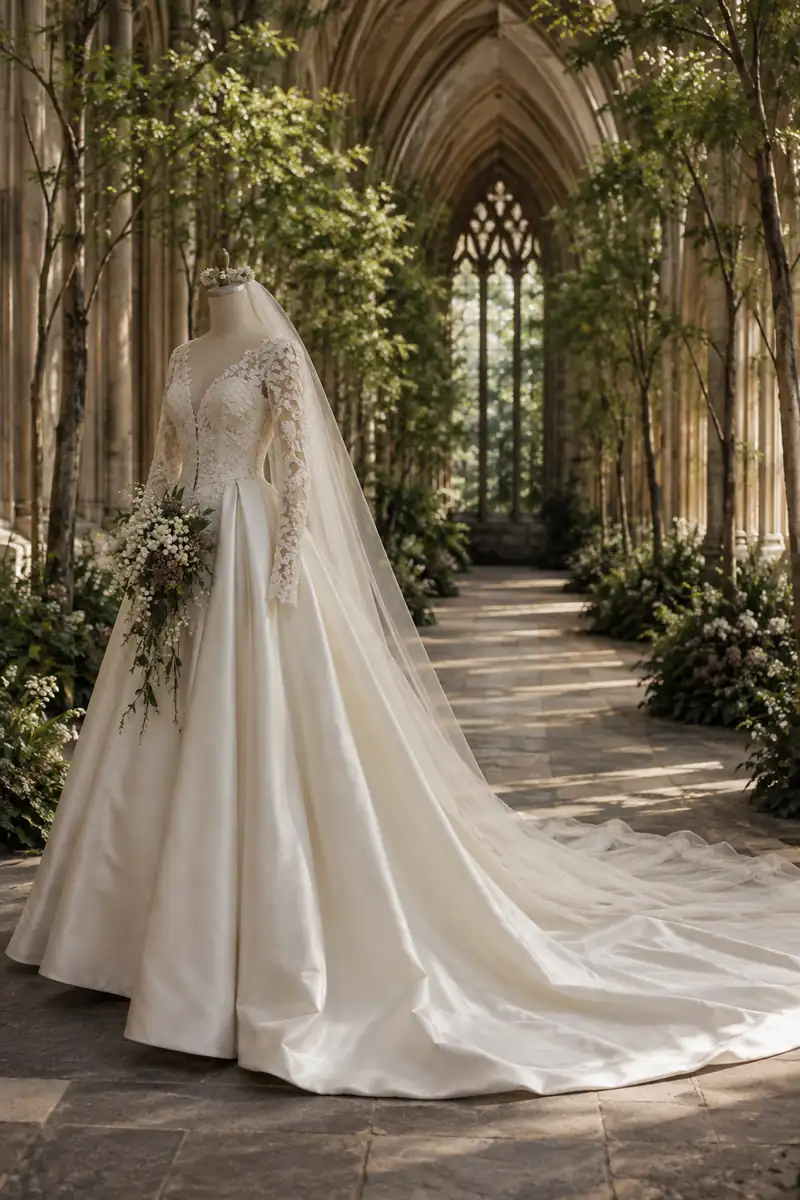
Her veil of ivory silk tulle, edged with hand-embroidered flowers, was held by a Cartier “halo” tiara of 1936, lent by the Queen. Her diamond earrings, by Robinson Pelham, were designed as stylized oak leaves with a diamond acorn, and her shoes, made by the McQueen team, were ivory duchesse satin with lace embroidered by the Royal School of Needlework.
The bouquet, by Shane Connolly, was small and shield-shaped: myrtle, lily of the valley, sweet William and hyacinth, with ivy. The myrtle came from the plant Queen Victoria put in at Osborne House on the Isle of Wight in 1845. Following the custom begun by the late Queen Mother, the bouquet was later laid on the Grave of the Unknown Warrior in the Abbey. The dress was displayed at Buckingham Palace that summer. See how it compares with other royal gowns in our guide to royal wedding dresses.
The reception
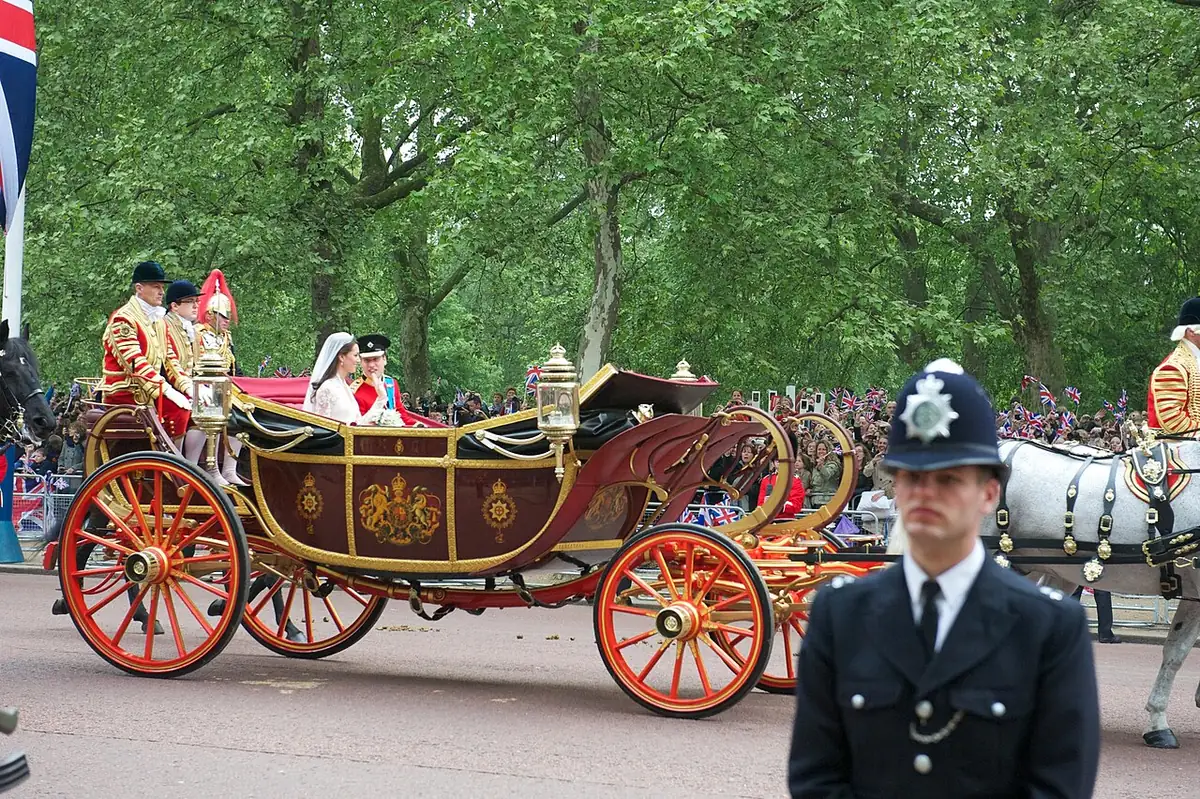
The couple rode back to Buckingham Palace in the 1902 State Landau and kissed on the balcony before an RAF flypast. The Queen gave a lunchtime reception for 650 guests. There were two cakes: an eight-tier fruitcake by Fiona Cairns and a chocolate biscuit groom’s cake made by McVitie’s. Later William drove his wife away from the palace in a vintage Aston Martin DB6 Volante.
That evening the Prince of Wales gave a dinner for 300. The bride changed into a second Sarah Burton design, a strapless gown with a full circle skirt and diamanté detailing, worn with a white shrug.
Why it mattered
The dress was widely compared to Grace Kelly’s in 1956, and it brought the long lace sleeve back into bridal fashion at a time when strapless gowns filled the bridal salons. Just as useful to other couples were the ideas around it: trees instead of formal arrangements, a small bouquet of flowers chosen for meaning, a second dress for the evening and a groom’s cake. The wedding showed that tradition could be kept and still feel personal. Seven years later, Prince Harry’s wedding went further in the same direction. For the whole history, see The Great Royal Weddings.
Borrow the idea
Bring the outdoors in. Potted trees along the aisle transform a large room and can be replanted or returned to the nursery afterward. Ask your florist about renting them.
Choose flowers for their meaning. Shane Connolly chose each flower for its associations with love, fidelity and constancy. Our guide to flower meanings will help you do the same.
Plan an evening change. A lighter second dress lets you dance. Choose it after the main gown so the two look like a pair.
Add a groom’s cake. A chocolate biscuit cake or the groom’s favorite dessert alongside the main cake is a warm, inexpensive touch. See our wedding cake guide.
Written and edited by the Today’s Weddings editors. How we research and check what we publish is set out in our editorial standards. Spotted something wrong? Tell us.