Royal Wedding Dresses, From Queen Victoria to Today
How a young queen’s white satin became the world’s wedding dress, and the royal gowns since, from Norman Hartnell’s pearls to Princess Beatrice’s borrowed Hartnell.
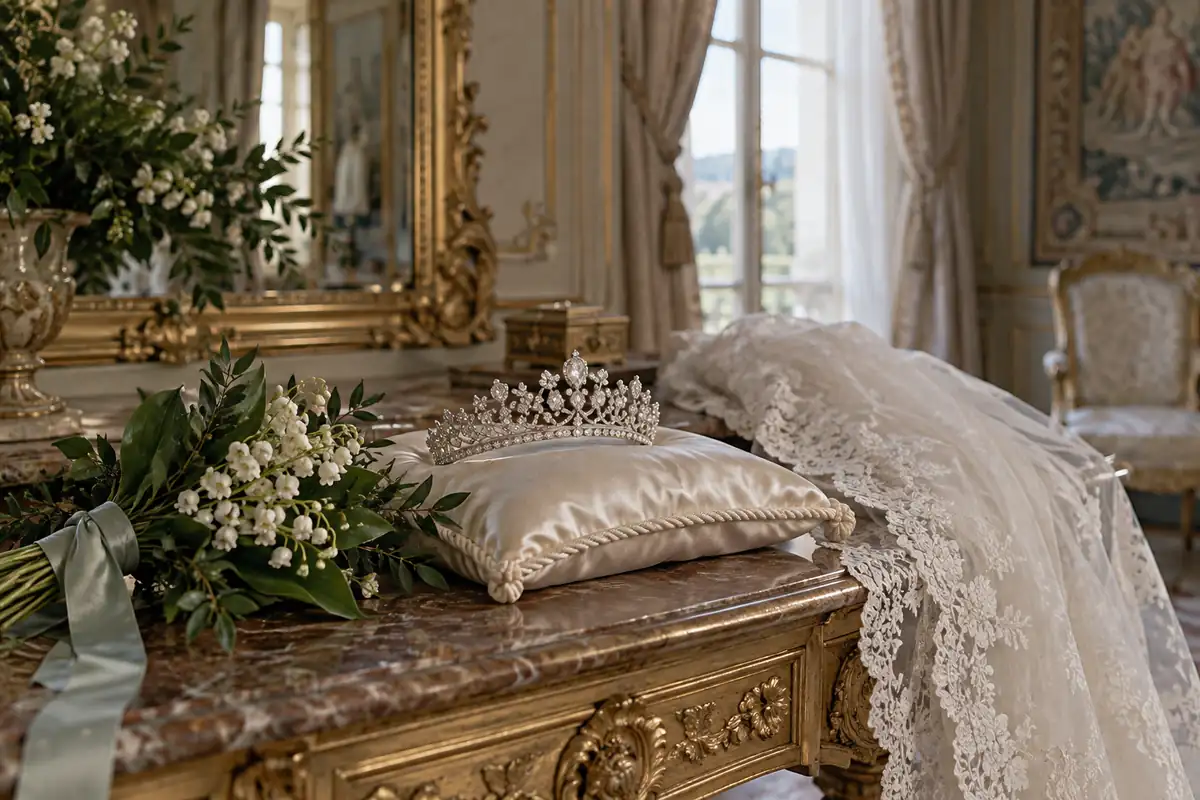
On February 10, 1840, Queen Victoria married Prince Albert at St James’s Palace in a dress of heavy white silk satin woven in Spitalfields, in east London, trimmed with handmade Honiton lace from Devon and orange blossom. She wore a wreath of orange blossom in place of a tiara. White was an unusual choice for a bride. Women of wealthy families generally married in rich colors and fabrics, and even royal brides who had worn white were exceptions. But illustrations of Victoria’s wedding were published widely, and within a generation elite brides were copying her. Nearly every white wedding since descends from that dress.
Royal weddings have set bridal fashion ever since. What follows are the most influential royal gowns of the last two centuries, what made each one, and what they can teach a bride who will never need a tiara.
Queen Victoria, 1840
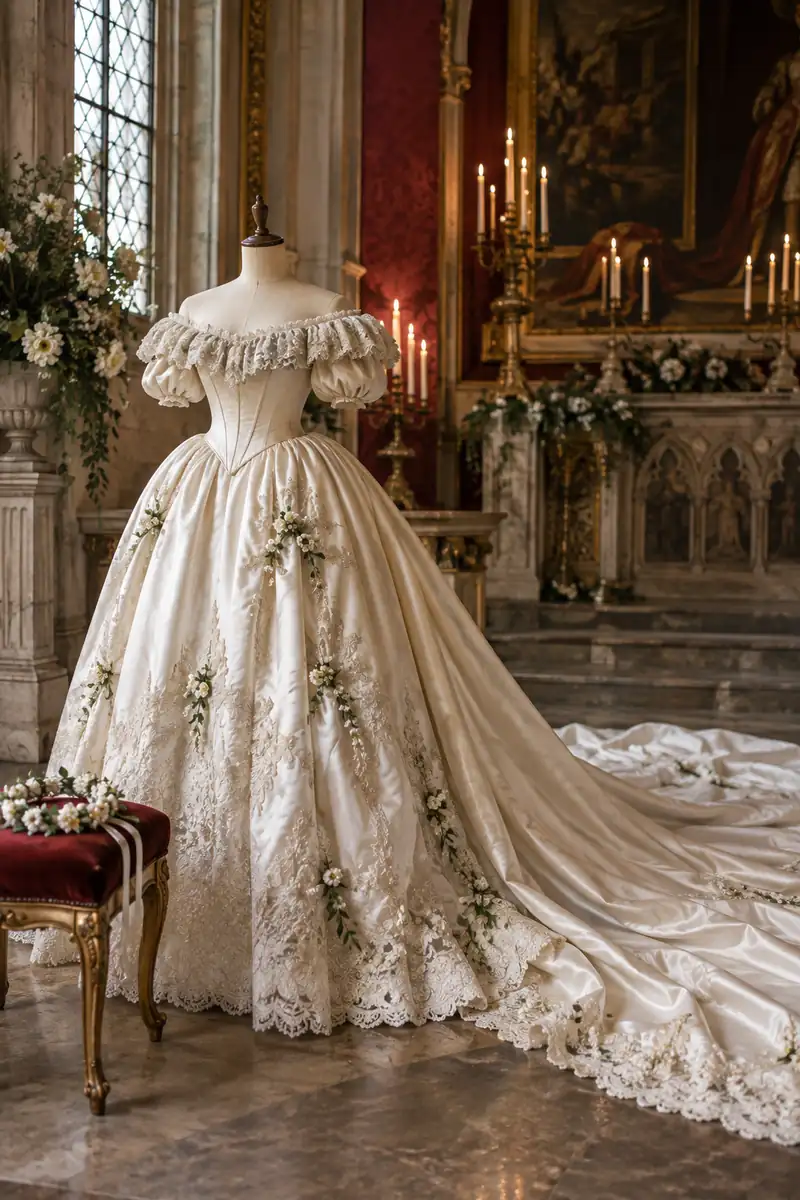
Victoria was not the first royal bride in white. Philippa of England, daughter of Henry IV, wore white silk at her wedding in Sweden in 1406. But Victoria’s choice was deliberate and patriotic. The satin was English, from the silk weavers of Spitalfields; the lace was made in Devon to a design by William Dyce, head of the Government School of Design; and the dress was made by Mary Bettans. The train was eighteen feet long. Supporting British craft through the wedding dress became a royal habit that has lasted to this day.
Princess May of Teck, 1893
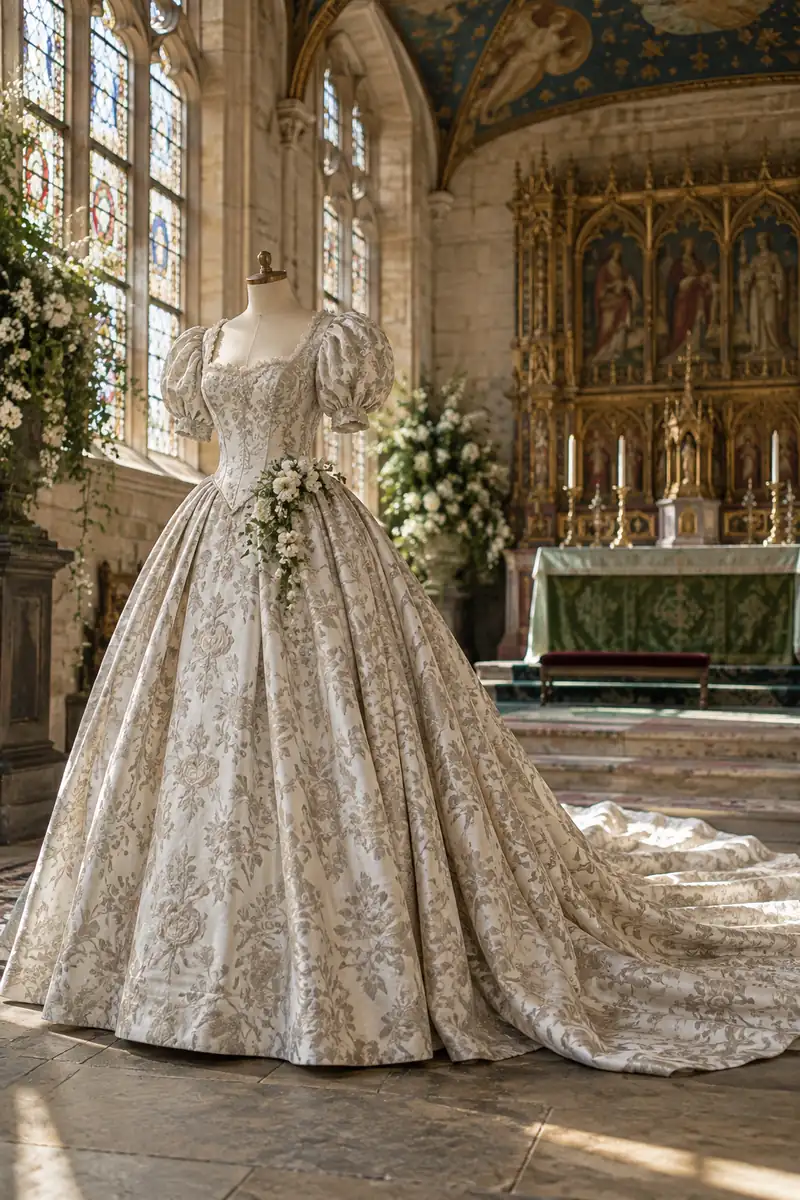
When Princess May of Teck, the future Queen Mary, married the Duke of York at the Chapel Royal, St James’s Palace, on July 6, 1893, her gown was a showcase for British textiles. Arthur Silver designed a white and silver silk brocade, woven at Warner & Sons’ Spitalfields works, with roses, shamrocks and thistles for England, Ireland and Scotland. The dress was made by Linton and Curtis of Albemarle Street and trimmed with Honiton lace from her mother’s own wedding dress. National flowers woven into the fabric became a royal tradition; Meghan Markle’s veil took it to its fullest expression 125 years later.
Princess Elizabeth, 1947, and Princess Margaret, 1960
Norman Hartnell, court dressmaker since 1938, made both sisters’ wedding dresses, and they could hardly be more different.
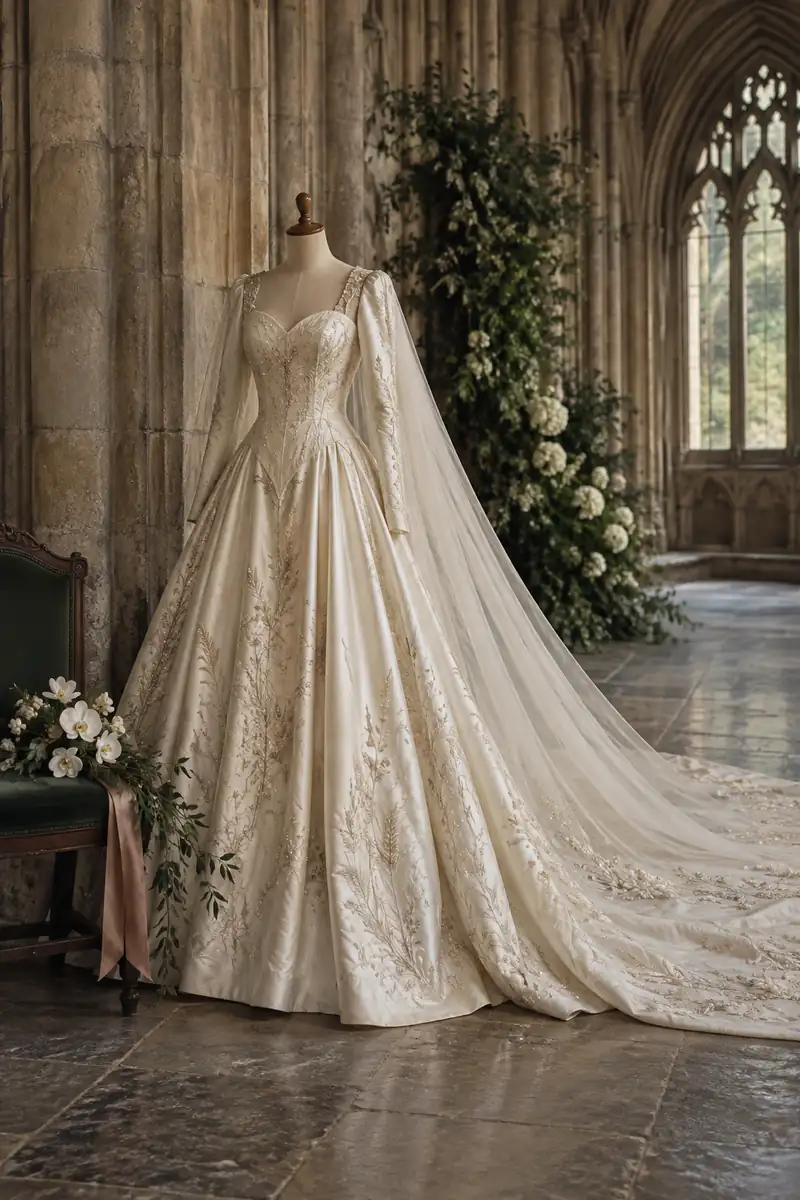
Elizabeth’s, for her November 20, 1947, wedding at Westminster Abbey, was ivory silk satin with a star-patterned train inspired by Botticelli’s Primavera, embroidered with about 10,000 seed pearls, crystals, jasmine, roses and ears of wheat. Clothing was still rationed, and she needed coupons for the fabric; the government granted her 200 extra. The dress was meant as a message of renewal after the war.
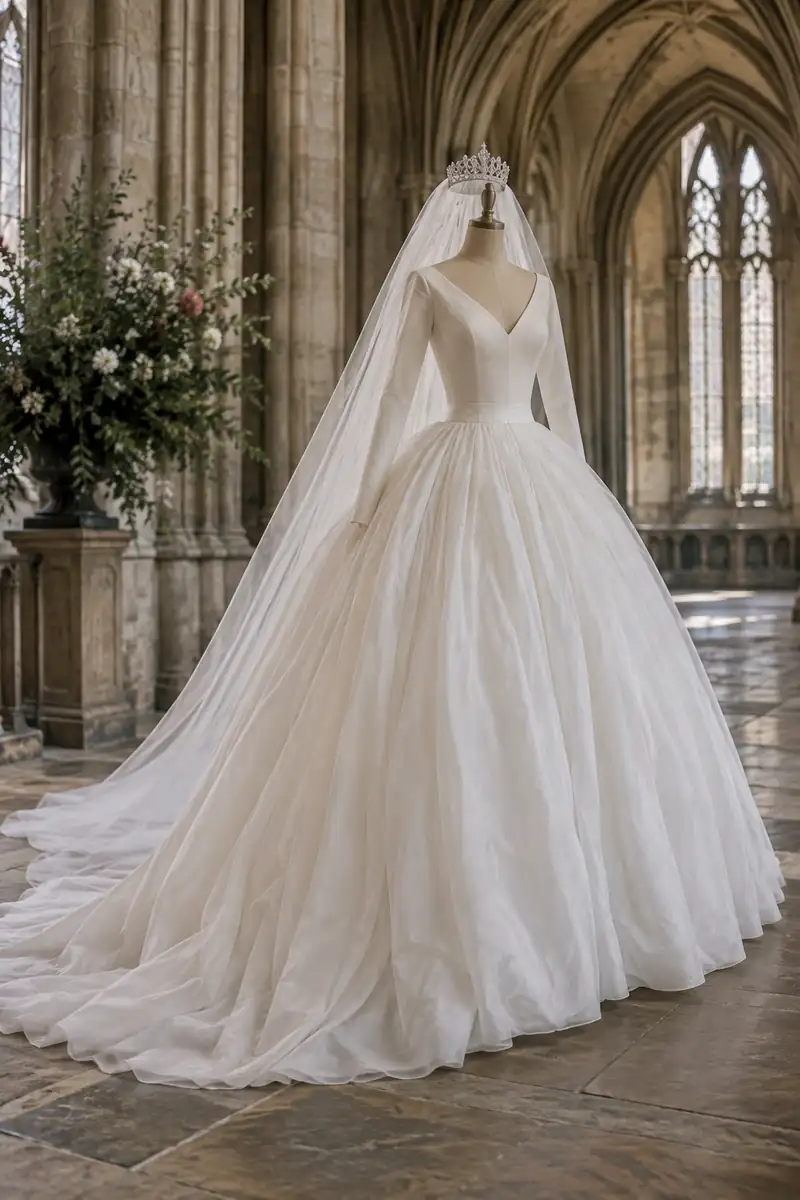
Margaret’s, for her May 6, 1960, wedding, also at Westminster Abbey, was silk organza with almost no ornament, cut to flatter her petite frame, with some thirty meters of fabric in the skirt. Life called it “the simplest royal wedding gown in history.”
Together they mark the two poles of royal bridal style: the embroidered state occasion and the triumph of cut. See also the wedding of Queen Elizabeth and Prince Philip.
Grace Kelly, 1956
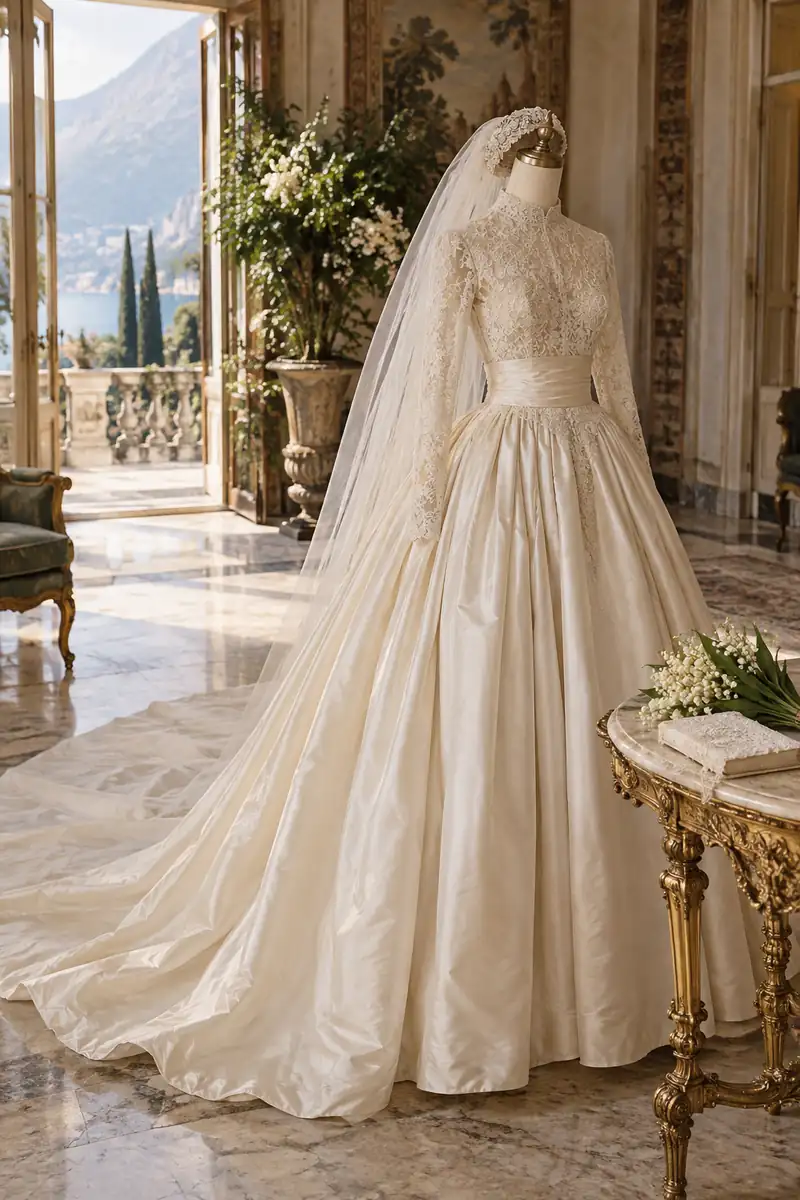
The American actress who became Princess of Monaco married Prince Rainier III on April 19, 1956, in a gown designed by MGM’s Helen Rose and given to her by the studio: silk taffeta, silk net, peau de soie and 125-year-old Brussels rose point lace, with seed pearls on the Juliet cap that held her veil. Its high lace bodice and long sleeves remain one of the most copied silhouettes in bridal. The dress is now in the Philadelphia Museum of Art. Read the story of the wedding.
Princess Anne, 1973
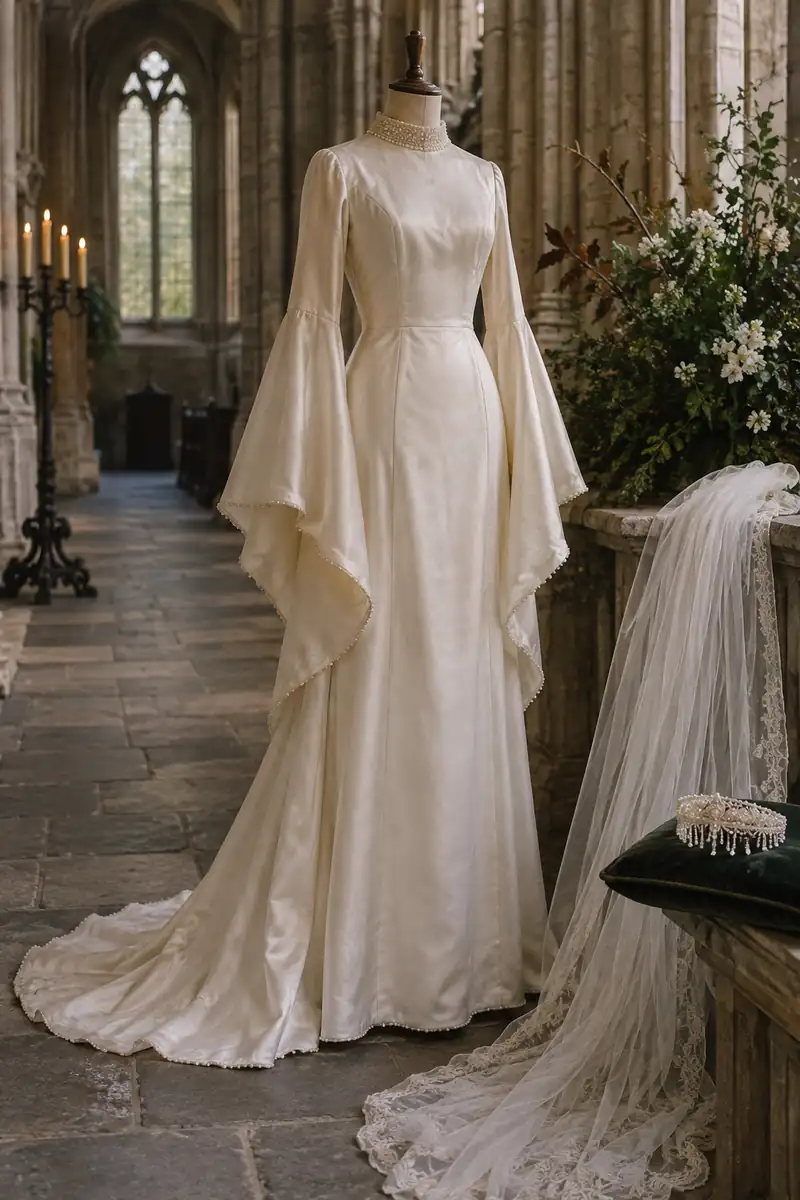
Princess Anne married Captain Mark Phillips at Westminster Abbey on November 14, 1973, in a high-collared white silk dress with medieval-style trumpet sleeves by Maureen Baker, chief designer of the label Susan Small. It was notably plain by royal standards and very much of the early 1970s. She wore the Queen Mary Fringe Tiara, which her mother had worn in 1947 and her niece Beatrice would wear in 2020.
Lady Diana Spencer, 1981, and Sarah Ferguson, 1986
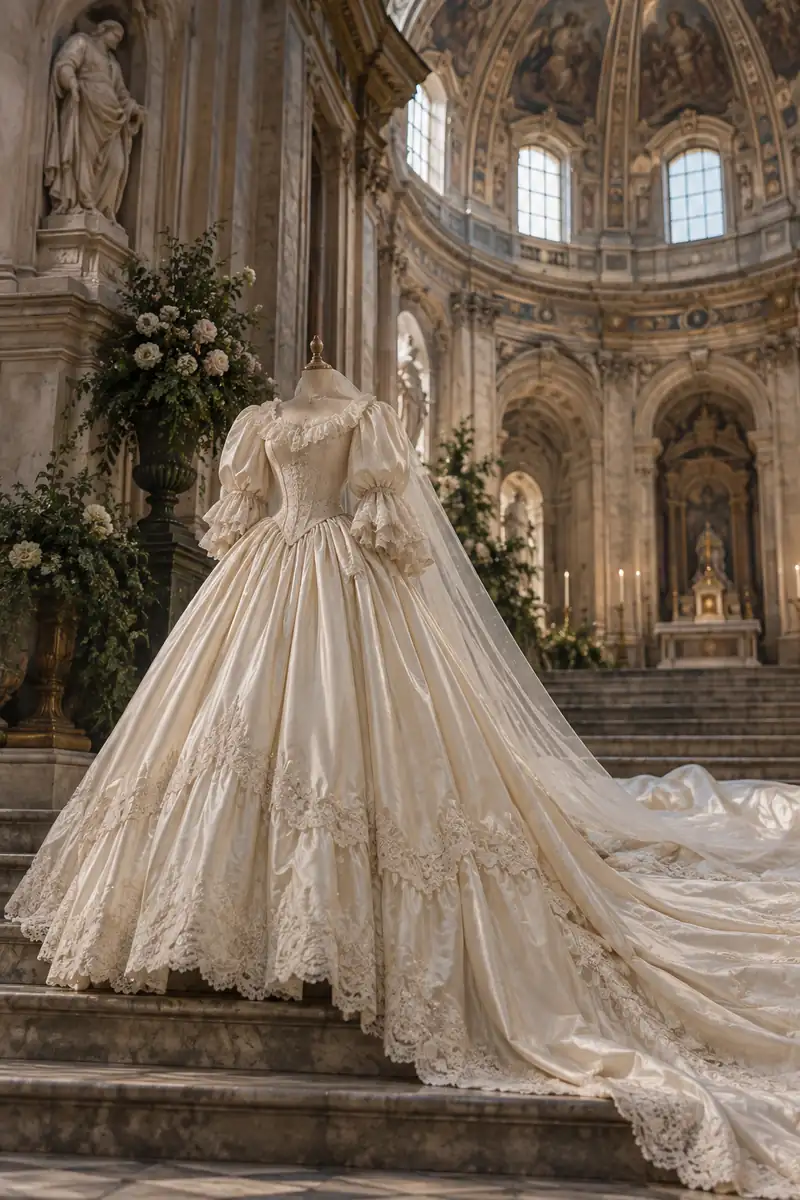
Diana’s dress, by David and Elizabeth Emanuel, was the defining royal gown of the century: ivory silk taffeta and antique lace, puffed sleeves, some 10,000 pearls, a 25-foot train and a veil of 153 yards of tulle, worn at St Paul’s Cathedral on July 29, 1981. Copies were on sale within hours. Read the story of the wedding.
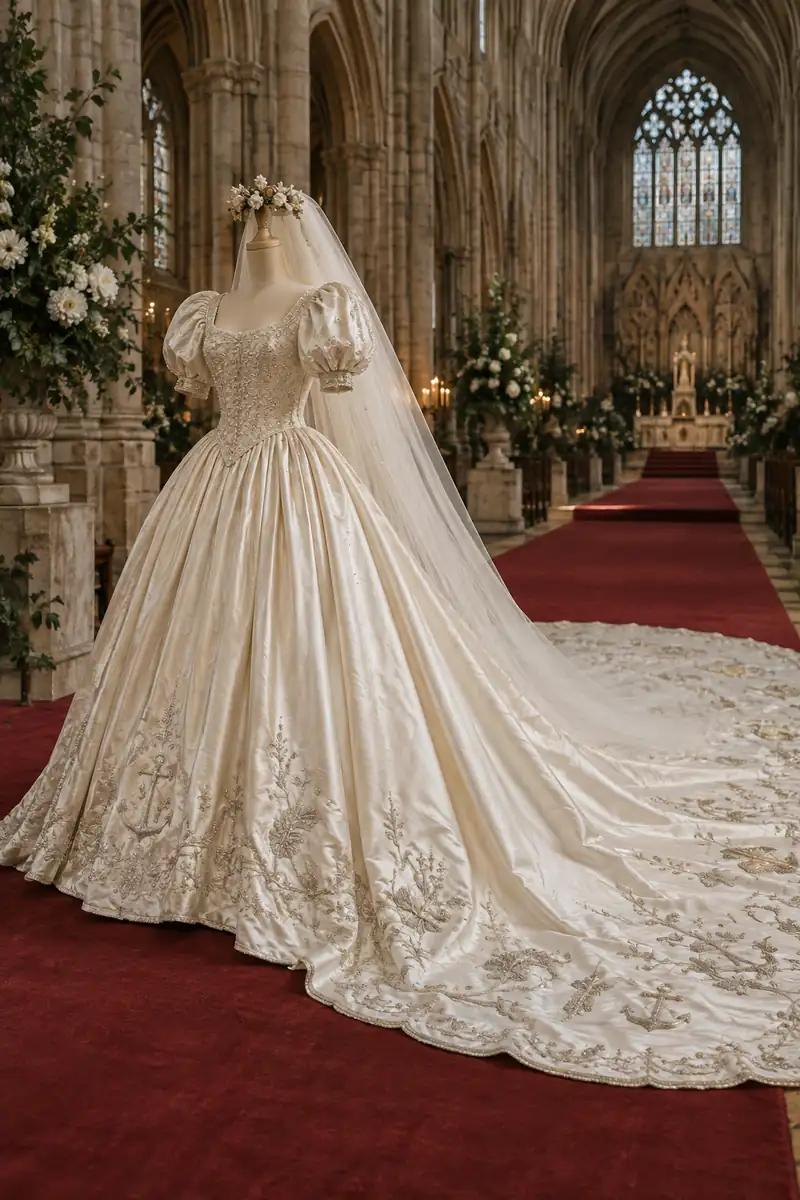
Sarah Ferguson’s, by Lindka Cierach, followed five years later: boned ivory duchesse satin with a 17-foot train beaded with the couple’s initials, anchors and waves for Prince Andrew’s naval career, and bees and thistles from her family’s coat of arms. It was the most sought-after style of the season.
Sophie Rhys-Jones, 1999, and Camilla Parker Bowles, 2005
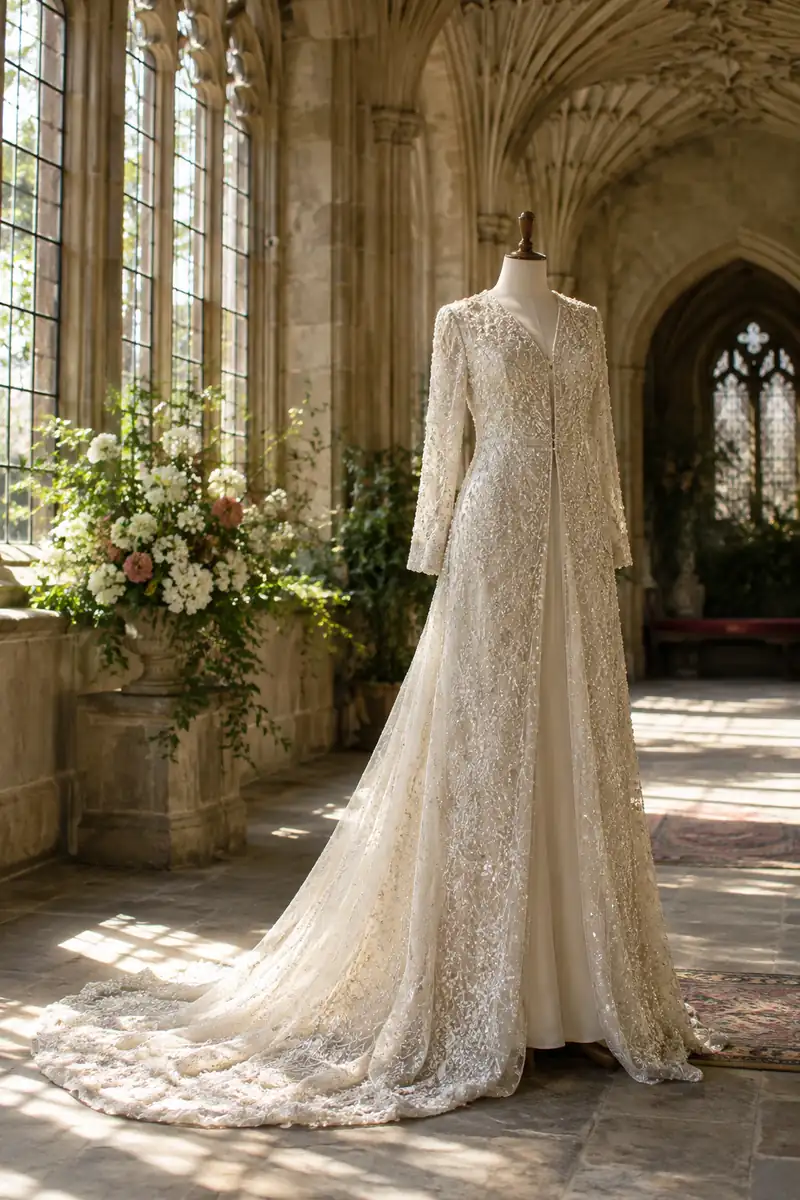
At St George’s Chapel, Windsor, on June 19, 1999, Sophie Rhys-Jones wore a gown by Samantha Shaw in hand-dyed silk organza and silk crepe, sewn with some 325,000 cut-glass and pearl beads.
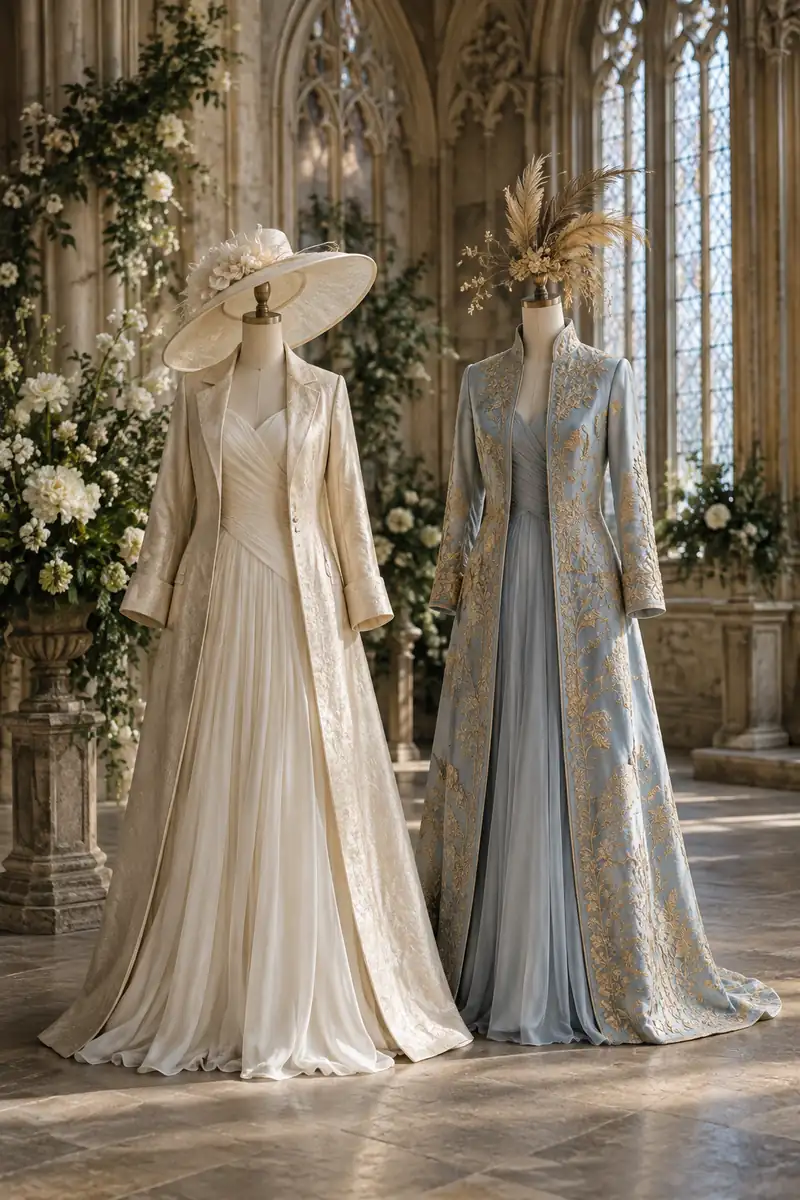
When Camilla Parker Bowles married the Prince of Wales in 2005, she wore cream silk chiffon with an oyster silk coat for the civil ceremony, then a floor-length pale blue and gold embroidered coat for the blessing, both by Robinson Valentine, with a hat by Philip Treacy. Hers is the model for the elegant second wedding and the civil ceremony (see courthouse and civil wedding dresses).
The European royal brides
Across Europe, royal brides have tended to choose couturiers from home or from the great Italian houses.
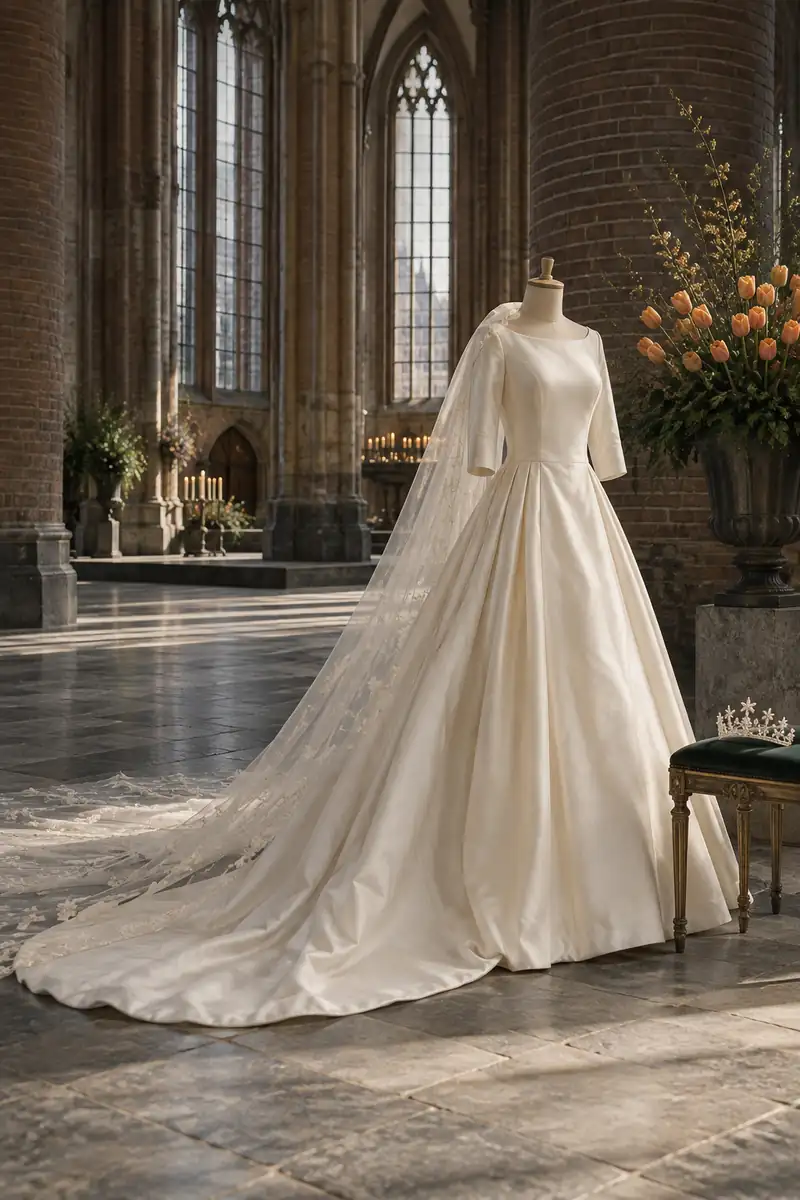 Máxima, 2002 — Valentino
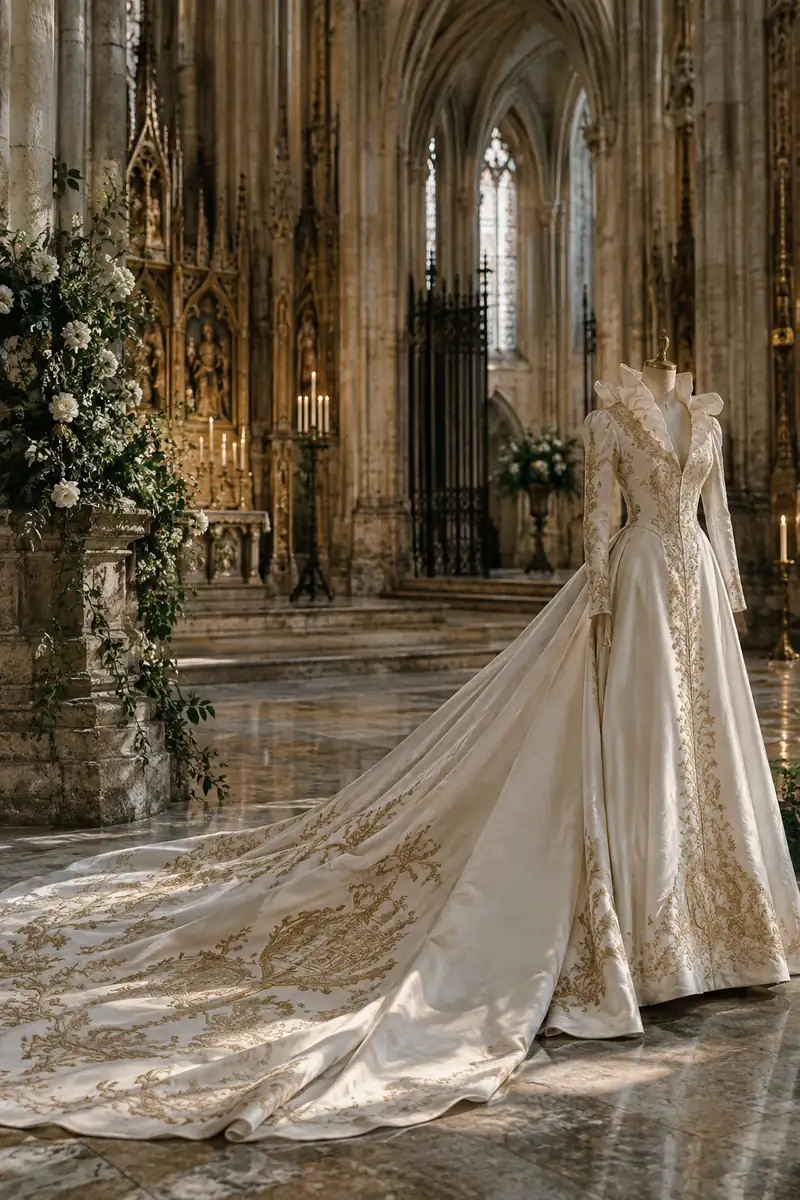 Letizia, 2004 — Manuel Pertegaz
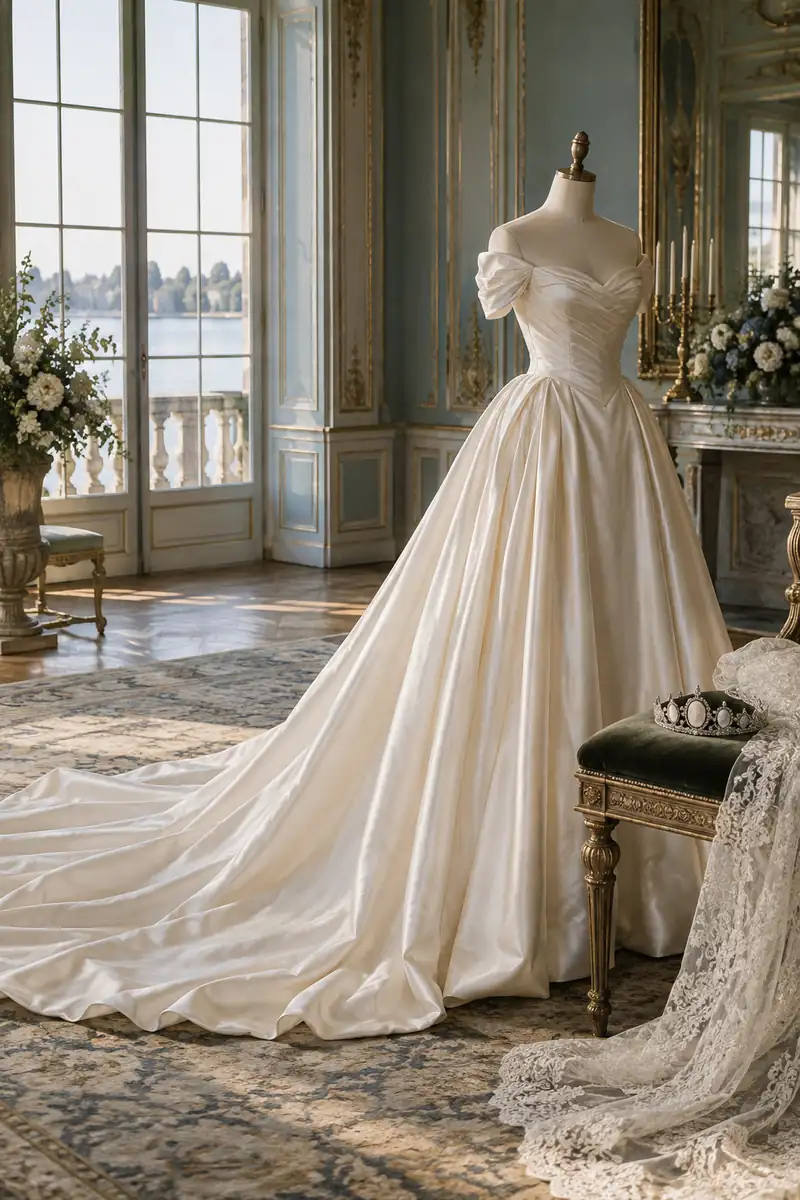 Victoria, 2010 — Pär Engsheden
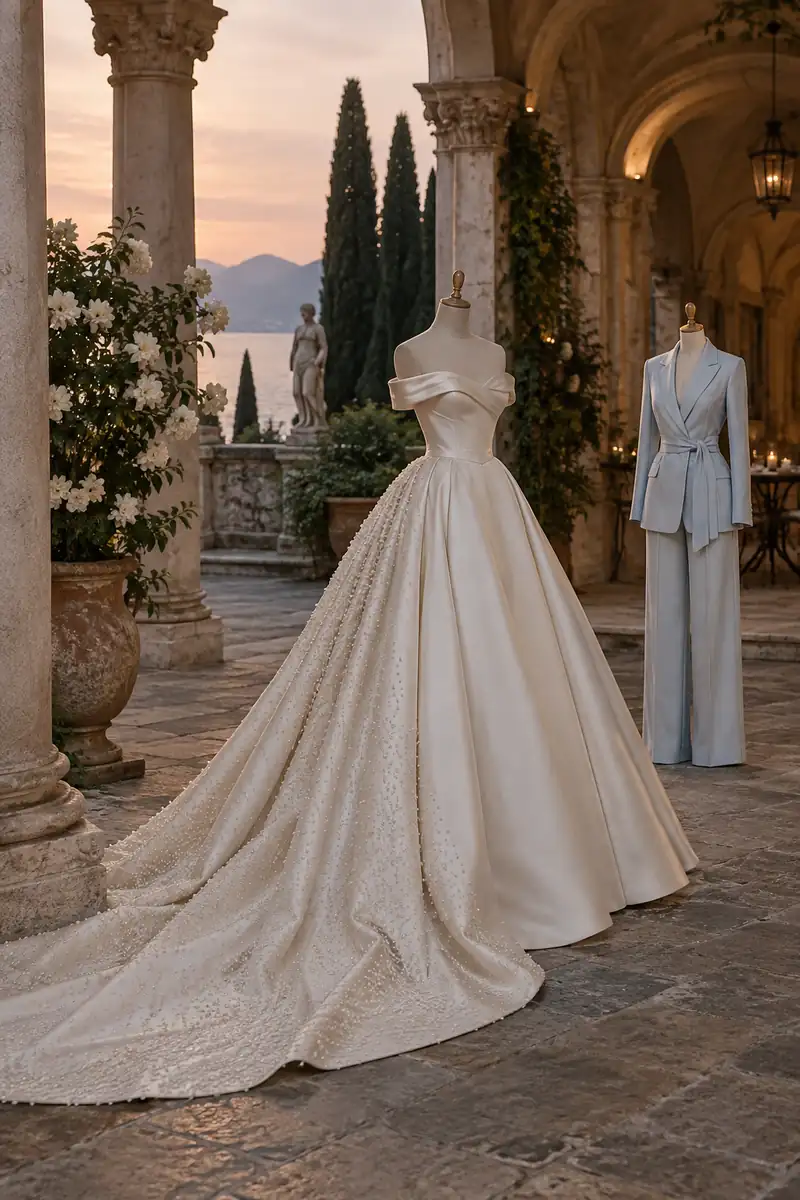 Charlene, 2011 — Giorgio Armani
Máxima Zorreguieta, 2002 — Valentino. The Argentine-born bride married the Prince of Orange on February 2, 2002, with a civil ceremony at the Beurs van Berlage and a religious ceremony at the Nieuwe Kerk in Amsterdam, wearing Valentino. The house has since dressed Princess Madeleine of Sweden among other royal brides.
Letizia Ortiz, 2004 — Manuel Pertegaz. For her wedding to Prince Felipe at the Almudena Cathedral in Madrid on May 22, 2004, the future Queen Letizia wore a long-sleeved white gown by the Spanish couturier Manuel Pertegaz, with a V-neck, a high corolla collar and a 4.5-meter train embroidered with heraldic motifs, fleurs-de-lis and ears of wheat. She wore the tiara Queen Sofía had worn at her own wedding.
Crown Princess Victoria of Sweden, 2010 — Pär Engsheden. She married Daniel Westling at Stockholm Cathedral on June 19, 2010, in a white satin gown by the Swedish designer Pär Engsheden with a five-meter train, and the cameo tiara her mother, Queen Silvia, had worn at her wedding.
Charlene Wittstock, 2011 — Giorgio Armani. For her religious wedding to Prince Albert II in the courtyard of the Prince’s Palace of Monaco on July 2, 2011, the South African-born bride wore white duchess satin with a long train by Giorgio Armani. Part of the ceremony was conducted in Afrikaans in honor of her South African heritage.
Princess Stéphanie of Luxembourg, 2012 — Elie Saab. The Lebanese couturier, a member of the Paris haute couture federation since 2003, dressed her for her civil wedding to Hereditary Grand Duke Guillaume.
Catherine, Meghan, Eugenie and Beatrice
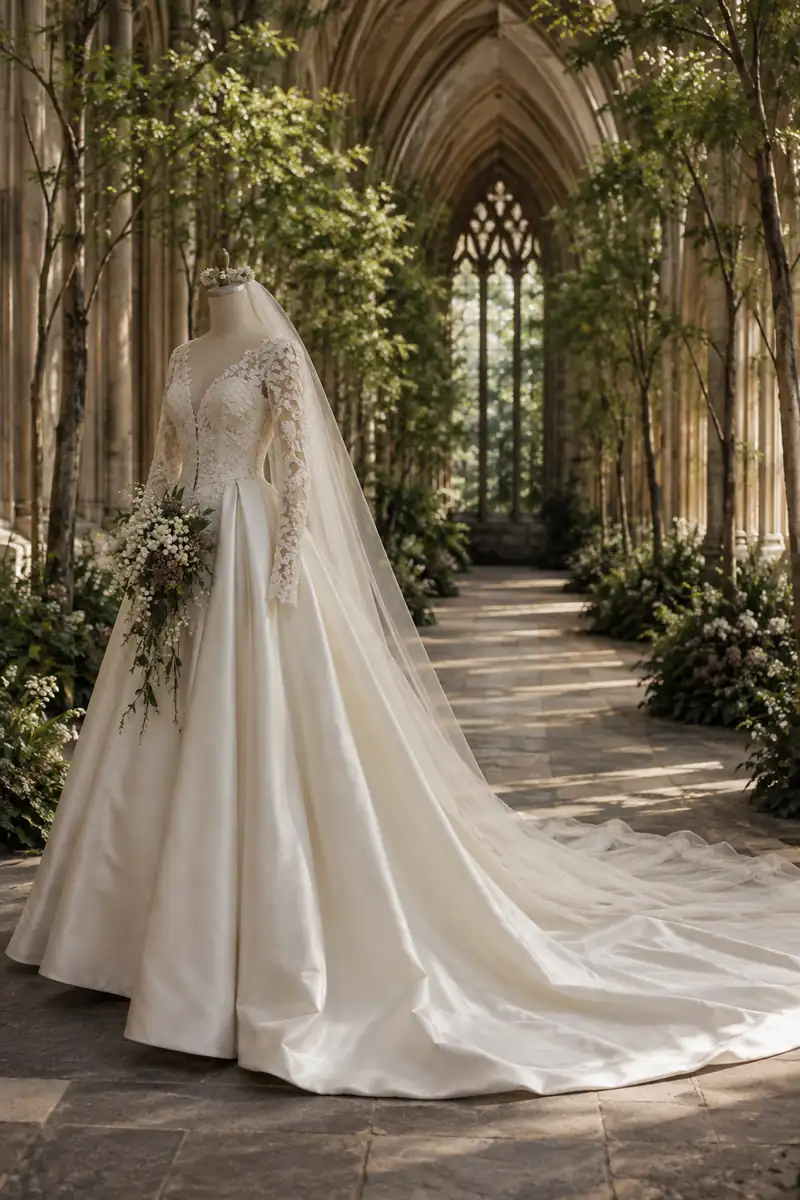 Catherine, 2011 — Alexander McQueen
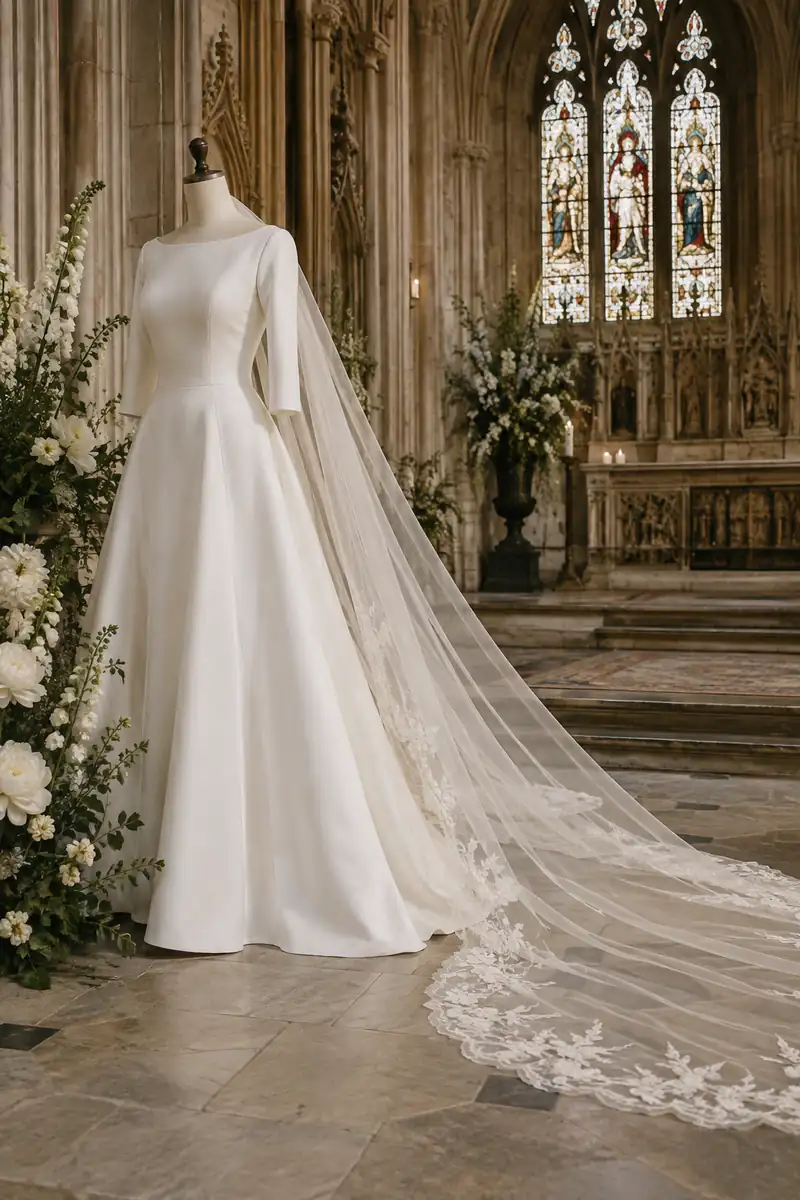 Meghan, 2018 — Givenchy
 Eugenie, 2018 — Peter Pilotto
 Beatrice, 2020 — Norman Hartnell
Catherine Middleton, 2011. Sarah Burton for Alexander McQueen made an ivory satin gown with long lace sleeves whose motifs were hand-appliquéd by the Royal School of Needlework, worn at Westminster Abbey on April 29, 2011. It was widely compared to Grace Kelly’s. Read the story of the wedding.
Meghan Markle, 2018. Clare Waight Keller for Givenchy made a six-seam gown in double-bonded silk cady with a bateau neckline. The five-meter silk tulle veil was embroidered with flowers for each of the 53 Commonwealth nations, plus the California poppy for the bride’s home state. A halter-neck Stella McCartney dress followed for the evening. Read the story of the wedding.
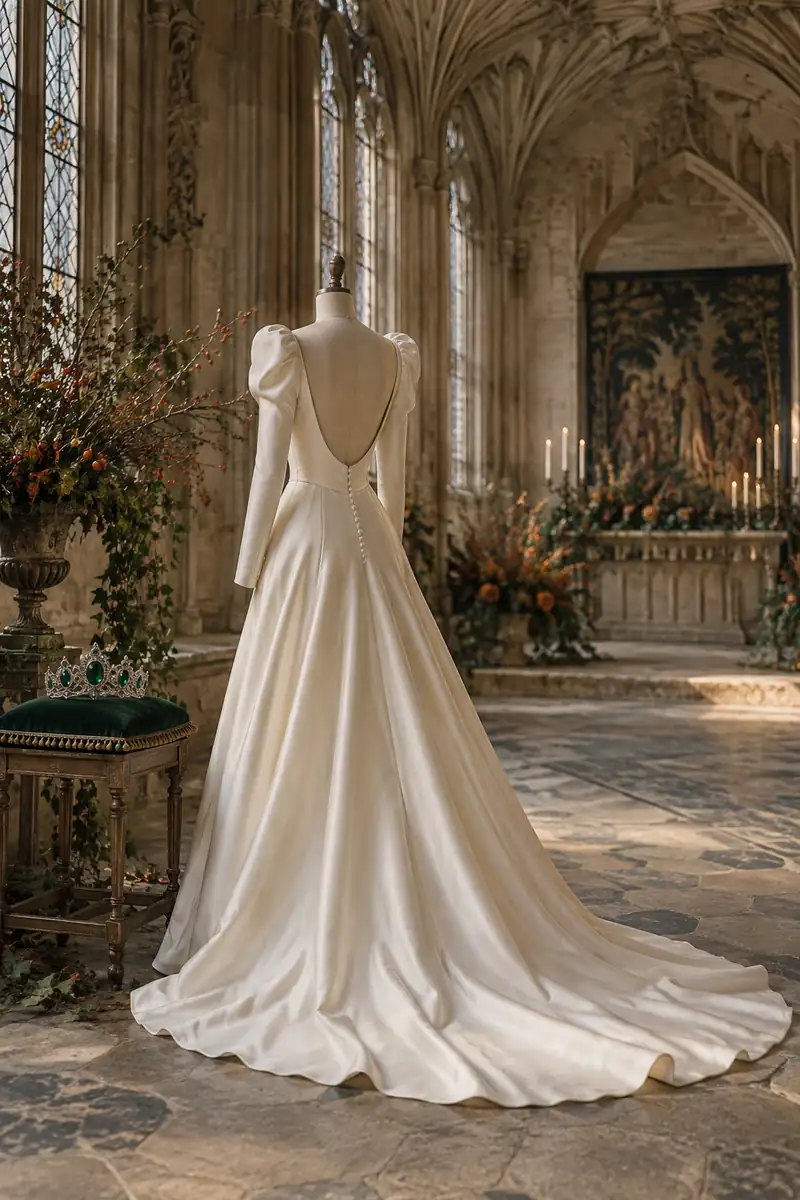
Princess Eugenie, 2018. Peter Pilotto and Christopher De Vos designed a gown with folded shoulders and a low back, which the princess chose deliberately to show the scar from the scoliosis surgery she had at twelve. She wore no veil and the Greville Emerald Kokoshnik Tiara, made by Boucheron in 1919.
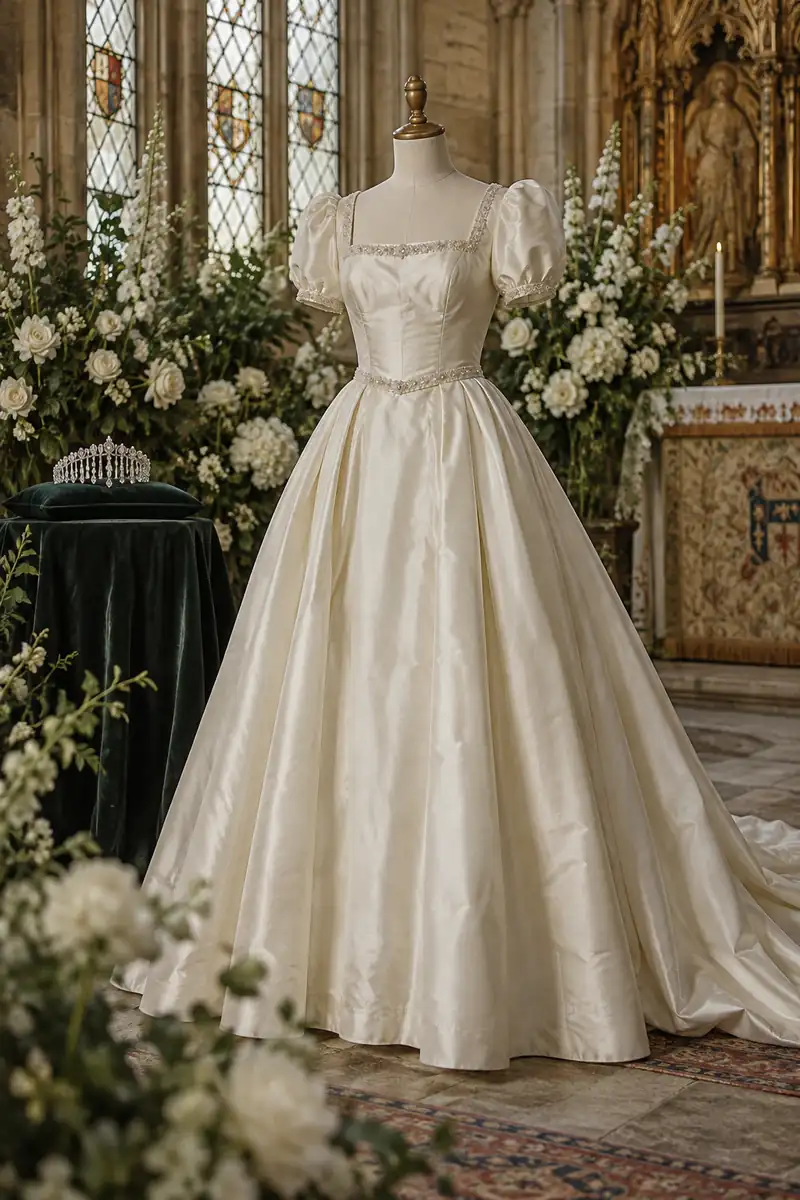
Princess Beatrice, 2020. Married at the Royal Chapel of All Saints, Windsor, on July 17, 2020, in a small ceremony scaled down by the pandemic, Beatrice wore a Norman Hartnell dress of ivory peau de soie taffeta that the Queen had worn in the early 1960s, including to the 1962 premiere of Lawrence of Arabia. The Queen’s dressmaker Angela Kelly and the designer Stewart Parvin refitted it and added organza sleeves. It is the most persuasive argument yet for the reworked heirloom dress.
For celebrity counterparts to these gowns, see the most famous celebrity wedding dresses.
What royal dresses teach the rest of us
Dress for the building. Royal trains are measured against the aisles of cathedrals and abbeys. A 25-foot train in a village church or a hotel ballroom is costume. Our guide to trains and bustles explains the lengths.
Cover up for the ceremony, change for the party. Most royal brides wear sleeves or cover their shoulders in church. If your ceremony has similar expectations, see modest wedding dresses, then plan a reception dress.
Choose one meaningful detail. Victoria’s English satin, Queen Mary’s woven national flowers, Sarah Ferguson’s bees and Meghan’s Commonwealth flowers each gave the dress a story. A family flower, a line of embroidery or a borrowed piece of lace costs little and means a great deal. See something old, something new.
Look in the family wardrobe. Princess Beatrice’s Hartnell and the tiaras passed from bride to bride show what a skilled seamstress can do with what already exists. Our guides to alterations and preservation explain how to rework an heirloom, and how to keep yours for the next bride.
Written and edited by the Today’s Weddings editors. How we research and check what we publish is set out in our editorial standards. Spotted something wrong? Tell us.