The Great Royal Weddings
Myrtle from Queen Victoria’s bush, a bouquet laid on a soldier’s grave, a kiss on a palace balcony. The customs, and the nine weddings, that shaped the modern royal wedding.
A royal wedding is a private promise made in public, and the tension between those two things is what makes it interesting. The couple exchange the same vows as anyone else, often in the same words, but they do it before a congregation of thousands and an audience of millions, inside a web of customs that tell the story of the family and the country. Since the Second World War, a handful of these weddings have done more than make headlines. They have changed what brides everywhere wear, carry and expect. Here are the customs that shape them, and the weddings that set the pattern.
What makes a royal wedding
The venue. In Britain the great royal weddings belong to a small number of churches. Westminster Abbey has hosted royal marriages since King Henry I married there in 1100; Princess Elizabeth was the tenth member of the royal family to marry at the Abbey, in 1947. Charles and Diana chose St Paul’s Cathedral in 1981 for its extra seating and longer procession route. St George’s Chapel at Windsor, and smaller chapels such as the Chapel Royal at St James’s Palace, serve for more intimate occasions. Elsewhere in Europe the cathedral of the capital is usual: Stockholm Cathedral for Crown Princess Victoria, the Almudena in Madrid for Letizia Ortiz, Saint Nicholas Cathedral in Monaco for Grace Kelly.
The titles. A royal groom has often received a new title on the wedding day itself. Philip Mountbatten became Duke of Edinburgh on the morning he married; William and Harry became the Dukes of Cambridge and of Sussex; in Sweden, Daniel Westling became Prince Daniel, Duke of Västergötland.
The flowers. British royal bouquets carry a sprig of myrtle, the plant of love and marriage. The custom goes back to Queen Victoria, who was given a myrtle by Prince Albert’s grandmother and planted it at Osborne House, the family’s home on the Isle of Wight, in 1845. Princess Elizabeth’s bouquet of white orchids in 1947 included myrtle; Catherine Middleton’s shield-shaped bouquet in 2011 used stems from the Osborne plant and from the Queen’s own bouquet; Meghan Markle’s in 2018 included myrtle grown from the plant used in the Queen’s; Princess Beatrice’s in 2020 had sprigs of it too. Our guide to flower meanings explains what other bridal flowers traditionally signify.
The Unknown Warrior. In 1923 Lady Elizabeth Bowes-Lyon, later Queen Elizabeth the Queen Mother, laid her wedding bouquet on the Grave of the Unknown Warrior in Westminster Abbey, in memory of her brother Fergus, who was killed in the First World War. Royal brides have followed her example, sending their bouquets back to the Abbey after the wedding, even when they married elsewhere. In Monaco and Spain the equivalent gesture is religious: Grace Kelly and Charlene Wittstock left their bouquets for Sainte-Dévote, Monaco’s patron saint, and Letizia Ortiz left hers before the Virgin of Atocha in Madrid.
The ring. By tradition, British royal wedding rings are made of Welsh gold. Princess Elizabeth’s came from the Clogau St David’s mine near Dolgellau; Catherine Middleton’s was Welsh gold too. Princess Beatrice broke the custom in 2020 with a platinum band.
The tiara. A royal bride rarely buys her tiara. She borrows it from her family or the sovereign. The diamond fringe tiara Princess Elizabeth wore in 1947, which snapped that morning and was mended just in time, was worn again by Princess Beatrice in 2020. The Queen lent Catherine a Cartier “halo” tiara of 1936, and Meghan Queen Mary’s diamond bandeau of 1932. Diana wore her own family’s Spencer tiara; Victoria of Sweden wore the cameo tiara her mother had worn; Letizia wore the tiara Queen Sofía had married in.
The balcony. After a London royal wedding the couple return to Buckingham Palace and step out onto the balcony to greet the crowds on the Mall, as Princess Elizabeth and Prince Philip did in 1947. In 1981 Charles and Diana kissed there, to the crowd’s delight, and began a tradition that later couples have followed.
For the gowns themselves, from Hartnell to Givenchy, see our guide to royal wedding dresses, and for the wider history of bridal customs, something old, something new.
The weddings
Princess Elizabeth and Philip Mountbatten, 1947
Two years after the war, the heir to the throne married at Westminster Abbey in a Norman Hartnell gown, inspired by Botticelli’s Primavera and embroidered with 10,000 seed pearls, for which she used her clothing coupons. BBC Radio carried the service to some 200 million listeners, and the marriage lasted 73 years. Read the full story.
Grace Kelly and Prince Rainier III, 1956
An Oscar-winning actress married the reigning Prince of Monaco in two ceremonies over two days, in a gown designed by Helen Rose and made by MGM. Its lace bodice and long sleeves have influenced royal brides since, Catherine Middleton among them. Read the full story.
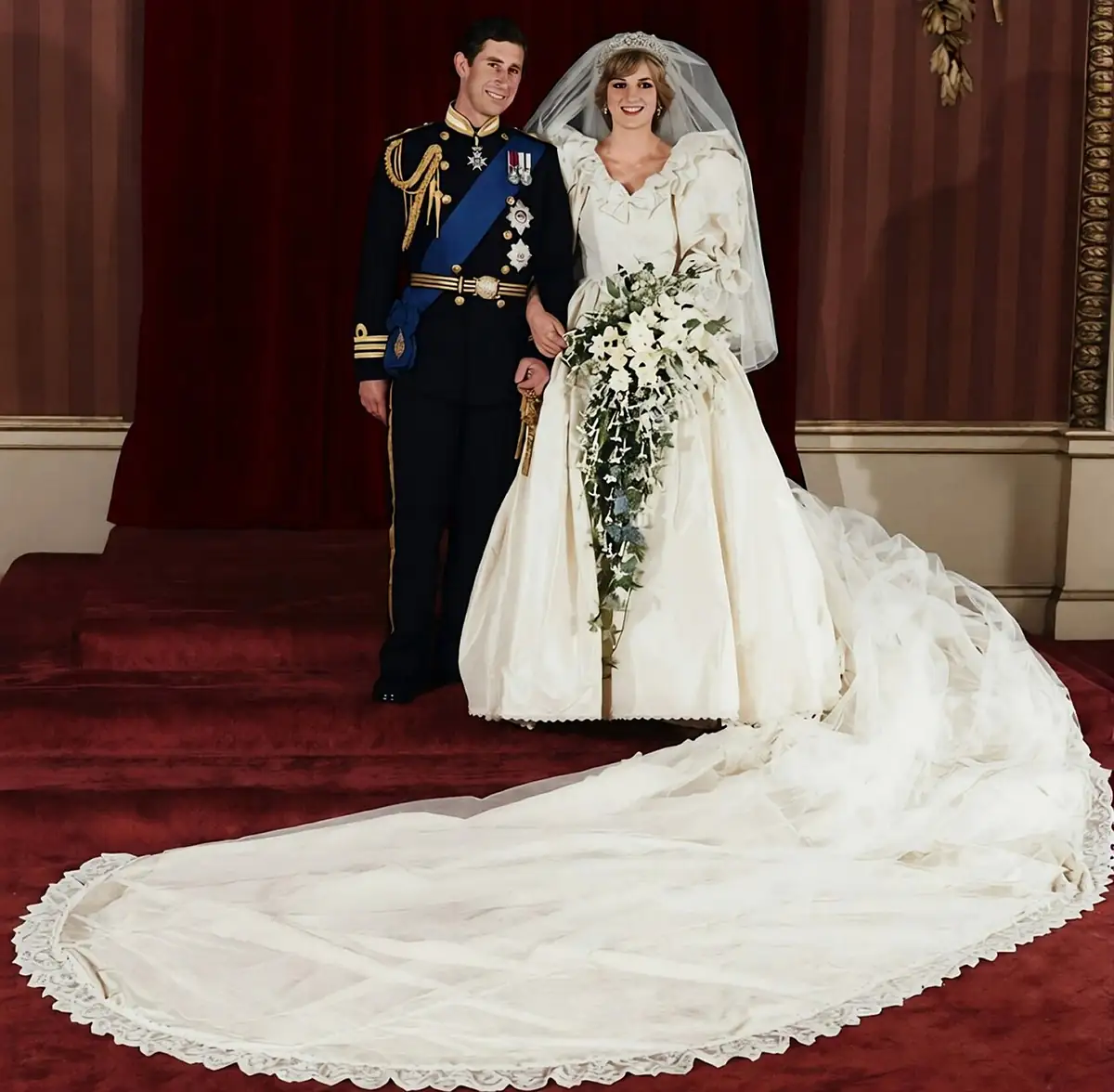
Prince Charles and Lady Diana Spencer, 1981
St Paul’s Cathedral, 3,500 guests, an estimated 750 million viewers and a 25-foot train. The Emanuels’ ivory taffeta gown defined bridal fashion for the rest of the decade, and the couple’s balcony kiss began a tradition. Read the full story.
Felipe of Spain and Letizia Ortiz, 2004
A television journalist married the heir to the Spanish throne in Madrid’s Almudena Cathedral, in heavy rain, ten weeks after the Madrid train bombings. Manuel Pertegaz’s gown, with its corolla collar, is one of the most architectural royal dresses of modern times. Read the full story.
Crown Princess Victoria and Daniel Westling, 2010
Sweden’s heir married her former personal trainer at Stockholm Cathedral on her parents’ wedding anniversary, in a gown by Pär Engsheden and the cameo tiara her mother had worn in 1976. Her father walked her part of the way, a compromise with the Church of Sweden. Read the full story.
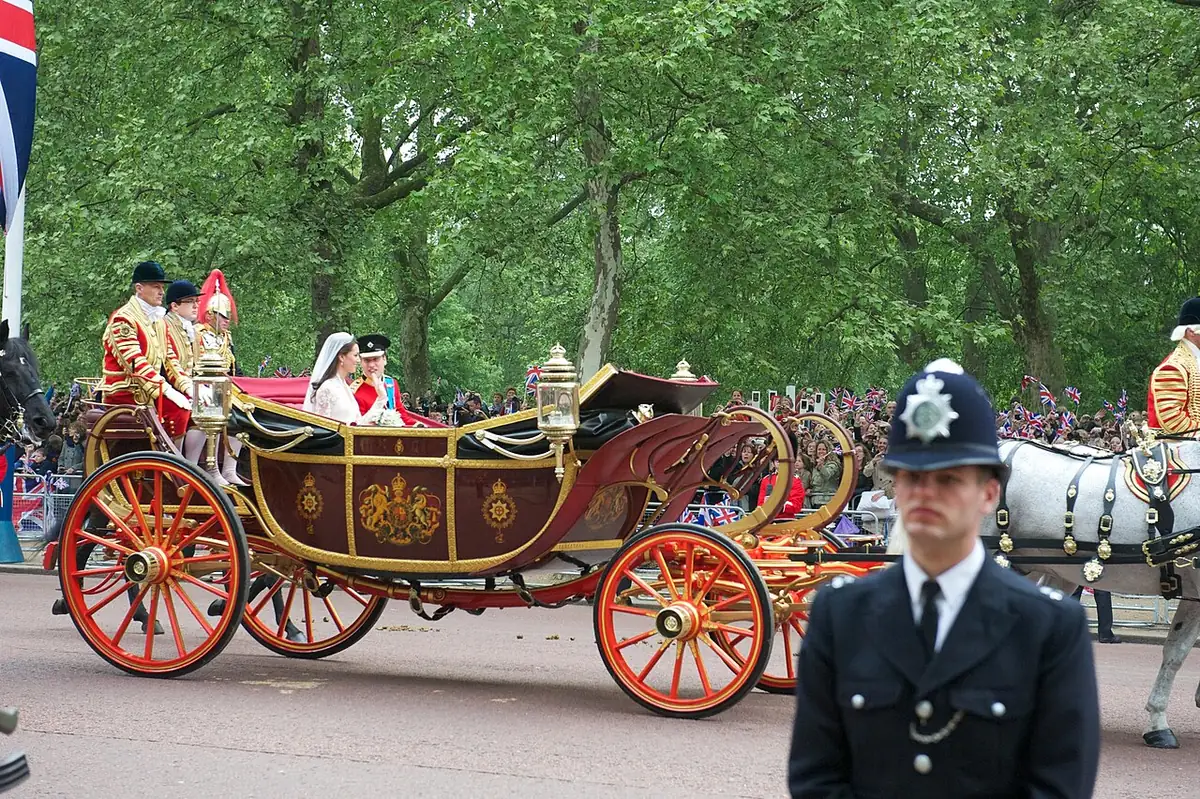
Prince William and Catherine Middleton, 2011
An avenue of maple and hornbeam trees inside Westminster Abbey, a lace gown by Sarah Burton for Alexander McQueen, and myrtle from Queen Victoria’s plant in the bouquet. The wedding showed how a royal occasion could feel personal without losing its grandeur. Read the full story.
Prince Albert II and Charlene Wittstock, 2011
Grace Kelly’s son married a former Olympic swimmer in the courtyard of the Prince’s Palace in Monaco, in a gown by Giorgio Armani, after a civil ceremony at which she wore Chanel. Like her mother-in-law, she took her bouquet to Sainte-Dévote. Read the full story.
Prince Harry and Meghan Markle, 2018
At St George’s Chapel, Windsor, Bishop Michael Curry preached on the power of love and a gospel choir sang “Stand By Me.” Clare Waight Keller’s Givenchy gown had only six seams; the veil was embroidered with the flowers of the Commonwealth. Read the full story.
Princess Beatrice and Edoardo Mapelli Mozzi, 2020
Postponed by the pandemic and reduced to about twenty guests, the wedding took place in the Royal Chapel of All Saints at Windsor. The bride wore a vintage Hartnell gown lent by the Queen and the tiara the Queen had worn in 1947. Read the full story.
A royal touch at home
None of these customs requires a palace. Tuck a sprig of myrtle or another meaningful herb into your bouquet. Borrow a family piece of jewelry rather than buying new. Lay your flowers somewhere that matters to your family the day after the wedding. And if your venue has a balcony, a terrace or a flight of steps, give your guests a moment to see you together before the party begins. Our guide to wedding traditions around the world has more customs worth borrowing, and our celebrity wedding dresses guide goes beyond the royals.
Written and edited by the Today’s Weddings editors. How we research and check what we publish is set out in our editorial standards. Spotted something wrong? Tell us.