Colored Wedding Dresses: Blush, Black, Red and Beyond
White is a relatively recent rule, and a local one. The history of the white wedding, the traditions of red, and how to wear blush, champagne, black or print with confidence.
When Queen Victoria married Prince Albert at the Chapel Royal, St. James’s Palace, on February 10, 1840, she wore a dress of heavy white silk satin woven in Spitalfields, trimmed with Honiton lace and crowned with a wreath of orange blossom in place of a tiara. Royal brides before her had often married in silver and gold. Within a decade, Godey’s Lady’s Book in America was telling readers that white was the most fitting color for a bride and presenting the idea as ancient custom. It wasn’t. Many brides went on marrying in their best dress, in whatever color it happened to be, well into the twentieth century. The white wedding dress is a Victorian invention, and a beautiful one, but it is a choice rather than a law.
A short history of white
Victoria’s dress was influential because she was a young queen and because her wedding was widely reported. The lace, worked by some two hundred lacemakers in Devon to a design by the artist William Dyce, was later reused by her descendants. Wealthy brides copied the white gown quickly; for everyone else, it took decades. White became the majority choice in Europe and North America only gradually, as the idea of a dress bought to be worn once spread beyond the rich.
Even then, there were famous exceptions. Wallis Simpson married the Duke of Windsor on June 3, 1937, in a Mainbocher gown of blue silk crepe, the shade named “Wallis blue” to match her eyes; she gave it to the Metropolitan Museum in 1950. For her civil ceremony in Monaco in April 1956, Grace Kelly wore pale pink taffeta under ivory Alençon lace.
Red: a bridal color across Asia
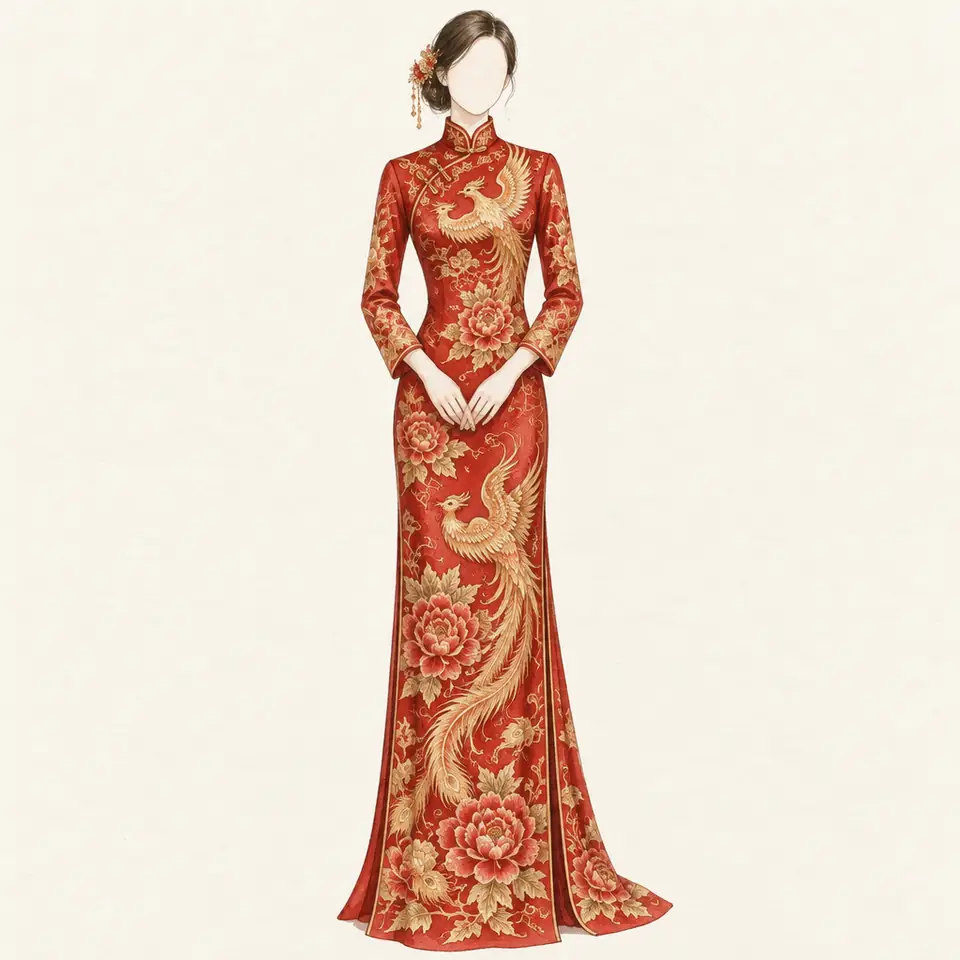
China. Red is the traditional color of celebration in Chinese culture, associated with happiness, luck and prosperity, and it has long been the color of the bride. Southern Chinese brides often wear the qun kwa (also spelled qun gua), a two-piece jacket and skirt in red embroidered with gold thread, typically with a dragon and a phoenix representing harmony between husband and wife. The qipao, or cheongsam, a fitted dress with a Mandarin collar, is also popular, especially in red. White and black have traditionally been associated with mourning. Many couples now combine the two, wearing a white gown for part of the day and red for the tea ceremony or the banquet.
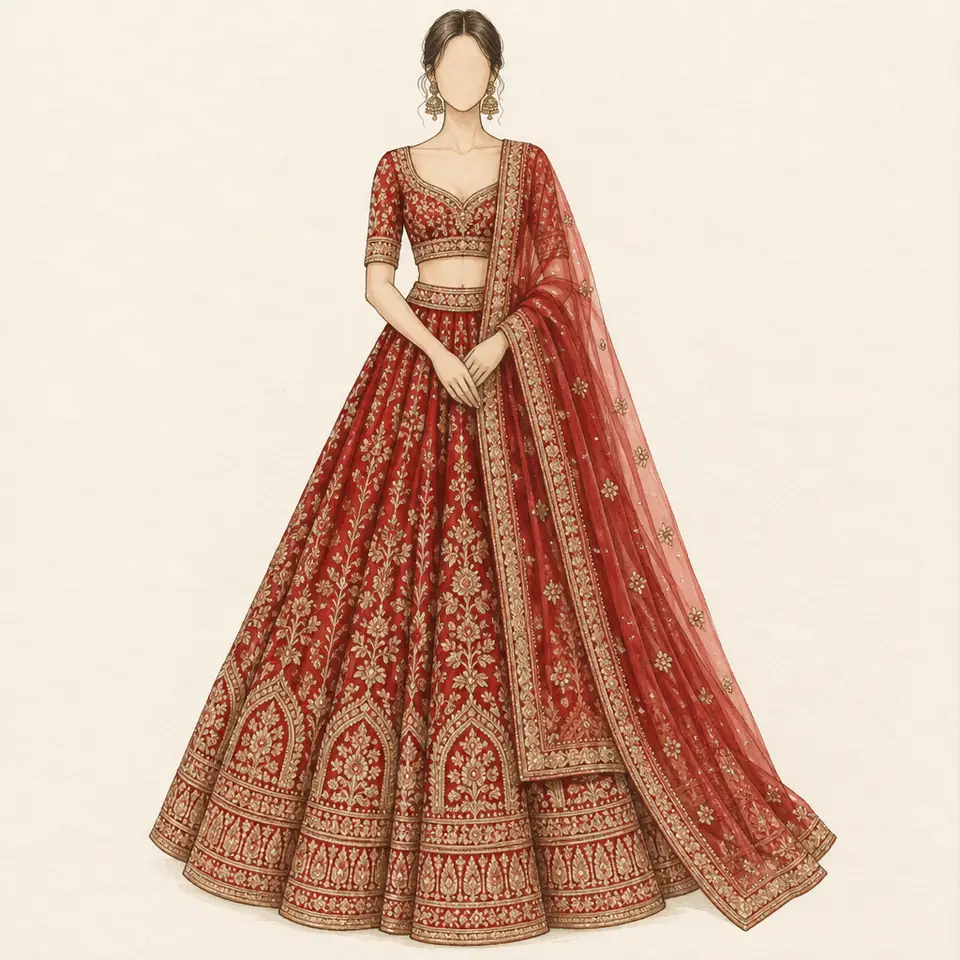
India. Red is the color most associated with brides in much of North India, where it symbolizes love, prosperity and marriage itself. It is not a single national rule: bridal colors vary by region, community and faith, and gold and ivory, green, yellow and pink are all traditional in different places. Many Indian Christian brides wear white. The wedding sari or lehenga is chosen with the family as much as by the bride.
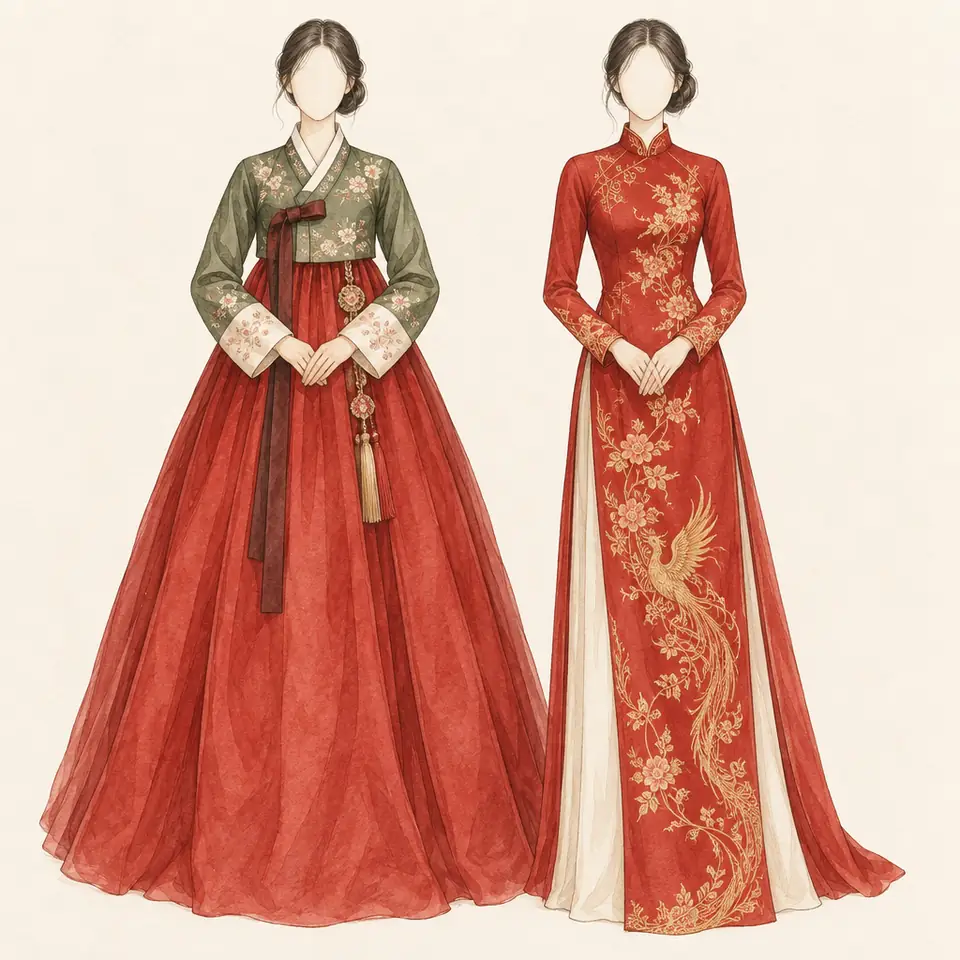
Korea and Vietnam. In traditional Korean weddings, the bride wears a hanbok, customarily a red skirt with a yellow or green jacket, with a ceremonial robe layered over it for the pyebaek, the family ceremony that follows. Vietnamese brides often wear an áo dài for the family ceremonies, frequently in red or pink, with a matching headpiece called a khăn vấn.
If you are marrying into or drawing on a tradition that isn’t your own, ask the family. The details, from which color is appropriate to which garment belongs at which ceremony, are best learned from the people who keep them. Wedding traditions around the world has more.
The white wedding dress is a Victorian invention, and a beautiful one, but it is a choice rather than a law.
The modern palette
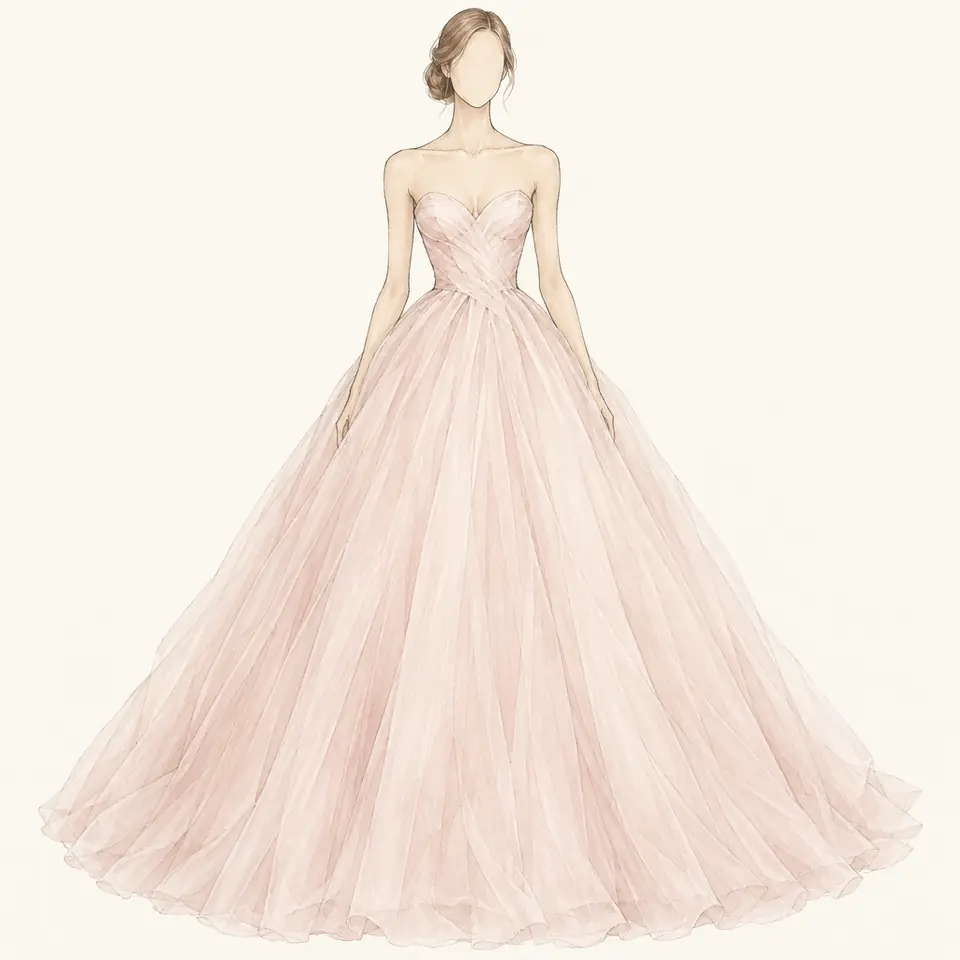
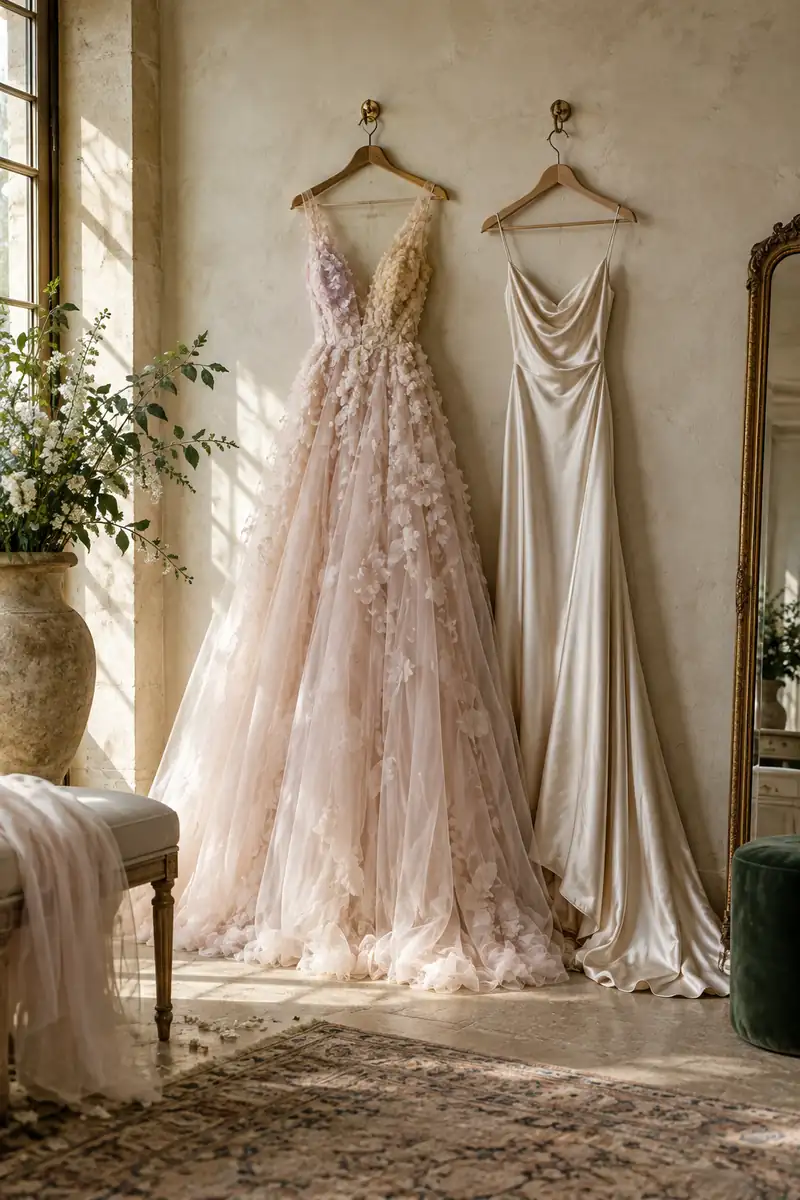
Blush. The gentlest departure from white. It warms most complexions and looks luminous in candlelight. Jessica Biel wore a pink Giambattista Valli gown to marry in Puglia in 2012; Gwen Stefani wore a white gown dip-dyed in vivid pink by John Galliano for Dior in 2002.
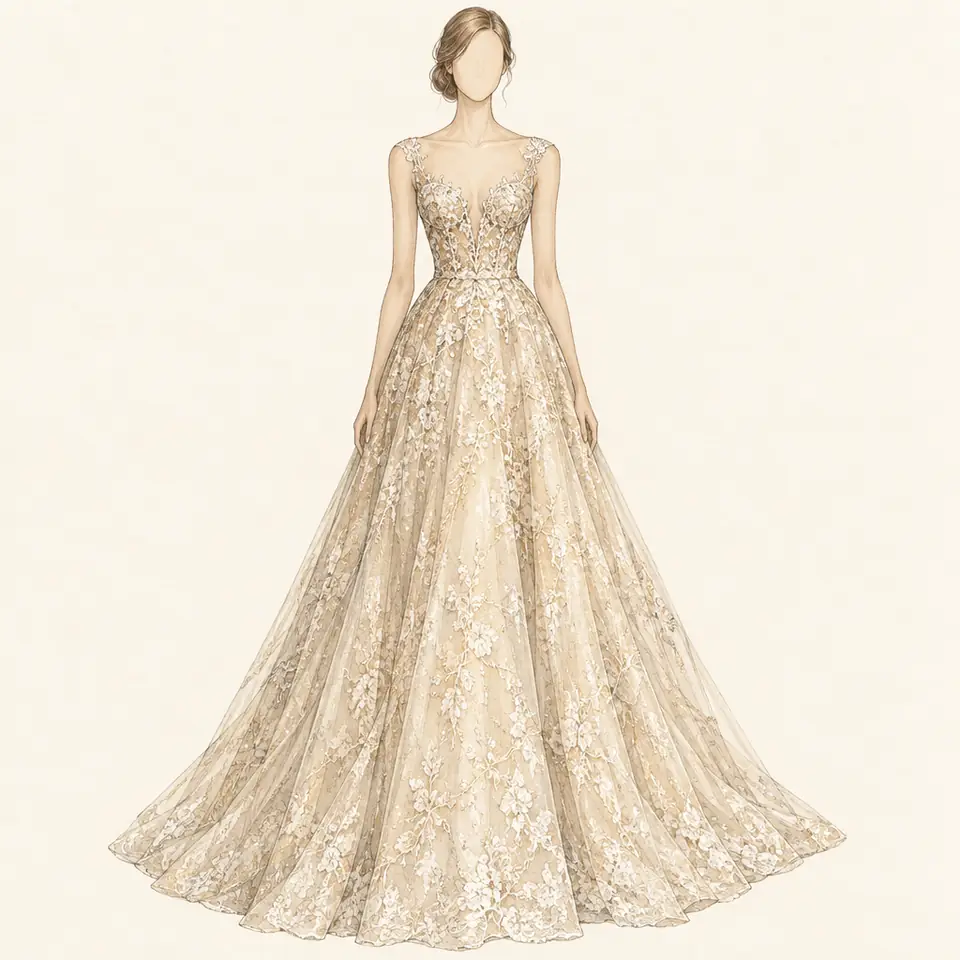
Champagne and gold. Champagne reads as ivory from a distance and gold up close; it is lovely under lace. A gold slip or metallic lamé is spectacular for an evening wedding.
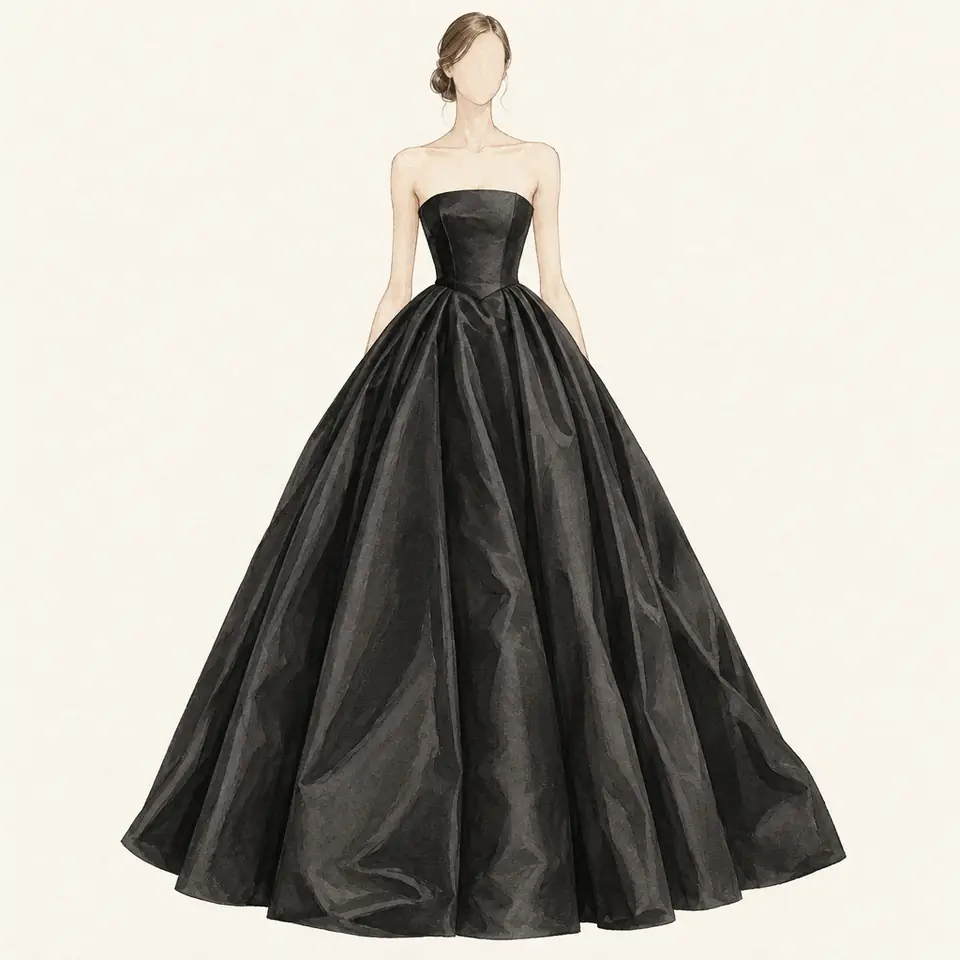
Black. Sarah Jessica Parker wore a black Morgane Le Fay gown to marry Matthew Broderick in New York in 1997; she has said she was too embarrassed to spend time shopping for a wedding dress for the small, private ceremony. Black is graphic, sophisticated and entirely serious. It works best in a clean silhouette in a rich fabric, such as a velvet column, a taffeta ball gown or a silk crepe sheath.
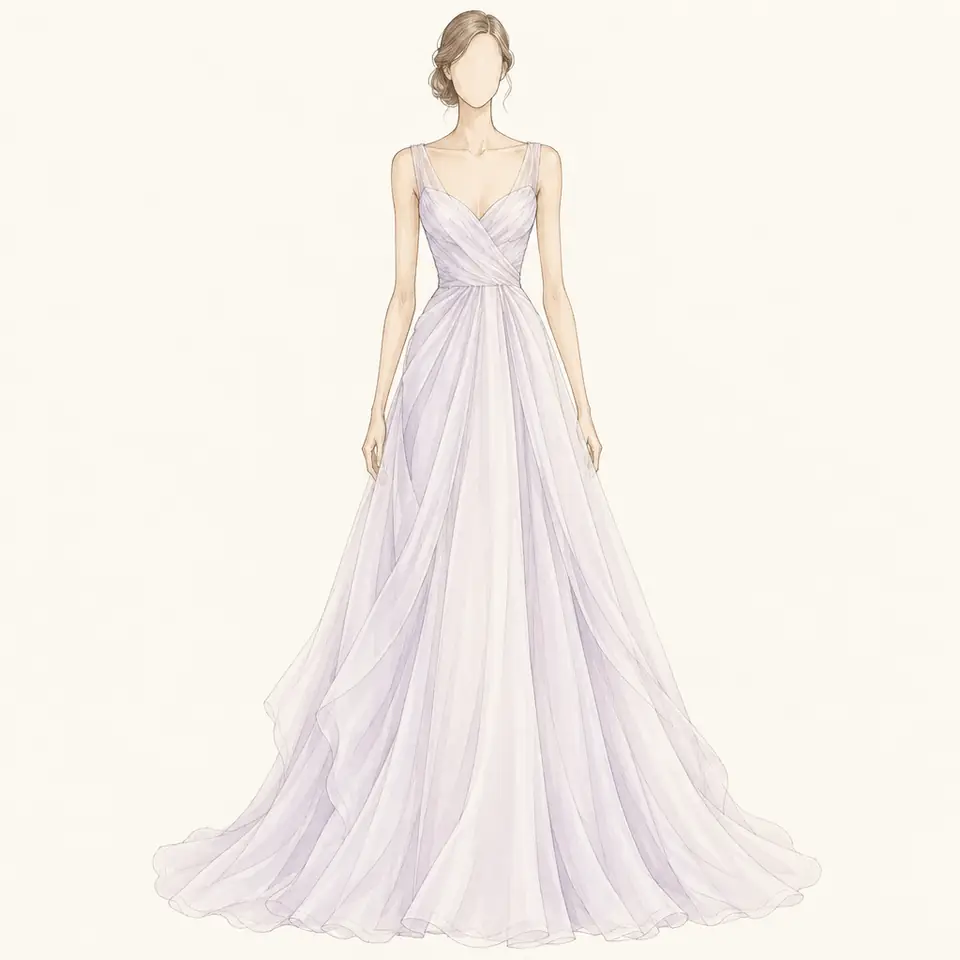
Pastels. Pale blue, lavender, mint and butter yellow suit garden and spring weddings. They look softer against greenery than bright white.
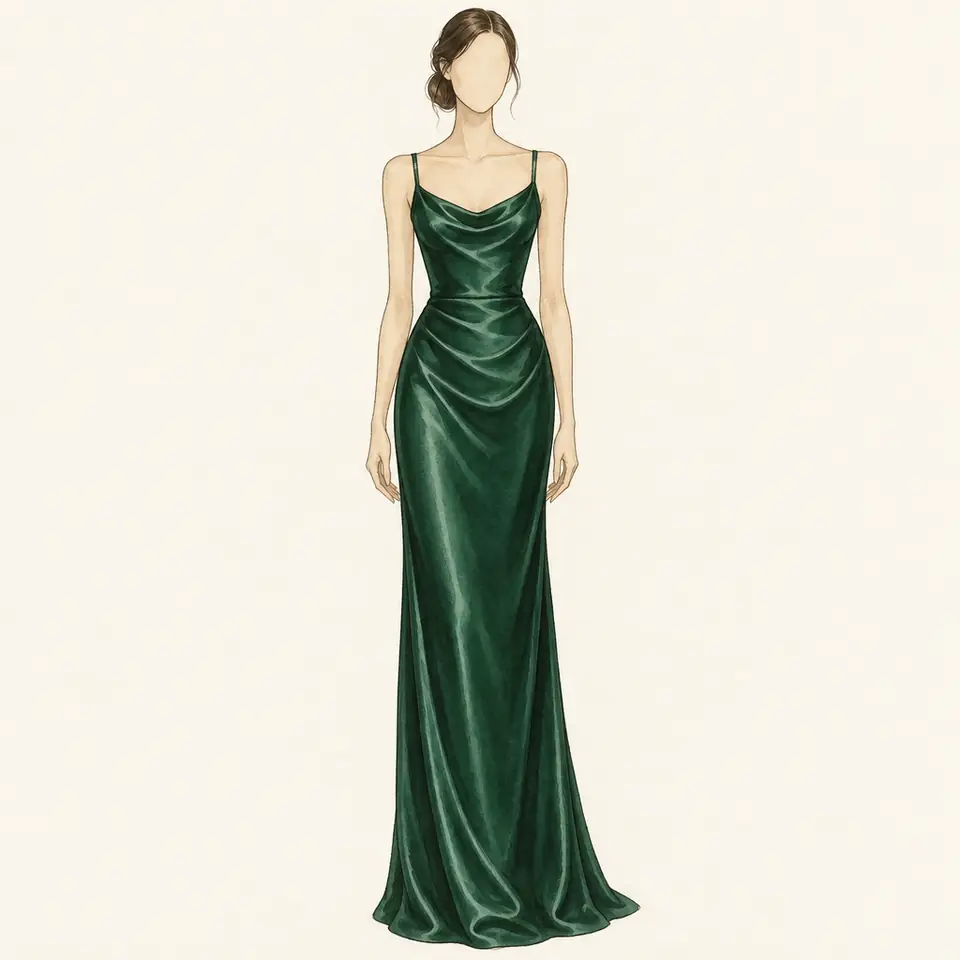
Saturated color. Deep red, emerald, cobalt or fuchsia make the bride the most vivid thing in the room, which is fitting. A single strong color works better than several.
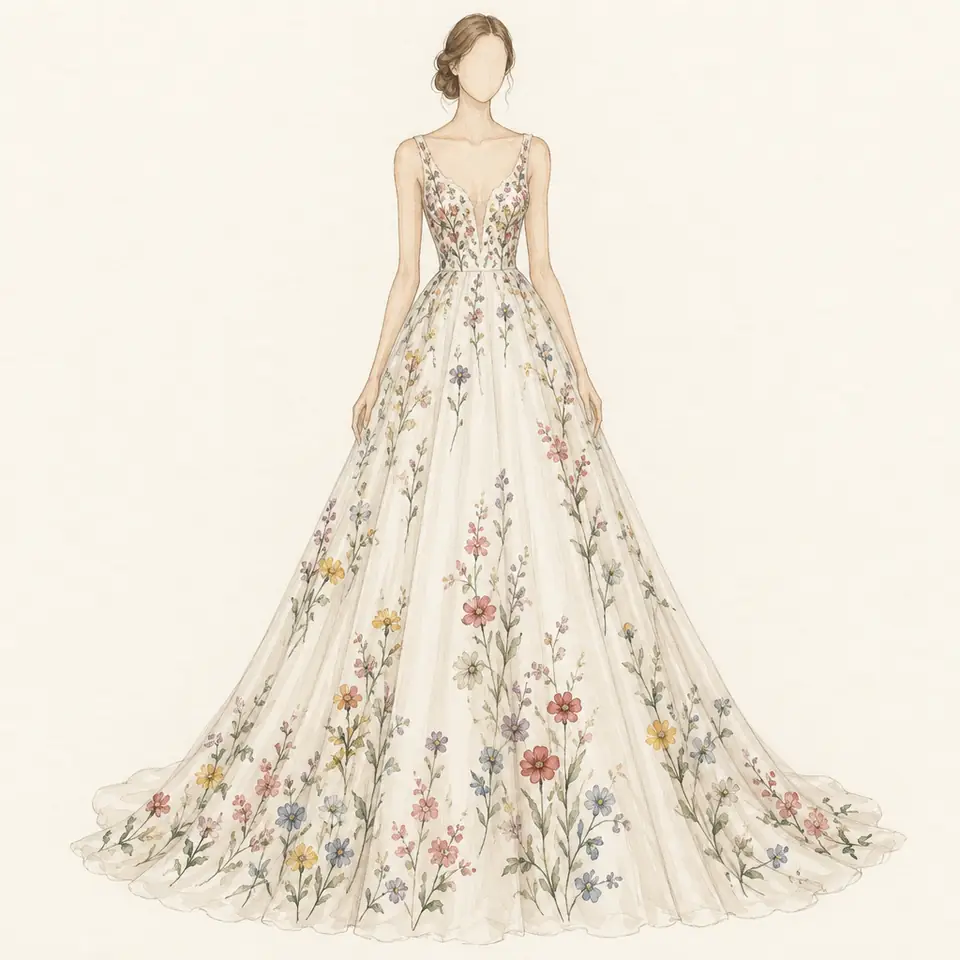
Prints and embroidery. Floral prints and embroidered gowns, often with color on a white or ivory ground, are a good compromise: the dress still reads as bridal, and the color is part of the design rather than all of it.
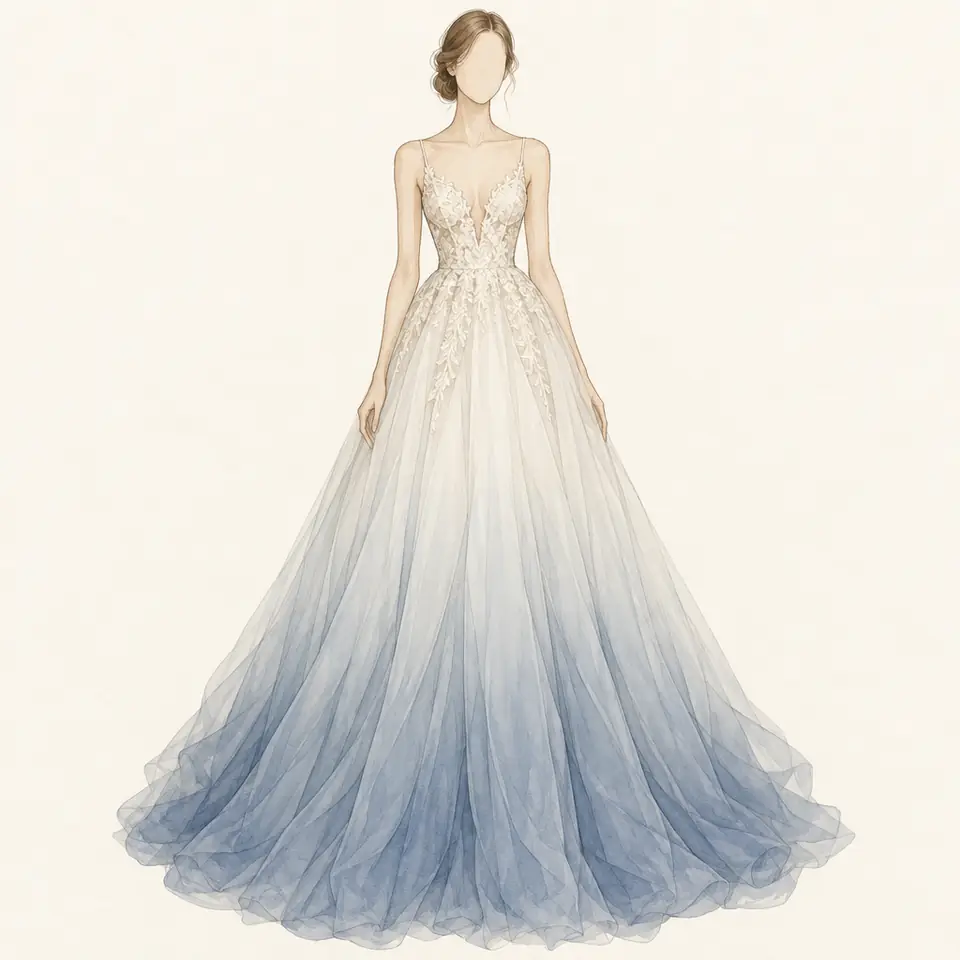
Ombré and dip-dye. A white bodice that deepens toward the hem is a subtle, joyful way to add color.
How to wear color well
Test it against your face. Hold the fabric under your chin in daylight, without makeup if you can. Color close to the face changes complexion more than white does.
Decide what else changes. A colored dress changes the rest of the wedding. The flowers, the bridesmaids’ dresses and the table linens should be chosen with it, not before it. Choosing your wedding colors explains how to build a palette.
Tell people. Guests who arrive in blush when you are in blush will feel awkward. If your dress is colored, mention it to the bridal party and, if necessary, guide guests’ clothing through the dress code.
Keep the construction bridal. A colored dress looks most like a wedding dress when the fabric, fit and detailing are of bridal quality. A beautifully made gown in an unusual color looks deliberate.
Think about the veil. Ivory tulle over a blush gown looks romantic; white tulle over black is graphic. A colored veil, or none, is an option too. See veils and headpieces.
Photographs. Colors change under different light. Ask your photographer to shoot a test, especially for pastels, which can wash out in bright sun.
Where to find one
Many bridal designers make gowns in blush and champagne, and some will make most styles in a custom color for an added charge. Evening-wear and ready-to-wear designers often have the widest range of color and print. Wedding dress designers and wedding dress trends for 2026 have more ideas, and a colored gown makes an excellent second dress.
Written and edited by the Today’s Weddings editors. How we research and check what we publish is set out in our editorial standards. Spotted something wrong? Tell us.