Reception and Second Wedding Dresses: The Second Look
A second dress lets you have the ceremony gown you dreamed of and still dance until midnight. When to change, what to choose, and the royal brides who did it best.
On May 19, 2018, the Duchess of Sussex left Windsor Castle for her evening reception in a silver-blue 1968 Jaguar E-Type converted to electric power, wearing a second dress: a high-necked, open-backed halter gown in silk crepe by Stella McCartney. The morning’s Givenchy gown had been built for St. George’s Chapel. The evening dress was built for a party at Frogmore House, and it was an immediate sensation. It also made plain what brides had long known privately: the dress you marry in and the dress you dance in do not have to be the same dress.
Why change at all
Movement. Cathedral trains, full ball-gown skirts and heavy beading are glorious in an aisle and hard work on a dance floor. Even with a good bustle, a big gown is a lot to manage for five hours.
The ceremony’s rules. Many brides marrying in a house of worship choose covered shoulders, sleeves or a longer veil. A second dress lets the reception look different. Modest wedding dresses covers the ceremony side.
Comfort and temperature. A long-sleeved lace gown in a July garden or a silk slip in a January tent can each be improved by a change.
Two ideas you loved. Some brides simply couldn’t choose between a romantic gown and a sleek modern one. A second look is a way to wear both.
When to change
At the end of the cocktail hour. The most common moment. You have finished the formal portraits, and you walk into the reception in the new look. Guests see the change as part of the evening.
Before the first dance. A good choice if you want the first dance to feel like the start of the party.
For the after-party. A late-night change into something short and easy, often at 10 or 11 p.m., when the formal part of the evening is over and the dancing begins in earnest.
Allow twenty to thirty minutes, more if the first dress has a corset back or many buttons. Tell your planner and photographer, add it to the reception timeline, and ask one person to be responsible for helping you change and for taking care of the ceremony dress afterwards.
The second dress should feel like the same bride in a different mood, not a different wedding.
What to wear
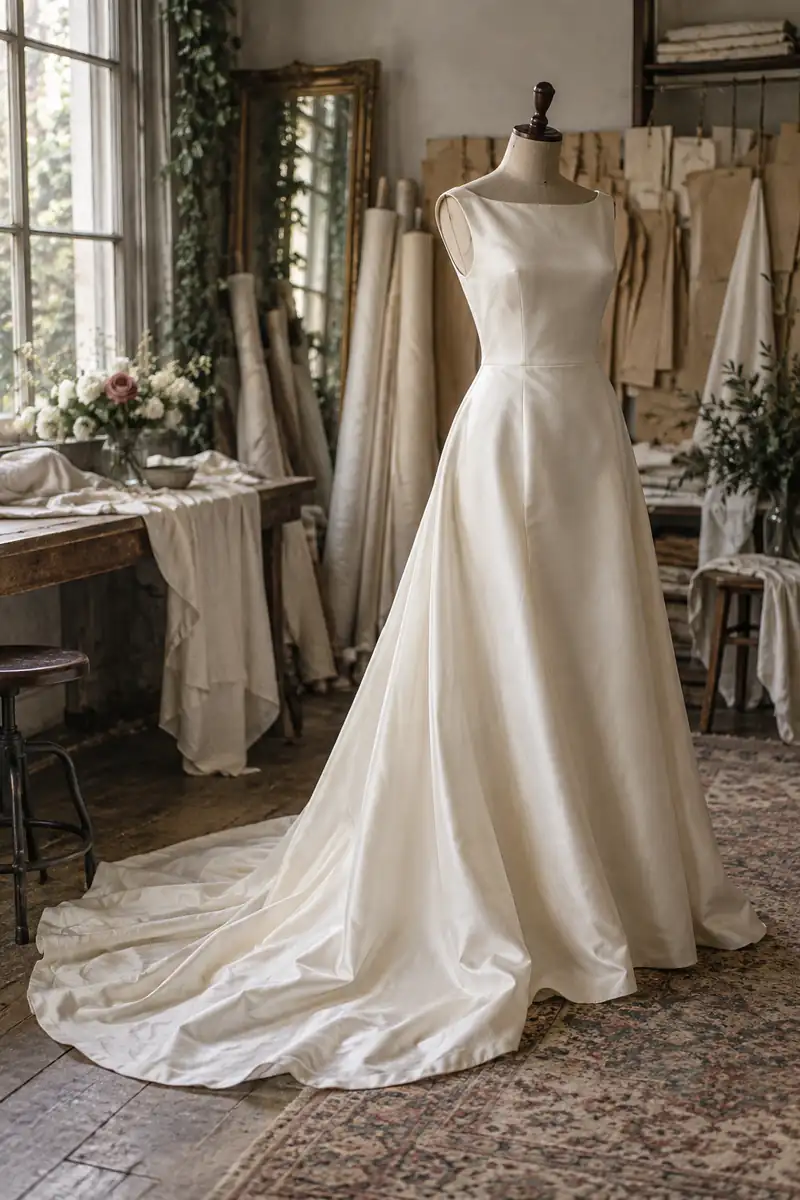
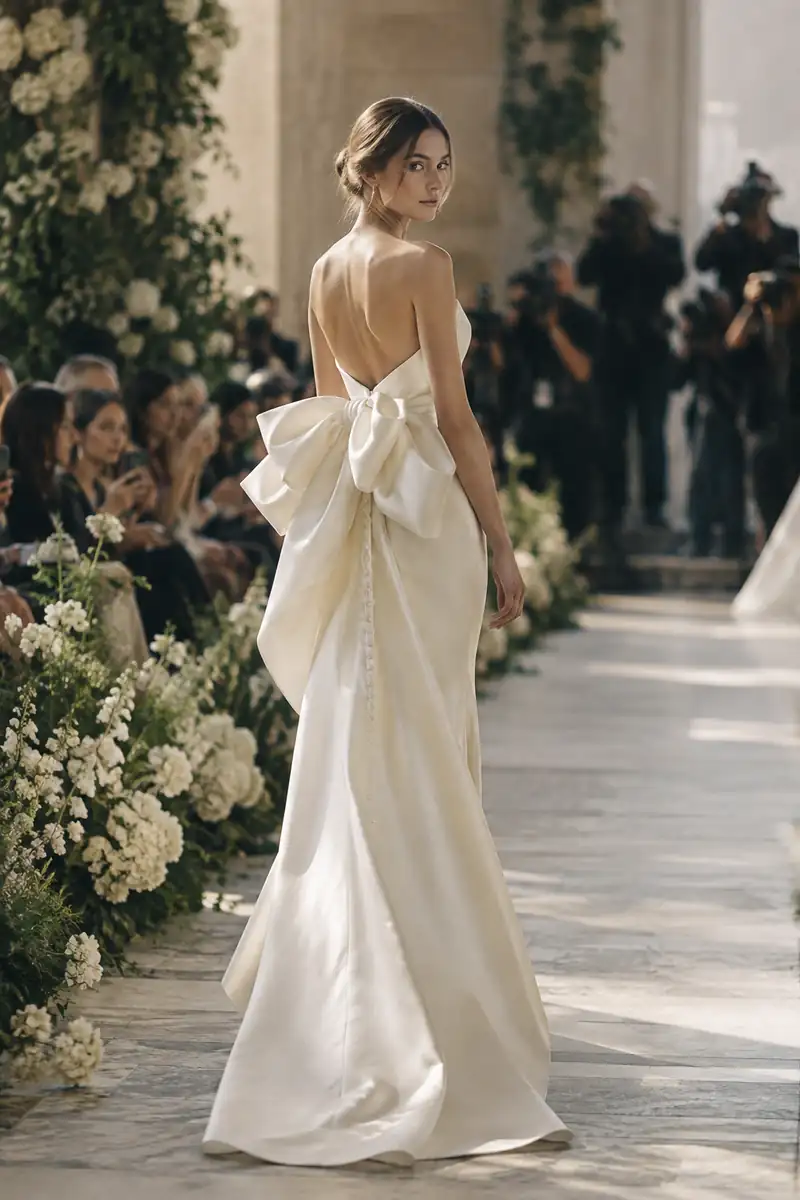
A simpler gown. A column or slip in silk crepe or satin, with the same color and tone as the ceremony dress. The Duchess of Sussex’s Stella McCartney halter is the model: plainer than the ceremony gown and more daring in cut.
A lighter version of the first dress. In 2011, the Duchess of Cambridge changed for the evening dinner and dance at Buckingham Palace into a second Alexander McQueen gown by Sarah Burton: strapless, in ivory satin with a full circle skirt and a crystal-embellished belt, worn with a white angora bolero. It kept the formality of the day and lost the lace sleeves and the train. The 2011 royal wedding story has the rest.
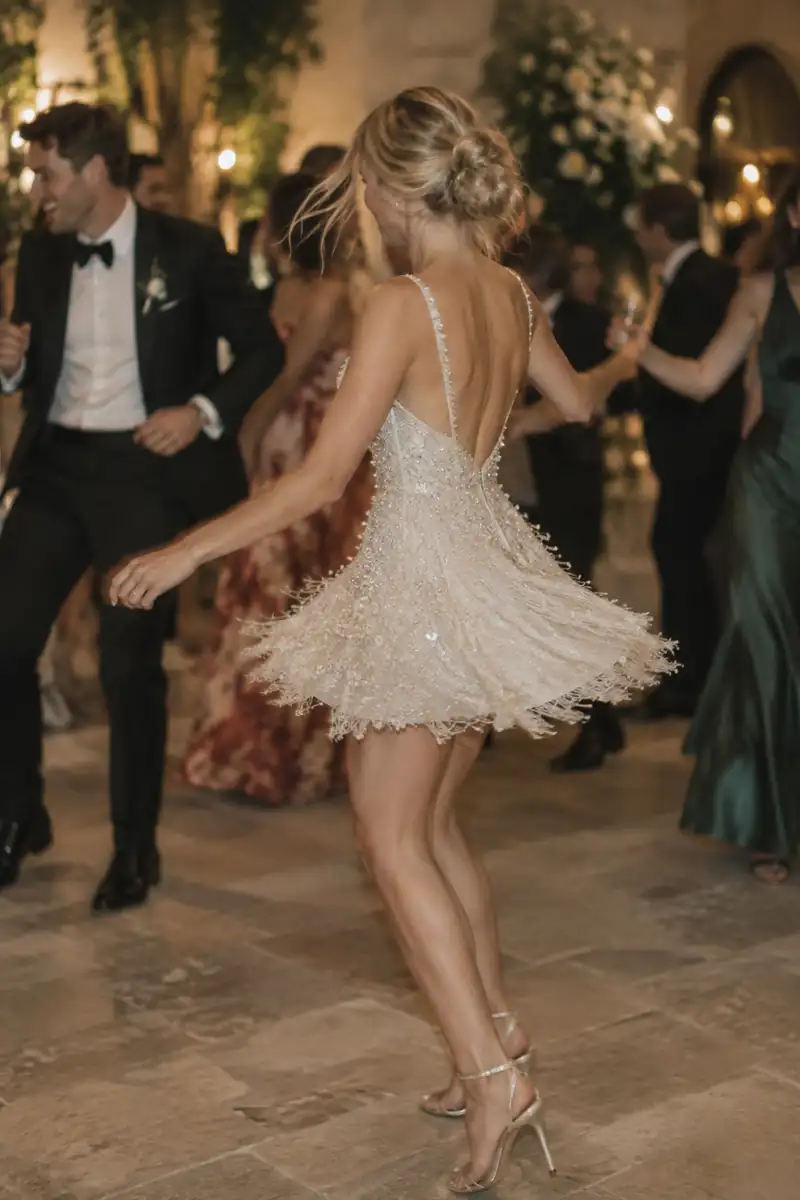
A short dress. The after-party mini, in silk, feathers, sequins, pearls or structured satin, is a modern favorite. Sequins and beading photograph well on a dance floor.
A jumpsuit or trousers. Wide-leg crepe trousers or a jumpsuit are elegant and practical for dancing. Bridal separates, suits and jumpsuits covers the options.
Separates. A top and skirt from the same fabric can be worn as a ceremony look with an overskirt, then changed by removing it. It is the least time-consuming second look.
Something with color. Blush, champagne or a metallic makes a change more obvious. Some couples choose a color that nods to heritage; colored wedding dresses looks at traditions that include red and gold.
How to choose
Match the tone of white. An optic-white second dress beside an ivory first dress in photographs can make either look off. Check the shades of white in daylight.
Keep one thread. The same fabric, a shared detail, the same earrings or the same hairstyle will connect the two looks. The Duchess of Sussex wore an aquamarine cocktail ring that had belonged to Diana, Princess of Wales, and Aquazzura shoes with pale blue soles; the details linked the evening look to the rest of the day.
Think about hair. A veiled updo may not suit an open-backed halter. Ask your stylist whether the evening look needs a change; sometimes loosening the updo or removing the veil is enough. Wedding hair and makeup covers the day’s timings.
Shoes. A change of dress is the natural moment to change into lower, easier heels. Wedding shoes has more.
Underwear. Backless and halter dresses need different underwear from a structured ceremony gown. Try both dresses with what you will wear and plan the change accordingly.
Buy it early. A second dress may need alterations, and it should be fitted over the same underwear and shoes you will wear with it.
What it costs
A second dress can be anything from a ready-to-wear white dress to a second couture gown. Decide on its budget at the same time as the first dress’s, not after, and look beyond bridal salons: evening and ready-to-wear designers produce white and ivory dresses throughout the year, often at lower prices. How much a wedding dress costs and the wedding budget guide put the numbers in context.
Borrowing the idea
- A simple change. Take off the veil and detachable sleeves, bustle the train and change your shoes. It feels like a new look for almost no cost.
- A going-away look. The older tradition of a smart departure outfit, a suit or coat and dress, works well for couples leaving before the end of the evening.
- Photograph it. Ask your photographer for a few portraits in the second look, ideally in the same light as the first.
For more of the day’s famous changes, see celebrity wedding dresses and royal wedding dresses, and the full story of the 2018 wedding at Windsor.
Written and edited by the Today’s Weddings editors. How we research and check what we publish is set out in our editorial standards. Spotted something wrong? Tell us.