Modest Wedding Dresses: Sleeves, Necklines and Faith
Long sleeves and high necklines have produced some of the most admired wedding dresses of the last century. How to find, adapt and layer a modest gown, and what faiths may ask.
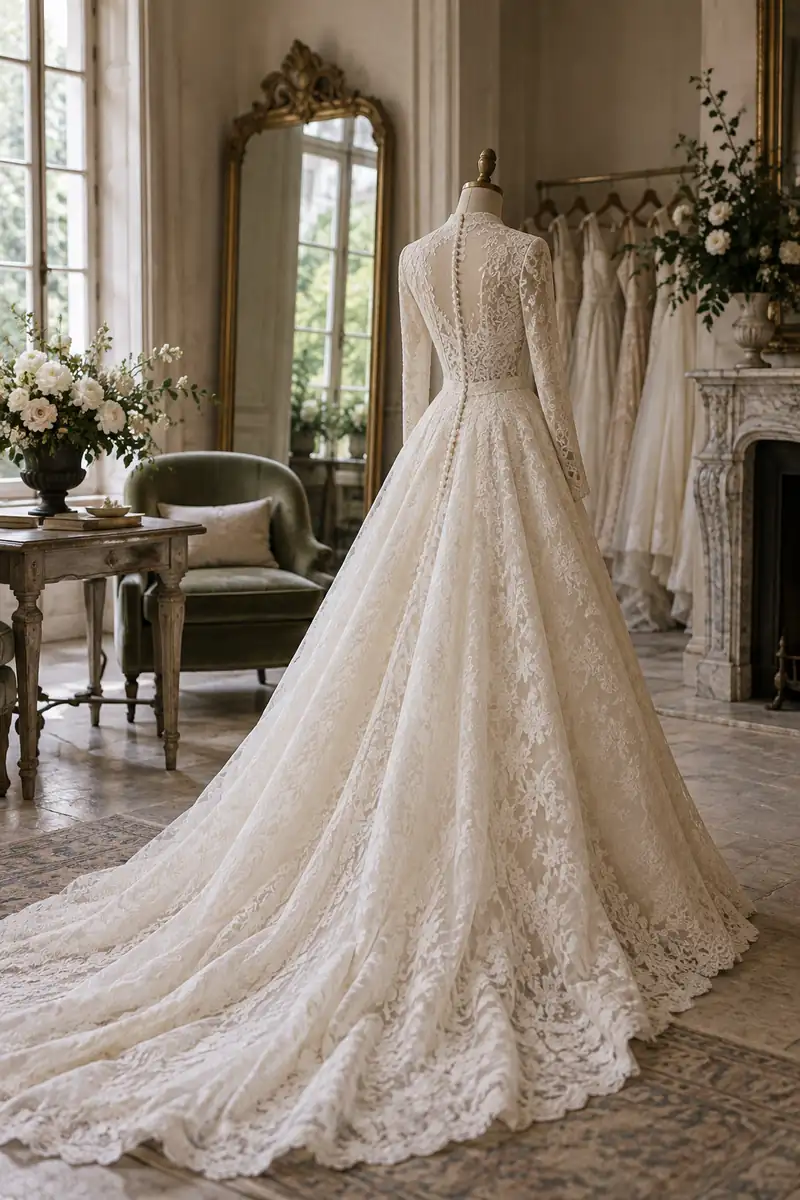
When Grace Kelly married Prince Rainier III in Monaco on April 19, 1956, her gown by Helen Rose of MGM had a high neck, long sleeves and a bodice of antique Brussels rose point lace. Fifty-five years later, the Duchess of Cambridge’s Alexander McQueen gown was admired for many of the same qualities: long lace sleeves, a modest V neckline and a full skirt. Neither dress was made to satisfy a religious rule, but both show what modest bridal design can be, which is regal, romantic and strikingly elegant. For many brides, though, modesty isn’t a style choice. It’s a requirement of the ceremony, the family or their own faith, and the good news is that fashion has caught up.
The elements of a modest gown
Sleeves. Long, three-quarter or elbow-length sleeves in lace, crepe or illusion tulle. Long fitted lace sleeves are the most formal; a bishop sleeve gathered at the wrist is romantic; an illusion sleeve with lace appliqués gives coverage that looks almost weightless. Sleeves, decoded explains each.
Necklines. Bateau, jewel, high neck and Queen Anne necklines are naturally modest. A sweetheart or V neckline can be filled in with illusion tulle, and a portrait neckline can be adapted with a sheer yoke. See necklines.
Linings. Sheer skirts, lace bodices and illusion backs should be lined in a nude or ivory fabric where full coverage is expected. A bodice can be lined behind the lace without losing its effect.
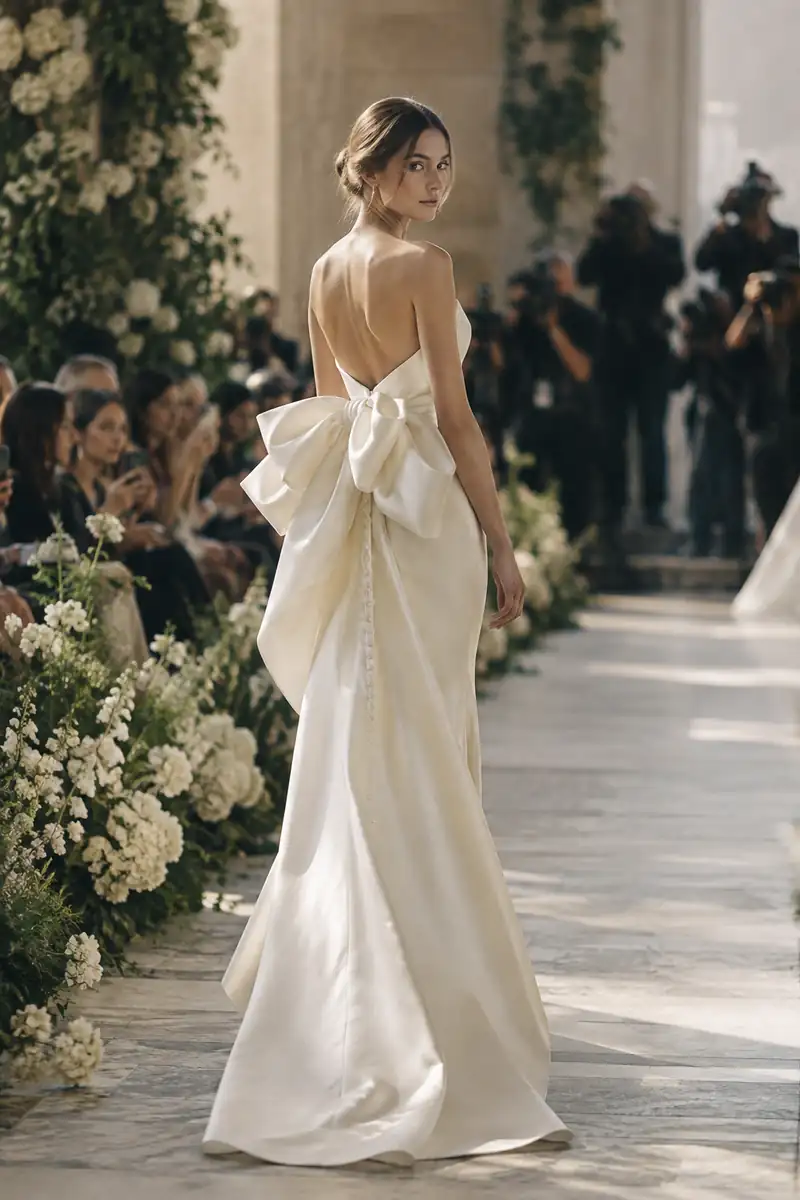
Backs. An open back can be closed with lace, illusion or a row of buttons.
Skirts. Full-length A-line, ball-gown and column skirts all work. Watch for high slits and sheer overlays.
Adapting a standard dress
Most bridal salons can show you dresses that are already modest, and most designers will add sleeves or raise a neckline on request, usually for a charge. Some shops specialize: Alta Moda Bridal in Salt Lake City, for example, focuses on modest and temple-ready gowns and works with designers to customize straps, necklines and bodices.
A bridal seamstress can also add sleeves, raise a neckline or line a bodice after the dress arrives. Adding sleeves is one of the larger alterations; Zola’s 2025 cost guide puts it at roughly $300 to $600. Wedding dress alterations explains the process and costs.
Layers and cover-ups
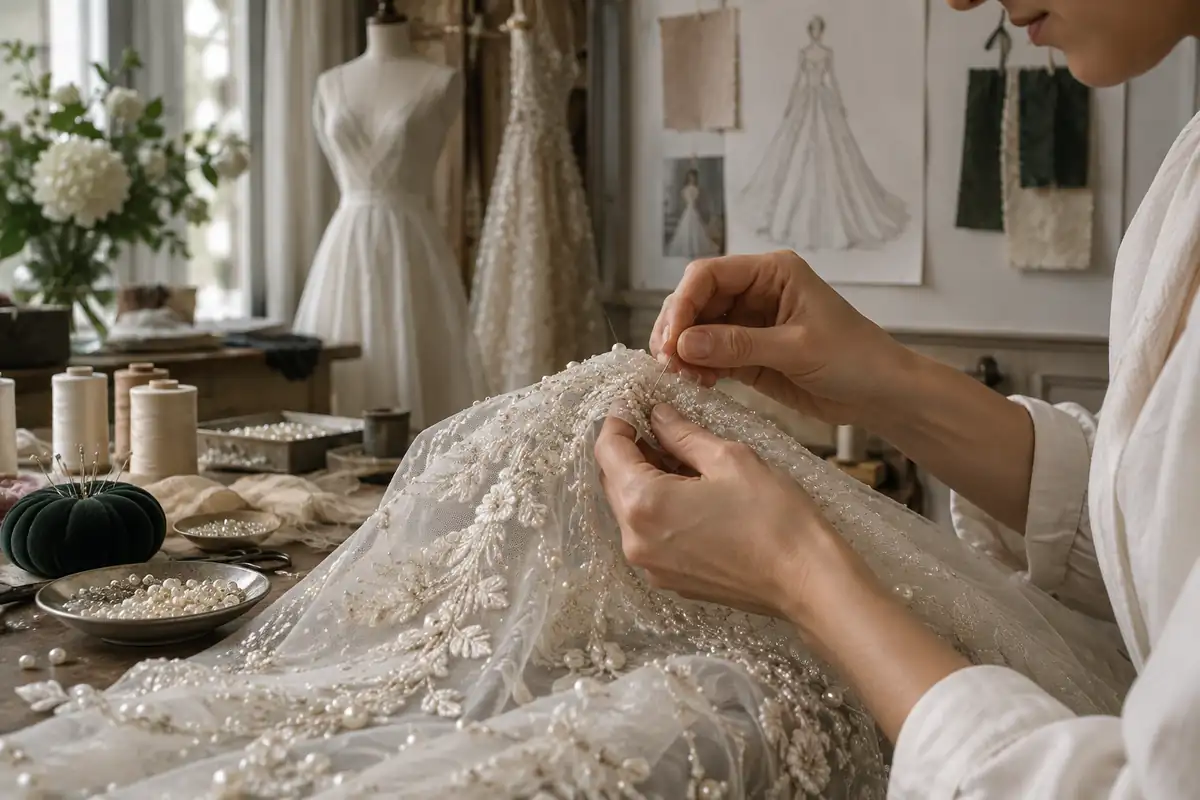
Detachable sleeves. Separate lace or tulle sleeves that attach at the shoulder, or a matching lace shrug. They come off after the ceremony.
Boleros and jackets. A short lace bolero, a satin jacket or a fitted cropped jacket covers the shoulders and upper arms.
Capes. A sheer or lace cape falling from the shoulders adds drama and coverage together.
Overlay tops. A sheer lace or tulle top worn over a strapless gown.
Shawls and wraps. A simple option for a ceremony in which shoulders should be covered.
Buy the layer when you buy the dress, so the fabric and shade of white match.
For many brides, modesty isn’t a style choice. It’s a requirement of the ceremony, the family or their own faith.
Faith and the wedding dress
These are general notes. Every tradition includes a range of practice, and your own officiant, parish, temple, mosque or synagogue is the authority. Ask before you shop.
Catholic. There is no single rule for bridal dress across the Catholic Church, and parishes differ. Many take their cue from the dress code at St. Peter’s Basilica in Rome, which asks visitors of both sexes to cover their shoulders and knees. In practice some parishes ask brides in strapless gowns to cover their shoulders during Mass with a bolero, jacket or shawl. A veil is customary; ask whether your parish has expectations of its own.
Latter-day Saints. For a temple sealing, guidance from The Church of Jesus Christ of Latter-day Saints says the bride’s dress should be white, modest in design and fabric, and free of elaborate ornamentation, with long or three-quarter sleeves; it should cover the temple garment, and sheer fabric should be lined. A train should be pinned up or removed for the sealing. Brides may also wear standard temple clothing, and the temple can provide a dress. Ask the temple you are marrying in about its current practice.
Muslim. Coverage of the arms, legs and, for brides who wear it, the hair is common, with a high or modest neckline and opaque fabric. Practice varies widely with culture, family and community, and a nikah held in a mosque is often more conservative than a reception in a hotel or hall. Many brides wear a bridal hijab in silk or chiffon coordinated with the gown; others choose styles from South Asian, Arab, African or other traditions.
Orthodox Jewish. Modesty, or tzniut, is central, and standards differ between communities. Many Orthodox brides wear long sleeves, a high neckline, a closed back and a long skirt, and married women in many communities cover their hair. Before the ceremony, at the bedeken, the groom lowers the veil over the bride’s face; in some communities the veil is opaque.
Other traditions. Greek, Russian and other Orthodox Christian churches, as well as many Protestant, Hindu, Sikh and other congregations, may have their own expectations. Wedding traditions around the world and the meaning of the traditional elements of the bride have more background.
Style advice
Choose lightweight fabrics for summer. Long sleeves in heavy satin are hot. Chiffon, crepe, silk georgette and fine lace breathe better. Fabrics and lace compares them.
Let one area be the focus. A high neck, a beautiful sleeve, a line of buttons down the back: choose one and keep the rest simpler.
Consider the veil. A long veil or a lace mantilla adds coverage and beauty for a church wedding. See veils and headpieces.
Plan a second look if you want one. A detachable layer or a reception dress lets you change after the ceremony.
Think about the guests. If your ceremony has a dress code, let guests know on the website or invitation. Wedding dress codes explains the wording.
For more on how gowns are built and chosen, see wedding dress styles and royal wedding dresses, many of which were made for churches with expectations of their own.
Written and edited by the Today’s Weddings editors. How we research and check what we publish is set out in our editorial standards. Spotted something wrong? Tell us.