Wedding Dress Shopping Guide: Timeline and Appointments
When to start, how many salons to visit, what sample sizes mean, how ordering and deposits work, and when each fitting should fall. The practical calendar for finding and wearing the dress.
Finding the dress is the romantic part. Getting it made, delivered and fitted on time is logistics, and it runs on a longer calendar than most brides expect. A typical made-to-order gown is cut only after you order it, takes several months to arrive, and then needs two or three fittings over the final weeks. Work backward from the wedding date and the first appointment falls much earlier than instinct suggests.
This is the practical guide. For the emotional side of the search, including how to know when you have found it, read Finding the Dress.
The timeline
| When | What to do |
|---|---|
| 12 months out | Fix the date, venue and budget. Start saving images and learning the vocabulary. |
| 9–12 months | Book appointments at two or three salons. Try every silhouette. |
| 8–9 months | Choose and order the dress. Pay the deposit. |
| 6–8 months | Choose the veil or headpiece, shoes and foundation garments. Book a seamstress if the salon does not do alterations. |
| 3–4 months | The dress should arrive. Try it on at once and check it against your order. |
| 8–12 weeks | First alteration fitting. |
| 4–6 weeks | Second fitting. |
| 1–2 weeks | Final fitting. Learn the bustle. Collect the dress. |
The full wedding calendar is in our 12-month planning checklist.
Before the first appointment
Know three numbers: your date, your budget including alterations, and your guest count. The date sets the deadline, the budget sets the range, and the size and formality of the wedding set the scale of the dress. What a wedding dress costs will help you set a realistic figure.
Research the salons. Each shop carries a limited set of designers. Check their websites for the labels they stock and the price range, and ask whether they charge an appointment fee, whether they do alterations in-house and whether they have samples in your size. Wedding dress designers introduces the main labels.
Learn the words. A consultant can help you far more quickly if you can say “a bateau neckline and a trumpet skirt in crepe” rather than “something simple.” The Wedding Dress, Decoded explains every term, and wedding dress styles will help you name your look.
How many salons, and when to go
Two or three salons, and three or four appointments in all, are enough for most brides. Each extra appointment adds more options but less clarity.
Book early for weekends. Saturday appointments at popular salons fill weeks ahead. A weekday appointment is usually quieter and less rushed.
Plan for about an hour and a half, and do not schedule more than two appointments in a day. By the third fitting room, everything starts to look the same.
Save one appointment for the decision. Many brides narrow it to two dresses and return to see them again before ordering.
Who to bring, and what to wear
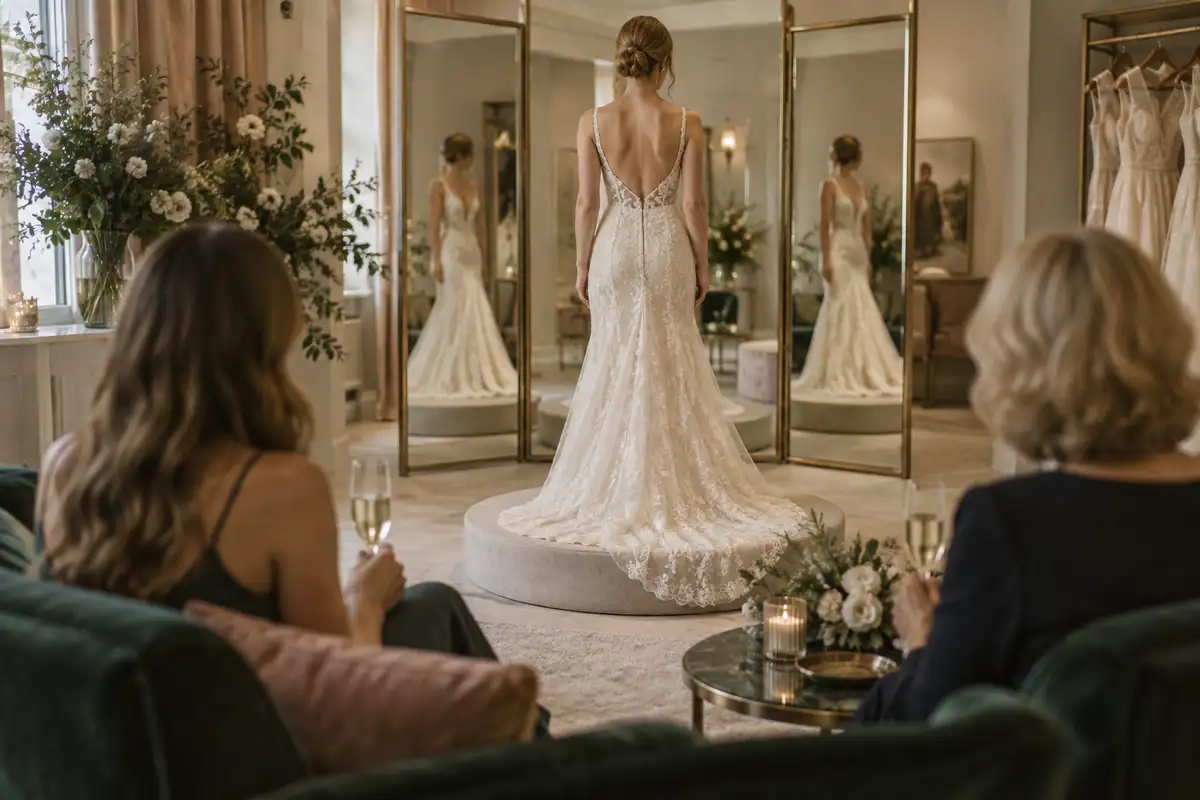
Bring one or two people whose taste you trust and whose honesty you can bear; Finding the Dress explains why a crowd rarely helps.
Wear seamless, skin-toned underwear and bring a strapless bra, although many salons provide foundation garments. Bring shoes near the heel height you plan to wear, or ask to borrow a pair. Wear your hair roughly as you expect to on the day, or bring a clip, and keep makeup light so it does not mark the samples. Bring images of dresses you like and a few photographs of the venue.
Sample sizes and how bridal sizing works
Samples are made in one size. Most salons carry a single sample of each style, in a standard sample size, and clip or pin it to fit whoever is trying it. If you are smaller, it will be clipped at the back; if larger, it may not close. Many salons now carry samples in a range of sizes, and some hold dedicated appointments for plus-size brides, but ask before you go. The point of the sample is to judge the line, the fabric and the movement, not the fit.
Bridal sizes are not your everyday size. Designers use their own size charts, which often run smaller than everyday store sizing, so a bride who wears an 8 in ready-to-wear may be ordered a 10 or 12. Ignore the number. The consultant will measure your bust, waist and hips and order the size that fits your largest measurement, because a dress can be taken in far more easily than it can be let out.
Do not order small. Ordering a size below your measurements because you plan to lose weight is a common and expensive mistake. Order for the body you have. A seamstress can take a dress in; she often cannot add fabric that is not there.
Ask about special sizing. Extra length, a larger bust in a smaller size, or other adjustments to the pattern before the dress is cut can often be ordered for an additional charge. They reduce the alterations later.
Trunk shows
At a trunk show, a designer’s full current collection visits a salon for a few days, sometimes with a representative of the house. It is the best chance to try styles the shop does not normally stock and to see a new season before it reaches the rack, and some salons offer incentives for ordering during the event. Follow your chosen salons and designers to hear about them in advance, and book early; appointments go quickly.
Sample sales
Salons regularly sell their floor samples to make room for new collections, usually at a substantial discount and to be taken home that day. The trade-off is that the dress has been tried on many times. Check the hem, the seams, the zipper or buttons, the beading and any makeup marks, and budget for cleaning and alterations. Designers also hold their own sample sales. Our guide to secondhand, rental and sample dresses explains exactly what to inspect.
Ordering and deposits
Once you choose, the salon takes your measurements and places the order with the designer. The Knot notes that deposits are typically 30 to 50 percent, with the balance due when the dress arrives or at pickup. Before you pay, make sure the contract states:
- the designer, style name or number, color and fabric;
- the size ordered, and any special-order changes and their cost;
- the total price, including any tariff surcharge and sales tax;
- the expected delivery date, and what happens if it is late;
- the refund and cancellation policy, and whether alterations are included.
Some brides are asked to sign a form accepting the size ordered. Read it; it confirms that you, not the salon, chose the size.
How long it takes. Made-to-order gowns commonly take four to six months to arrive. Allure Bridals, for example, says its gowns are made over twelve to sixteen weeks, before shipping. Couture and bespoke dresses often take longer. If the dress is made in China or Vietnam, tariff changes and shipping can add surcharges or delays, so ask what the salon’s recent experience has been.
Short on time: rush orders
If the wedding is less than six months away, you still have options, but they are narrower.
Rush production. Some designers will speed up an order for an additional charge. Ask the salon what the fee is and whether the date is guaranteed.
Buy off the rack. Many salons and chains sell in-stock dresses you can take home the same day, and sample sales do the same.
Look beyond the salon. Pre-owned dresses, rental, bridal separates and white evening dresses can all be found and fitted in weeks. See alternatives to the bridal salon and bridal separates, suits and jumpsuits.
Rush alterations cost too. Zola notes that rushed alterations can add 25 to 50 percent, so allow time for fittings even when the dress is bought in a hurry.
The fittings
Plan on about three fittings. The first, eight to twelve weeks before the wedding, sets the major changes: hem, bodice, straps and any sleeves or neckline work. The second, a few weeks later, checks the changes and refines the fit. The final fitting, one to two weeks before, confirms that nothing has shifted, and is the moment to learn the bustle.
Buy the shoes before the first fitting. The hem is cut to the heel. Wedding shoes explains why.
Bring the exact underwear and shoes to every fitting, and ideally the veil or headpiece.
Bring the person who will help you dress to the last fitting, so they can practice the bustle and fastenings.
Collect the dress after the final fitting, steamed and bagged, or arrange for the salon to press it close to the day. Our full guide to wedding dress alterations covers what each change involves and costs, and wedding dress preservation covers what to do afterward.
For readers’ hard-won advice, the archive’s shopping dos and don’ts and one bride’s wedding dress search are still worth reading.
Written and edited by the Today’s Weddings editors. How we research and check what we publish is set out in our editorial standards. Spotted something wrong? Tell us.