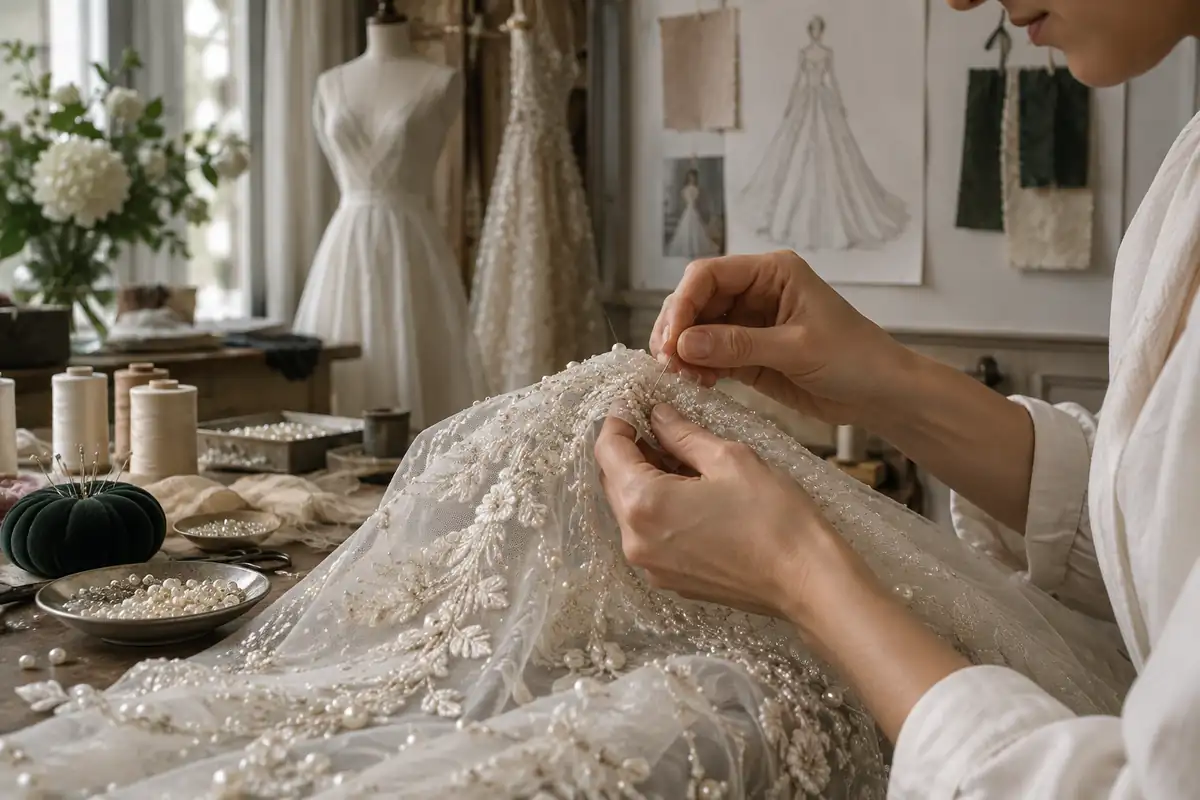
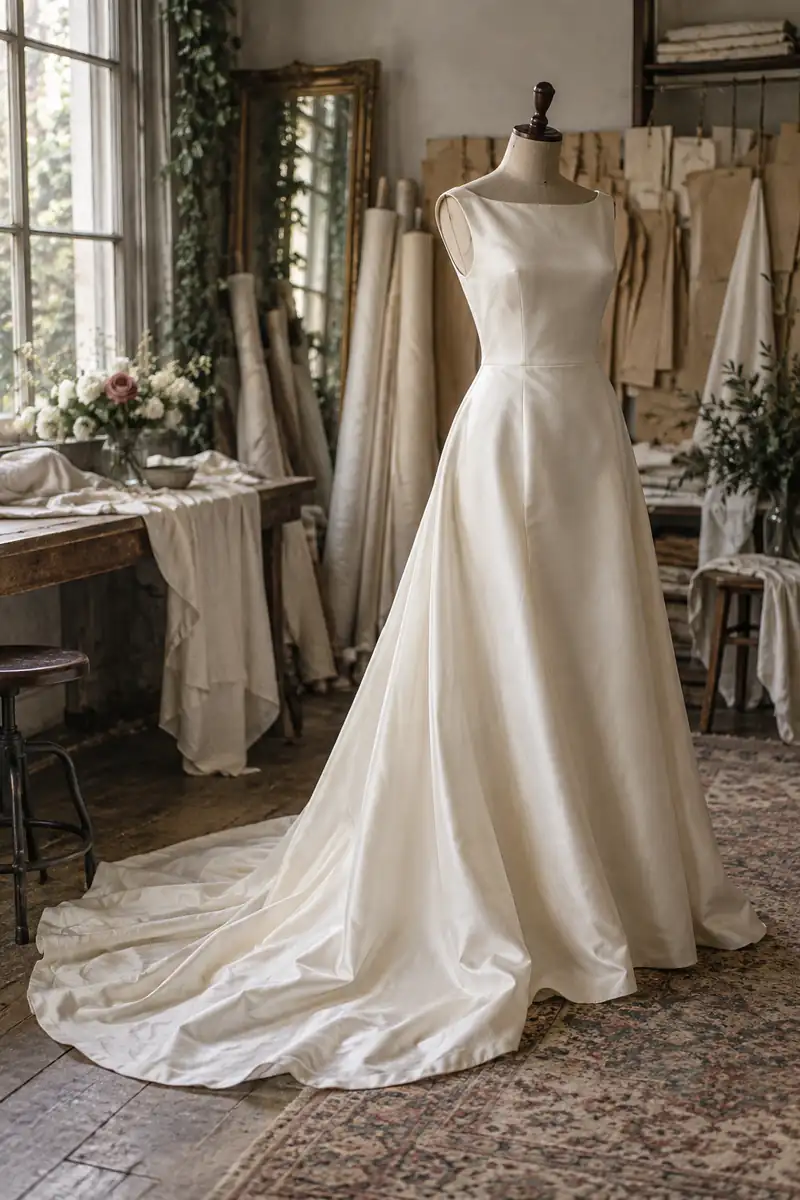
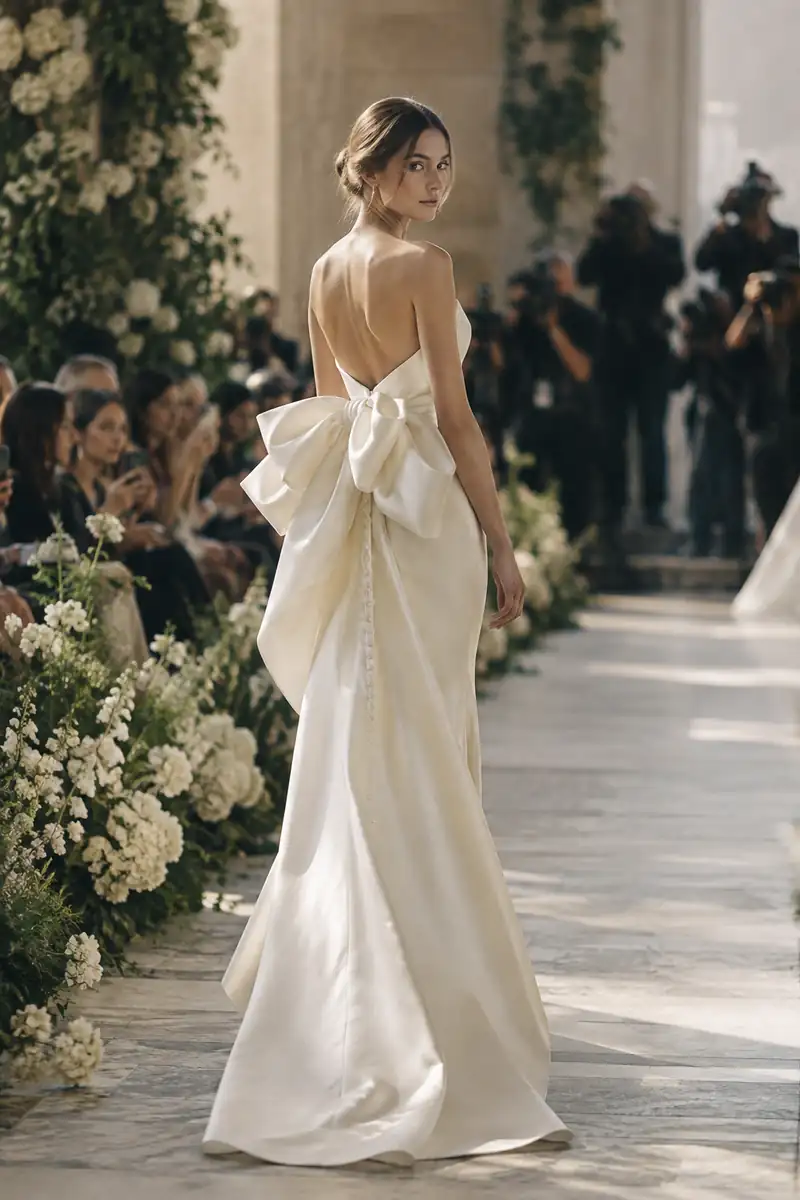
Wedding Dresses by Decade: 1900s to Today
A century and a quarter of bridal fashion, decade by decade: what brides wore, why the shape kept changing, and how to borrow each era without wearing a costume.
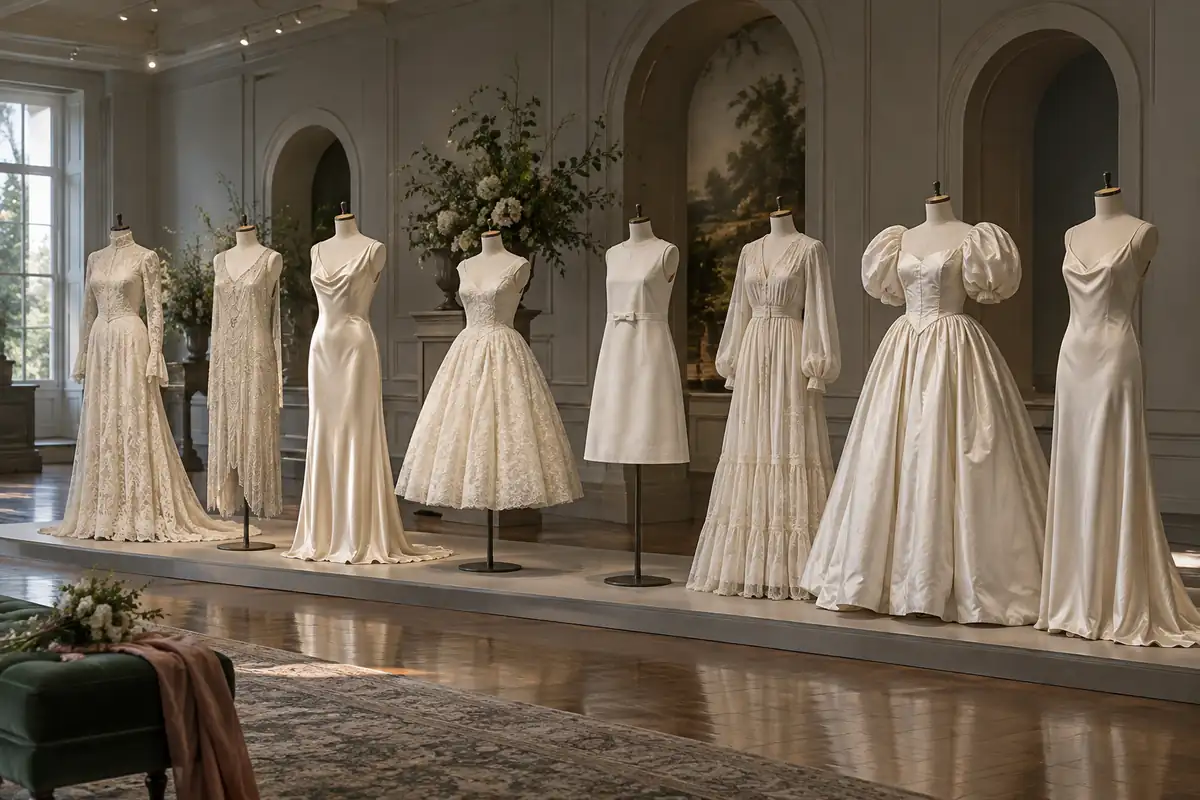
A wedding dress is the most conservative garment most women will ever buy, and still it has changed shape in every decade of the last hundred and twenty-five years. The reason is simple: bridal fashion follows everyday fashion, a few years behind and a few feet longer. When waists dropped, wedding dresses dropped them too; when hemlines rose, brides rose with them, sometimes to the knee. Change the underwear and you change the bride.
The white dress itself is newer than its reputation. Queen Victoria wore white satin and Honiton lace in 1840 and made it fashionable (the story is told in royal wedding dresses), but white was expensive to buy and impossible to keep clean, and for much of the century that followed, a bride of modest means married in her best dress, often in a color she could wear again. What follows is how the wedding dress changed from there, decade by decade.
The illustrations on this page are our own recreations of each era’s typical style, made for Today’s Weddings. They are not photographs of real dresses. For the vocabulary, see The Wedding Dress, Decoded.
The 1900s: Edwardian lace
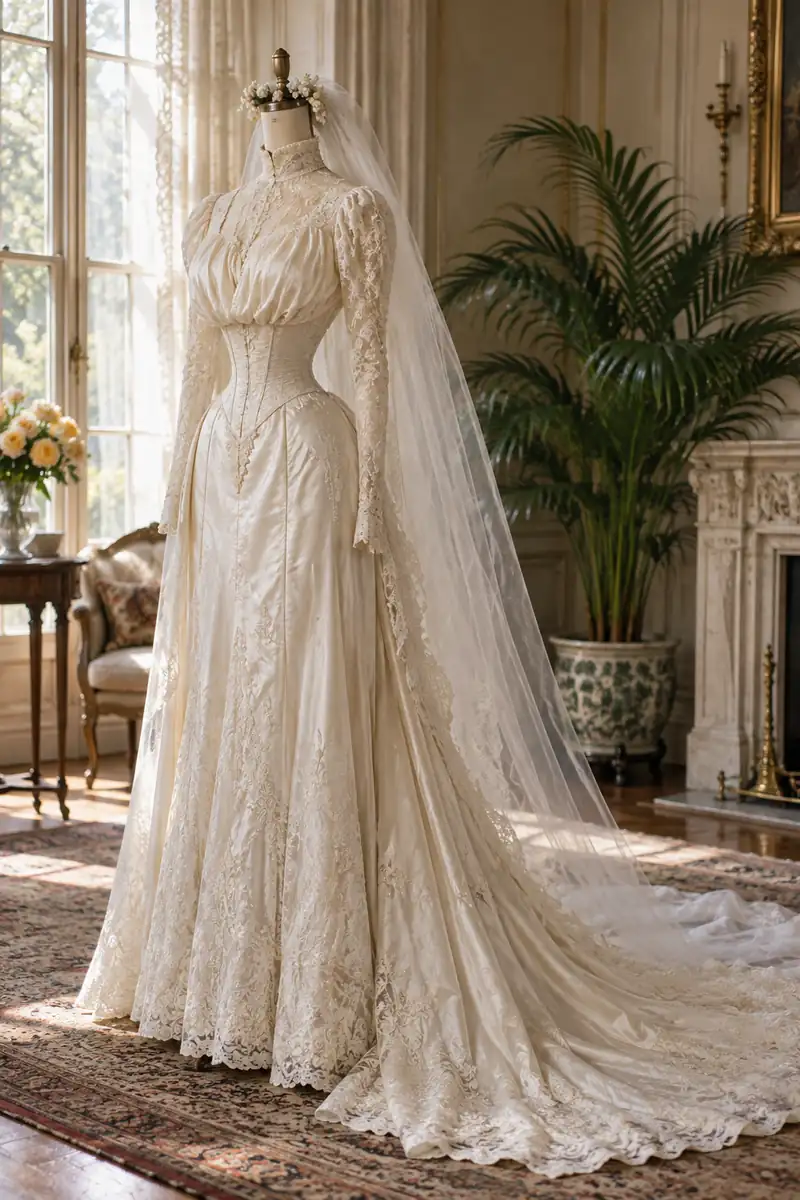
The Edwardian bride was built by her corset. The fashionable S-bend corset of the decade pushed the chest forward and the hips back, and dresses were made for that shape: a soft, pouched “pigeon-breast” bodice, a tiny waist and a skirt that flared like a trumpet into a train. Necklines climbed to the jaw in collars of boned lace, and sleeves were long. Lace was everywhere, along with lightweight silks, chiffon and embroidered lawn, and the wreath of orange blossom Victoria had worn was still the bride’s flower.
Borrow it: a high lace collar or a lace blouse-style bodice over a simple skirt. It suits a historic house or a winter church.
The 1910s: the line softens
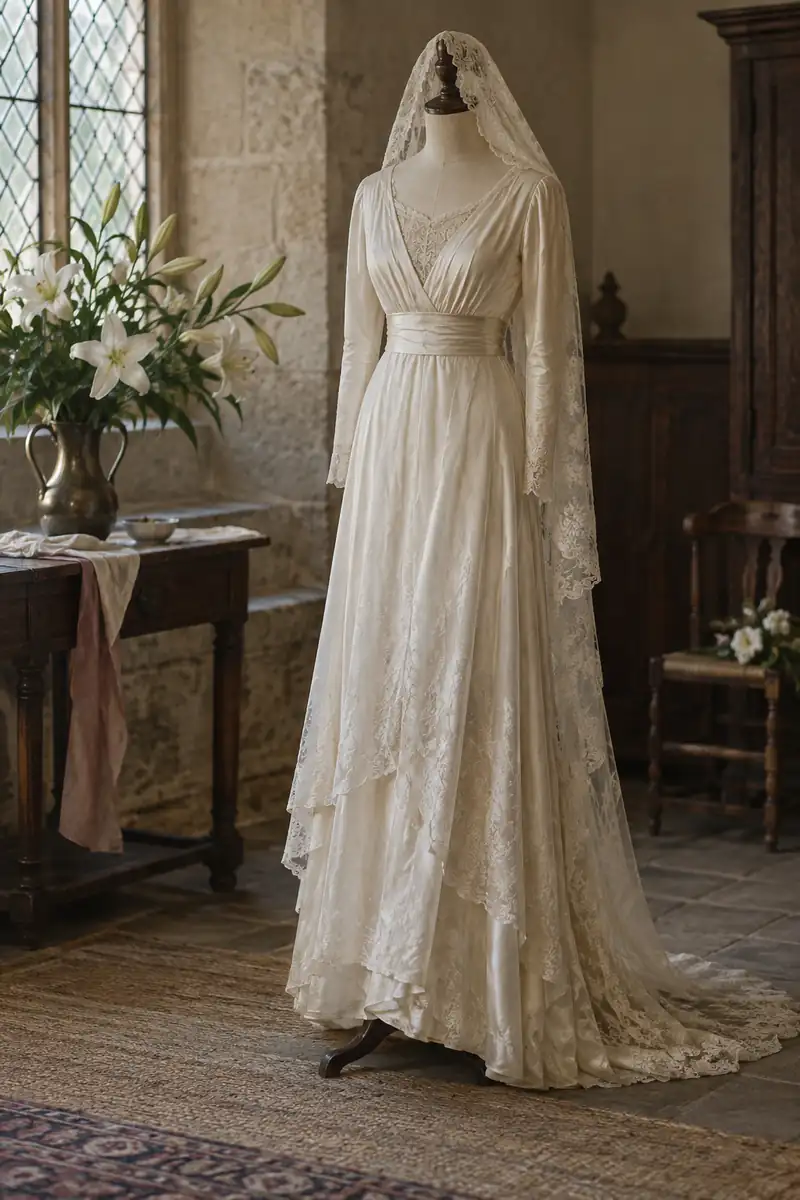
The S-bend fell out of favor, and with it the exaggerated curve. Waists rose, skirts straightened and narrowed, and dresses were layered in soft silk, net and lace in a lighter, more columnar line. The First World War brought simpler dresses and quicker weddings, as couples married before a groom shipped out, and by the end of the decade hemlines had risen to the ankle. Veils began to be worn as a close lace cap set low on the forehead, a look that would carry straight into the next decade.
Borrow it: a soft, raised waist and a sash, in layered chiffon. It is a good choice for a garden wedding in early summer.
The 1920s: the dropped waist
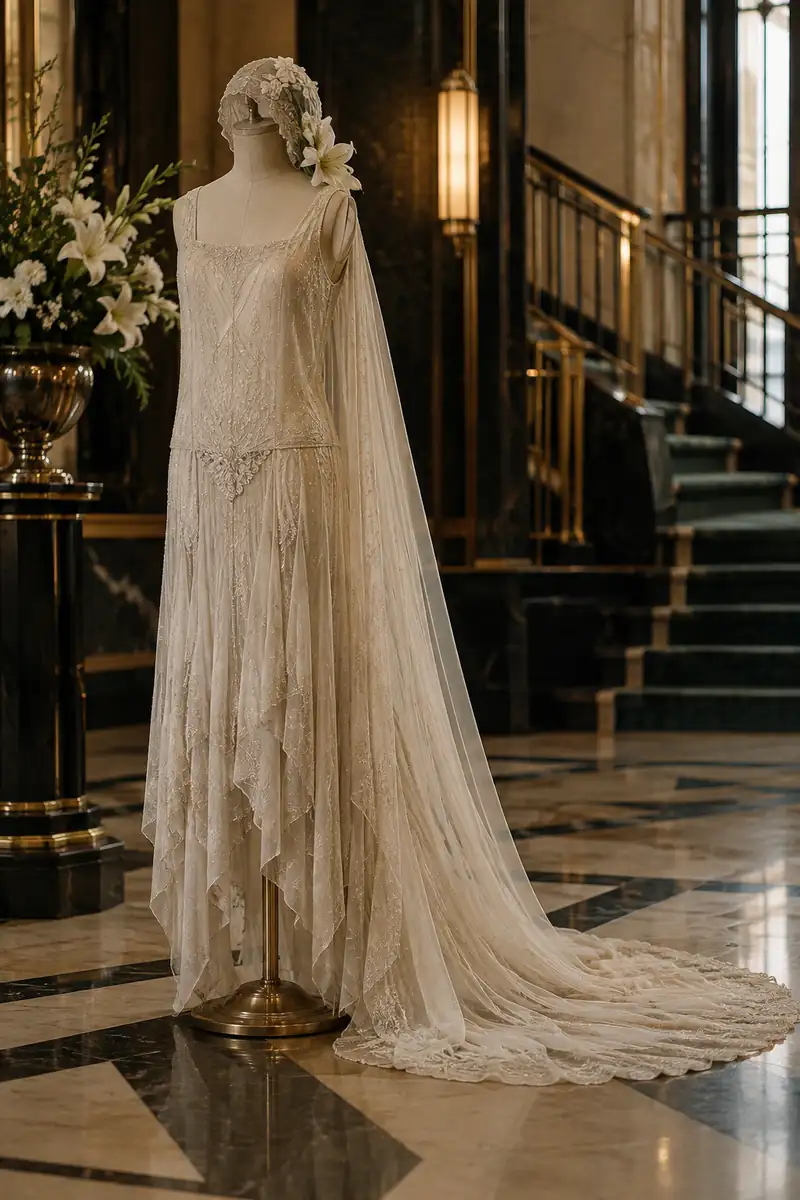
No decade changed the wedding dress more quickly. The waist dropped to the hips, the silhouette went straight and loose, and by the middle of the decade the hem had risen to the knee or just below it, sometimes with a long court train falling from the shoulders to keep a sense of ceremony. Beading, fringe and handkerchief hems caught the light. The cap veil, often trimmed with orange blossom, was worn close to the head over short, bobbed hair.
Borrow it: a beaded drop-waist dress or a beaded cap veil. An Art Deco hotel is the natural setting, and a shorter length is ideal for a city wedding. See the vintage-inspired bride.
The 1930s: the bias cut
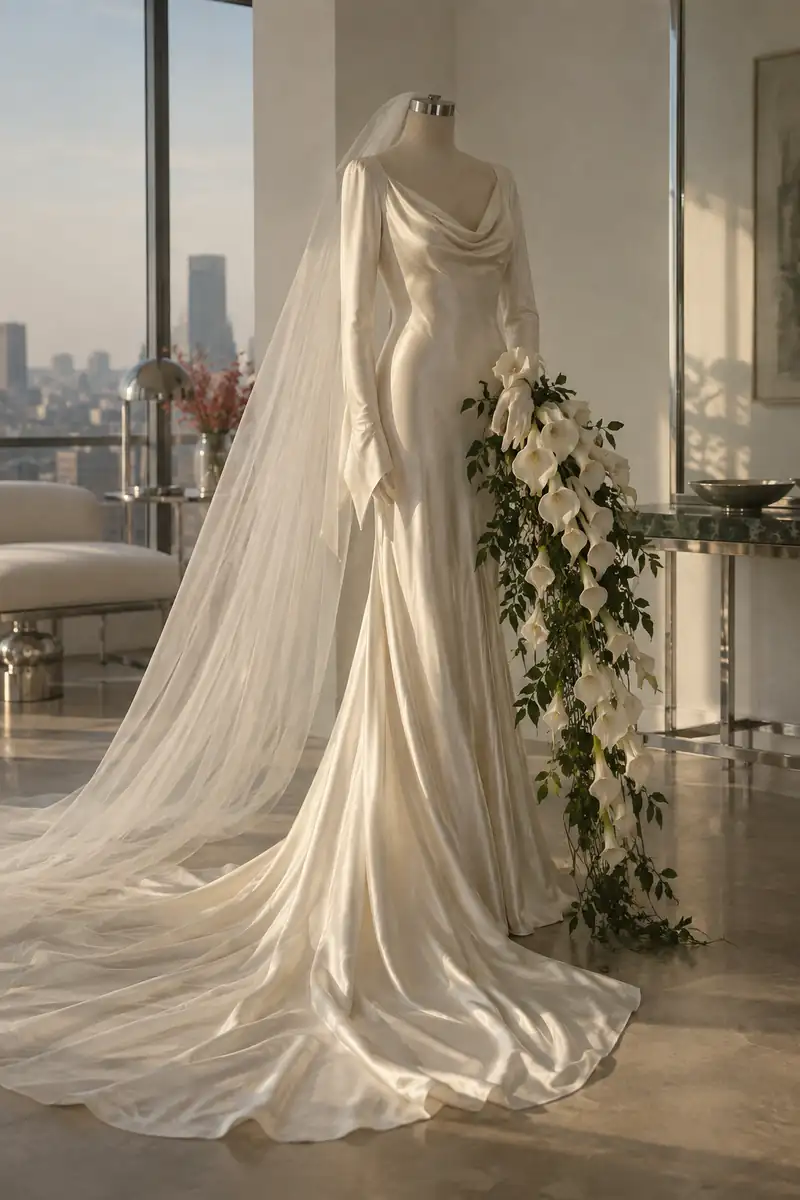
Hemlines fell back to the floor, and the Paris couturier Madeleine Vionnet’s technique of cutting fabric on the bias, diagonally across the grain, made satin cling and pour over the body. Wedding dresses of the decade are long and lean, with cowl necklines, low backs, long sleeves that often ended in a point over the hand, and pooling trains, and they owe a great deal to the Hollywood costume designers of the day. The Depression made many brides practical: a dress that could be worn again, or a well-cut suit. The most famous wedding dress of the decade was not white at all. Wallis Simpson married the former Edward VIII in 1937 in slim blue silk crepe by Mainbocher (see celebrity wedding dresses).
Borrow it: the bias-cut satin gown is the direct ancestor of the modern slip dress, and it flatters almost everyone who stands up straight.
The 1940s: making do
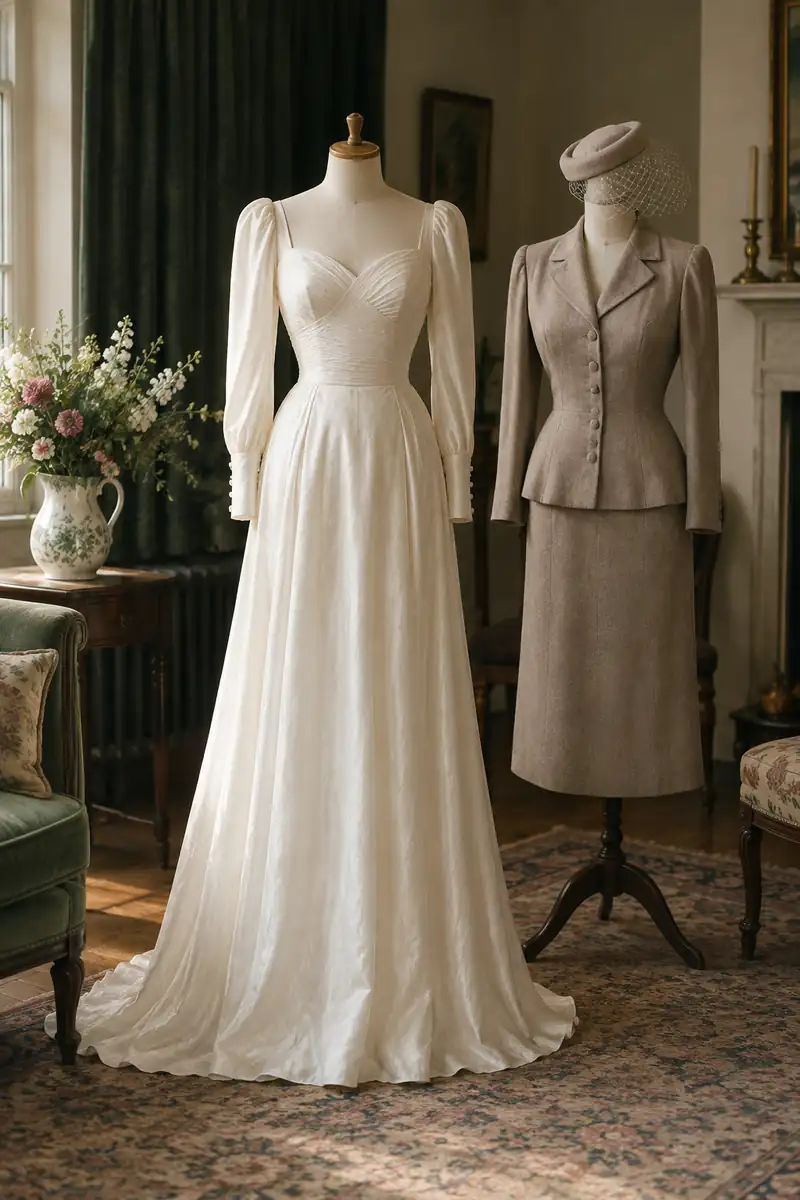
The Second World War rewrote the wedding. In Britain, clothes rationing began in 1941, and many brides married in a suit or in uniform, or in a dress borrowed from a sister or a friend and altered for the day. Even Princess Elizabeth needed clothing coupons for her 1947 gown. In the United States, some brides wore dresses sewn from silk parachutes brought home by servicemen; the Library of Congress’s Veterans History Project records the story of Nancy Rutan, who married in Idaho in 1947 in a gown made from a parachute her husband had mailed home from Japan. Fashionable dresses of the decade had padded shoulders, sweetheart necklines, long sleeves gathered high at the shoulder and fitted waists.
Borrow it: a tailored skirt suit and a small hat with a short veil is one of the most elegant choices for a courthouse or civil wedding.
The 1950s: the full skirt
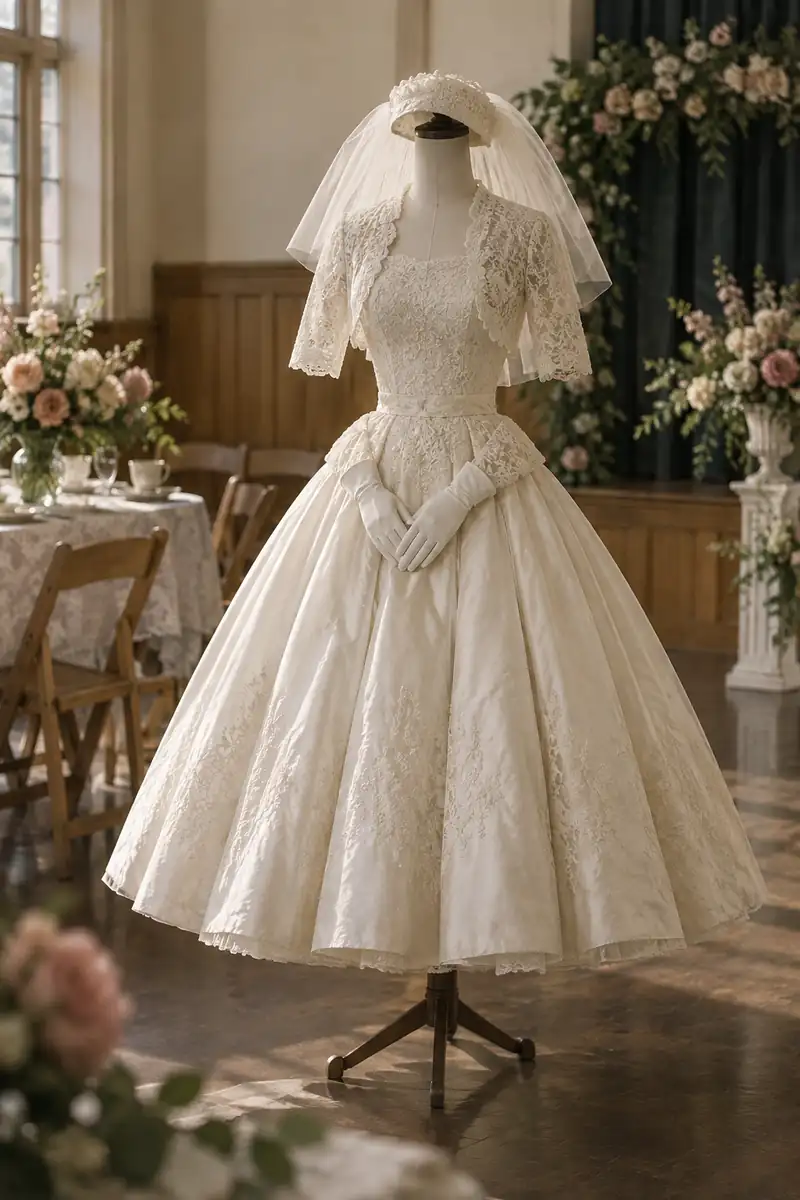
Christian Dior’s New Look of 1947 set the shape for the next decade: a nipped waist, a fitted bodice and a full skirt held out by petticoats. For weddings the skirt came either to the floor or, newly, to the calf, a length known as tea or ballerina length. Strapless bodices appeared, usually covered in church by a matching lace jacket or bolero, and the veil was often held by a small Juliet cap. The decade’s great brides made the reference points that bridal still uses: Jacqueline Bouvier in Ann Lowe’s taffeta in 1953, Audrey Hepburn in tea-length Balmain in 1954 and Grace Kelly in Helen Rose’s lace in 1956.
Borrow it: a tea-length dress with a full skirt is right for a garden party or a daytime reception, and a lace bodice with long sleeves is the most copied royal look of all.
The 1960s: the shift
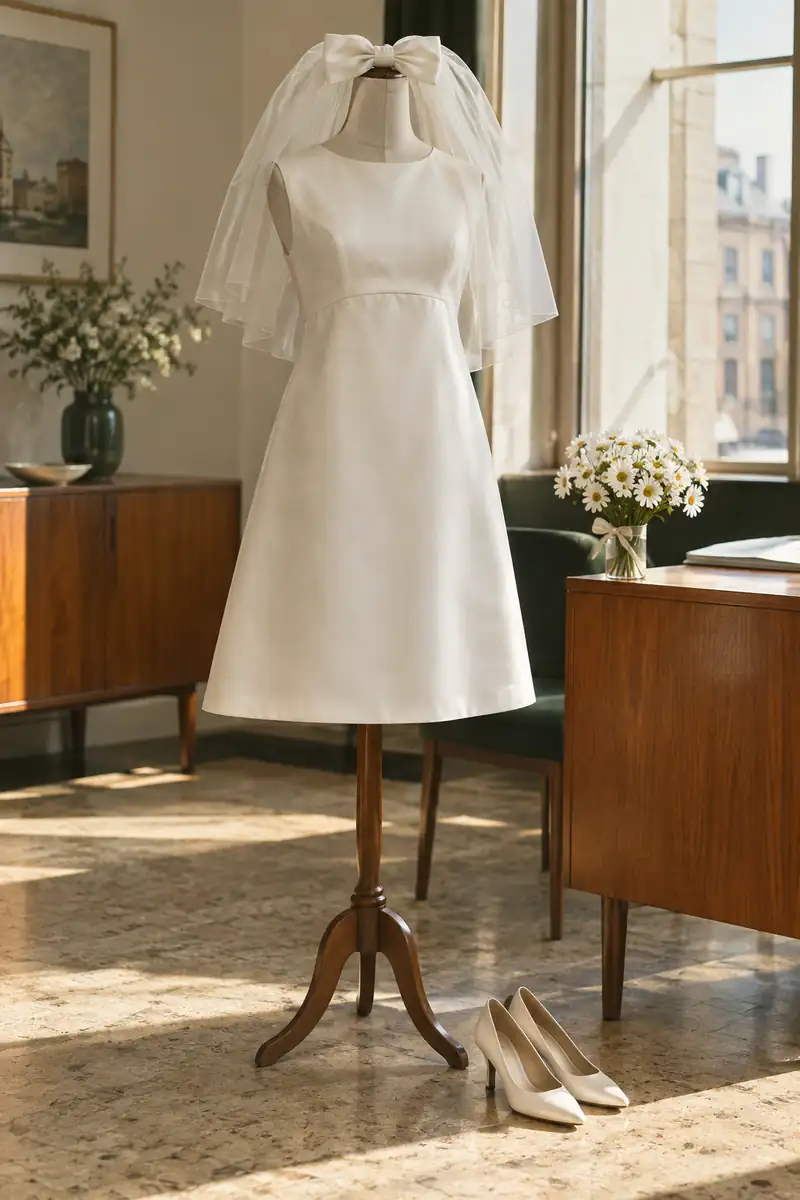
The decade opened with Princess Margaret’s plain silk organza gown of 1960, cut for line rather than ornament, and simplicity became the story. Dresses took the shapes of daywear: the shift, the empire line, the clean A-line, often with a high round neck. Veils grew short and full, perched on bouffant hair or on a bow, and by the end of the decade some brides wore the mini. Priscilla Presley married in 1967 in a simple chiffon dress she had bought off the rack, and Audrey Hepburn married for the second time in 1969 in a pale pink Givenchy mini.
Borrow it: a short, structured dress with a high neck is modern again, and ideal for a city hall ceremony or as a second dress for the party.
The 1970s: prairie and romance
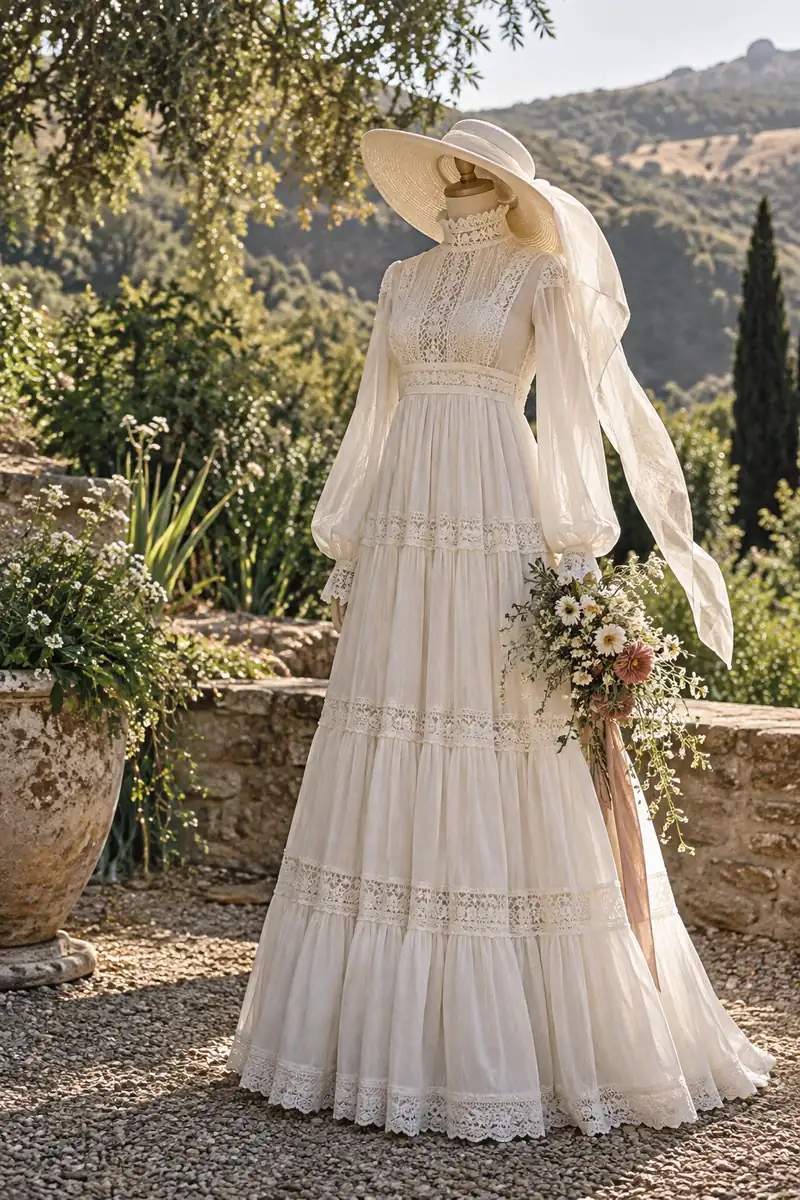
The 1970s bride looked backward, to the Victorian and Edwardian past. High ruffled necks, long bishop sleeves, empire waists and tiered skirts in cotton, voile and crochet lace were everywhere, often worn with a wide-brimmed picture hat instead of a veil and a loose bunch of wildflowers. Princess Anne’s 1973 gown, with its high collar and medieval trumpet sleeves, was of the moment. At the other extreme, Bianca Jagger married in Saint-Tropez in 1971 in a white Yves Saint Laurent tuxedo jacket and a long bias-cut skirt, with a wide hat and veil, and made the bridal suit fashionable half a century before it became a trend.
Borrow it: long sleeves and a high neck in light lace for a country wedding, or a white jacket over a long skirt. See bridal separates, suits and jumpsuits.
The 1980s: more of everything
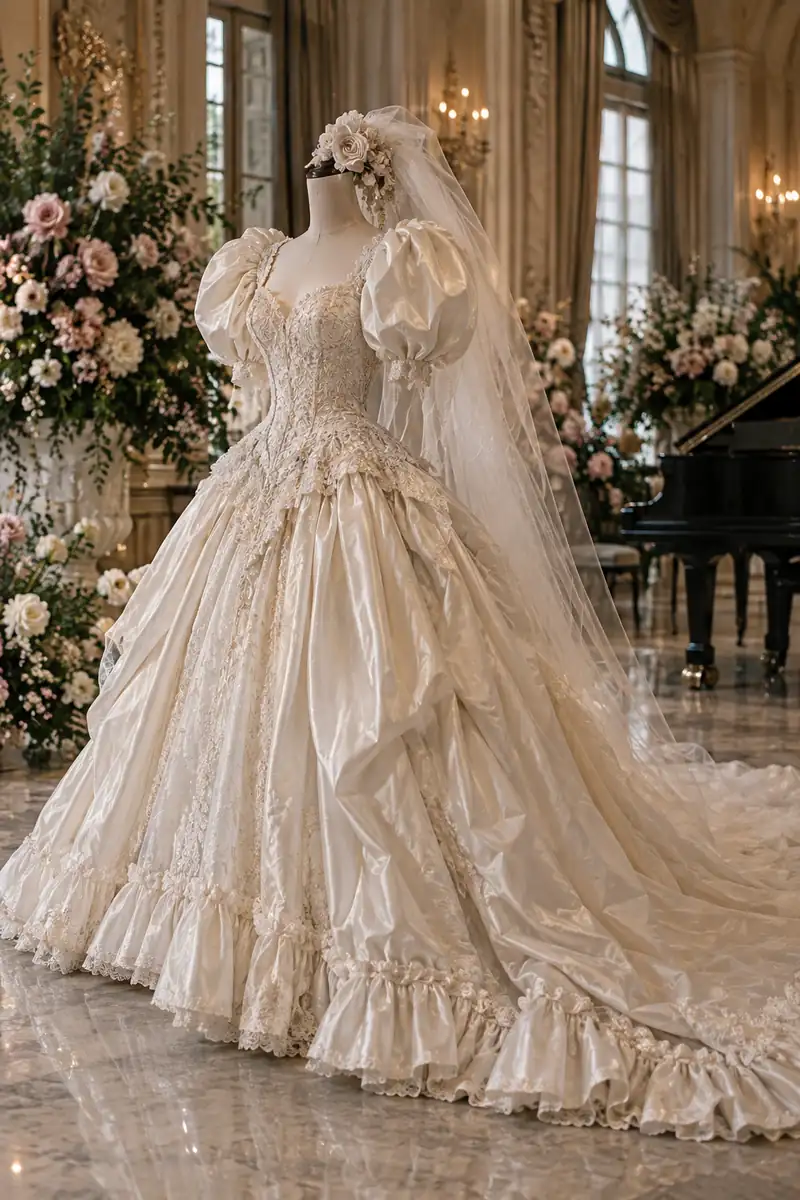
On July 29, 1981, Lady Diana Spencer stepped out at St Paul’s Cathedral in ivory silk taffeta with puffed sleeves and a twenty-five-foot train, and bridal fashion followed her for the rest of the decade. Sleeves grew enormous, waists dropped to a point, skirts ballooned in taffeta and satin, and lace, pearls and sequins were layered over all of it. Sarah Ferguson’s beaded Lindka Cierach gown of 1986 confirmed the mood. The look dates quickly in photographs, which is exactly why it was loved: no other decade’s wedding dresses are so unmistakably of their time.
Borrow it: carefully. A single dramatic sleeve on a simple modern bodice nods to the decade without reproducing it.
The 1990s: the slip dress
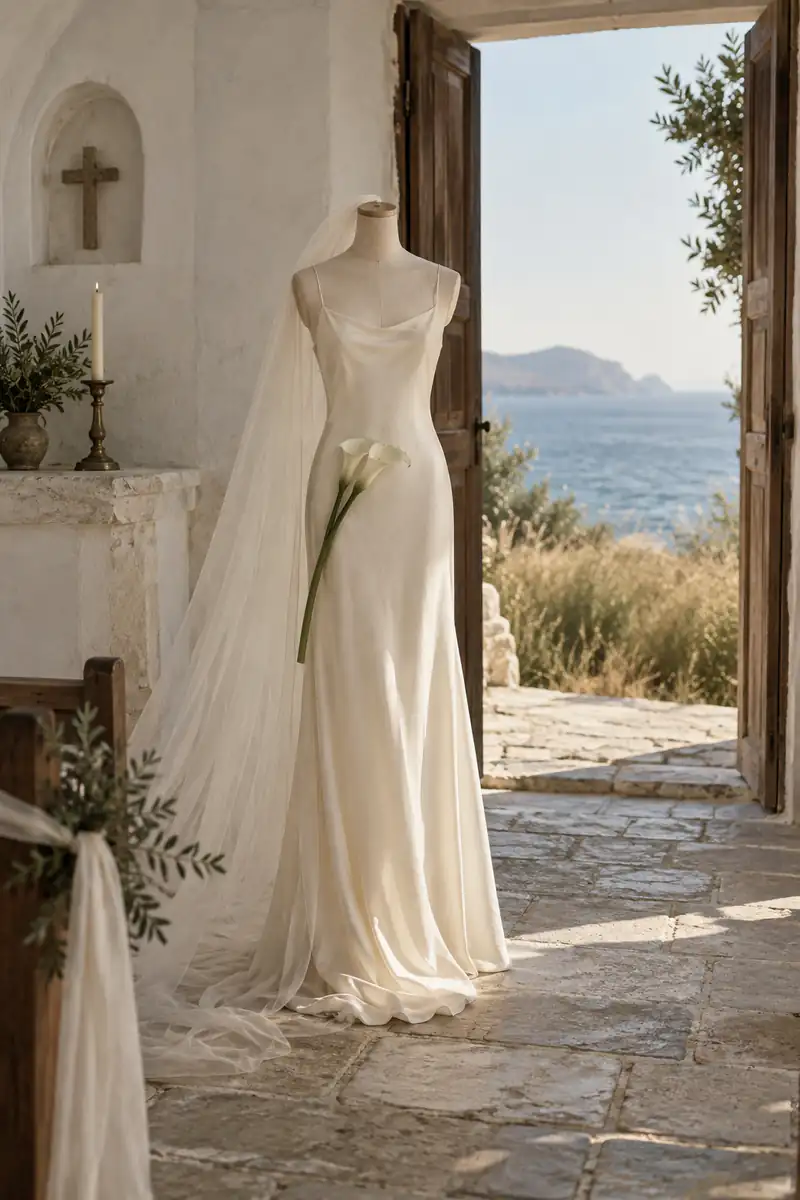
The reaction, when it came, was total. The 1990s cleared away the puffs and the lace for clean lines, plain fabrics and bare shoulders. Vera Wang, a former Vogue editor, opened her bridal business at the Carlyle Hotel in New York in 1990 and brought a fashion designer’s eye to the wedding dress. The decade’s defining moment came in 1996, when Carolyn Bessette married John F. Kennedy Jr. on Cumberland Island, Georgia, in a bias-cut silk slip by Narciso Rodriguez. The strapless gown began its rise at the end of the decade.
Borrow it: the slip dress is the most wearable vintage reference of all, and it has been in fashion again since 2026. See the modern minimalist.
The 2000s: the strapless decade
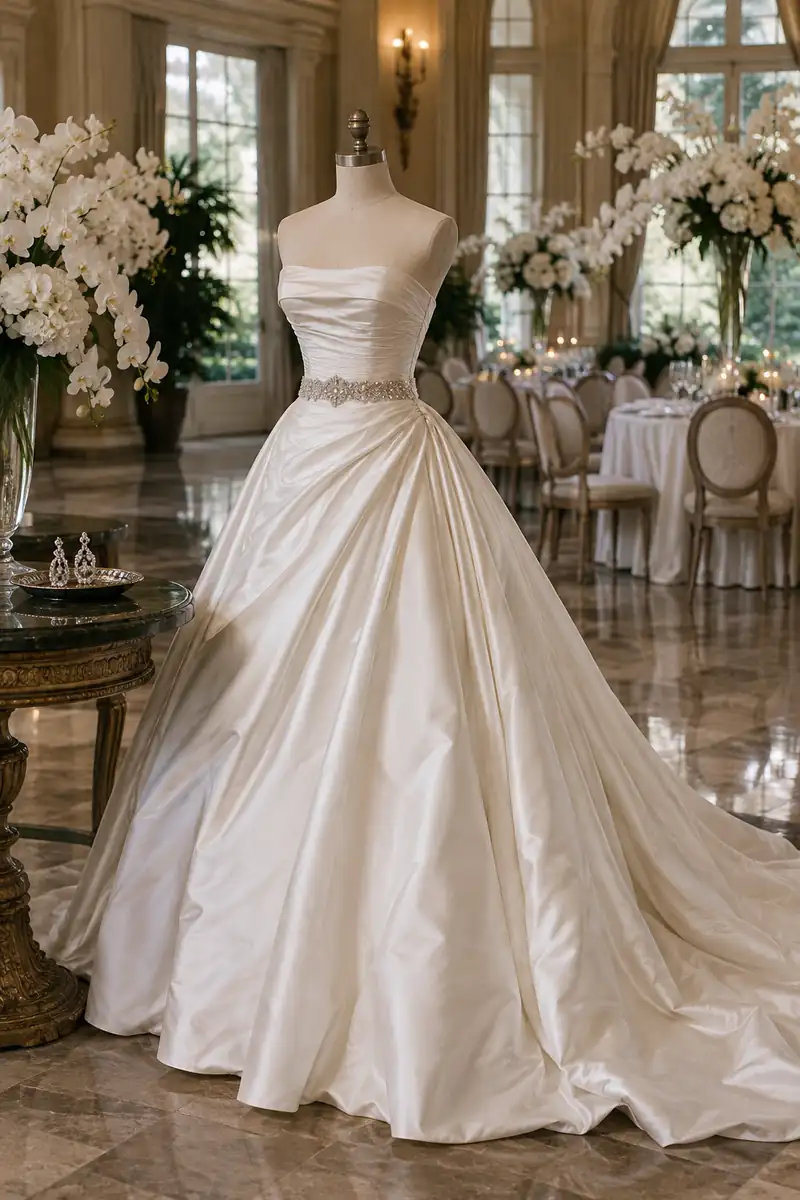
For about ten years the strapless gown was so dominant that it became hard to buy anything else. Bodices were fitted and often ruched, waists were marked with crystal-encrusted belts, and skirts ranged from full ball gowns to close mermaid shapes. Bridal became a mass-market fashion business and a form of entertainment: Say Yes to the Dress, set in a New York bridal salon, began on TLC in 2007. Beyoncé’s 2008 wedding, in a dress made by her mother, Tina Knowles, was a quiet counterpoint to the era’s spectacle.
Borrow it: a strapless bodice is still the easiest shape to alter and to wear with a statement necklace or a veil.
The 2010s: sleeves come back
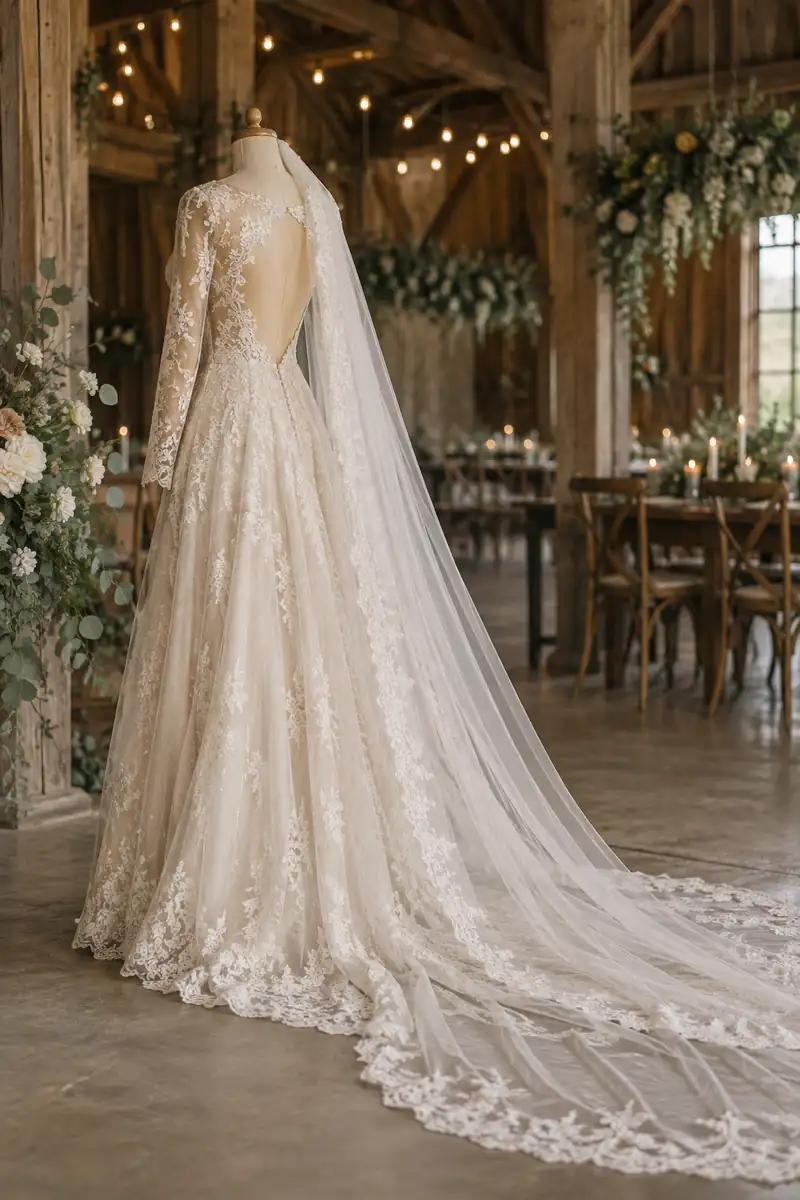
On April 29, 2011, Catherine Middleton wore long lace sleeves by Sarah Burton for Alexander McQueen, and the strapless decade ended almost overnight. Lace sleeves, sheer illusion necklines and open backs defined the years that followed, alongside a relaxed bohemian style suited to barns, vineyards and the Instagram age. Brides also grew bolder: Solange Knowles wore a jumpsuit to her wedding in 2014. The decade closed with Meghan Markle’s plain six-seam Givenchy gown of 2018 and a return to the clean line.
Borrow it: lace sleeves are now a classic in their own right, and suit a church wedding in any season.
The 2020s: the wedding of many looks
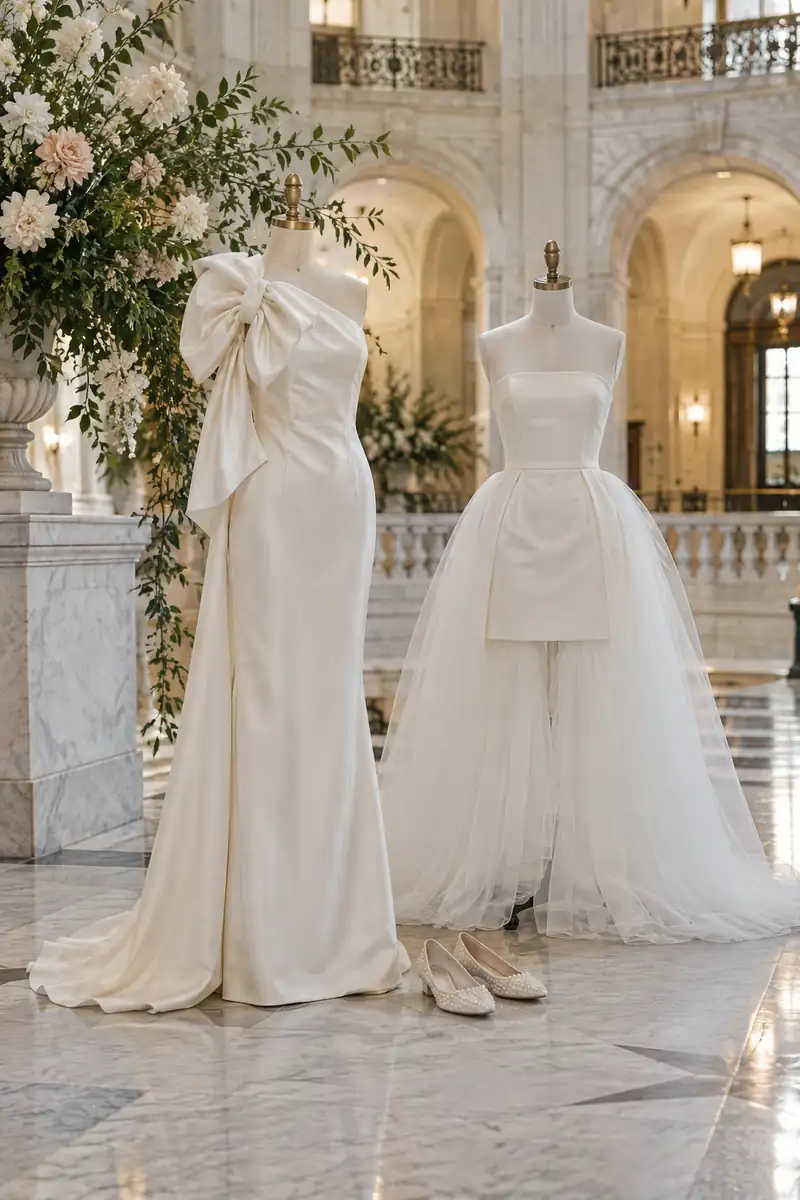
The pandemic weddings of 2020 and 2021, with their small guest lists, courthouse ceremonies and postponed parties, broke the idea that a wedding needs one dress. The decade’s bride is as likely to wear two or three looks as one: a gown for the ceremony, a second dress for dancing, a short dress for the rehearsal or the after-party. Bows, sculptural satin, color and separates are all in play, and brides increasingly buy secondhand, rent or rework an heirloom. For what is on the runways now, see wedding dress trends for 2026.
How to wear a decade without wearing a costume
Choose one element. A 1920s beaded cap, a 1950s tea-length skirt, a 1970s high neck: one strong period detail reads as style; three read as fancy dress.
Match the era to the venue. An Art Deco hotel wants the 1920s or 1930s; a country church wants the 1900s or the 1970s; a city hall wants the 1940s suit or the 1960s shift. Our guide to wedding dress styles matches styles to settings.
Update the fit and the underwear. Period dresses were made for period foundations. A modern bra and a modern fit will make a vintage shape look intentional.
Buy real vintage with care. Old silk splits and old lace tears. Have a specialist assess any true vintage dress before you buy it, and allow extra time for alterations.
Look at family photographs first. The best period reference is often the one in your own album: a grandmother’s neckline, a mother’s veil, an aunt’s hat.
Written and edited by the Today’s Weddings editors. How we research and check what we publish is set out in our editorial standards. Spotted something wrong? Tell us.